

Key Takeaways
Our Verdict
Passive and active safety systems aren't competing technologies — they're complementary layers of protection. Passive features like airbags and crumple zones absorb the impact when a crash can't be avoided, while active features like automatic emergency braking and lane-keeping assist work to prevent the crash in the first place. The safest vehicles, and the safest drivers, rely on both.
| Best for | Recommended |
|---|---|
| Drivers prioritizing crash-impact protection | Passive safety features |
| Drivers focused on avoiding accidents before they happen | Active safety features |
| Families and everyday commuters who want well-rounded protection | Vehicles equipped with both passive and active systems |
What the Terms Actually Mean
Car safety features generally fall into two buckets: passive and active. The simplest way to remember the difference is timing.
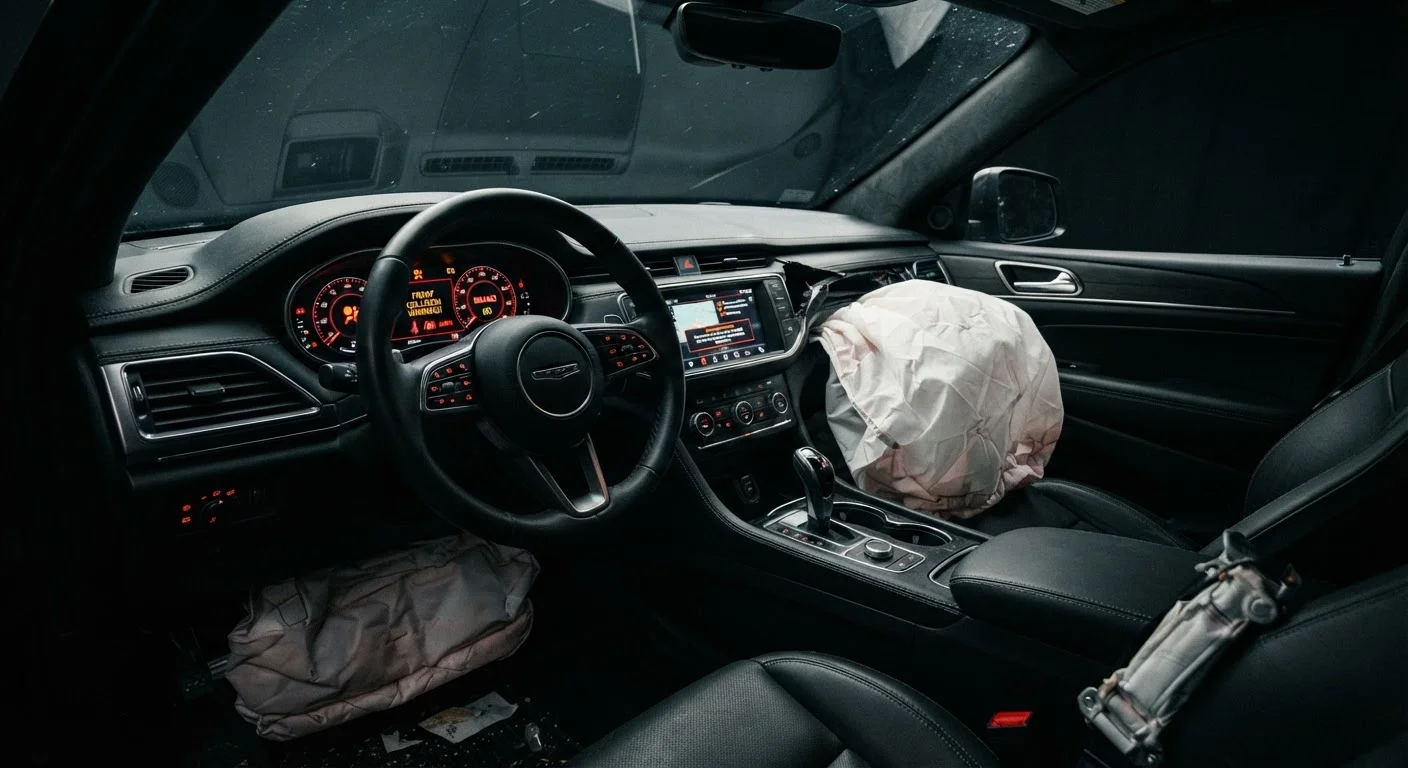
Passive safety features do their job during a crash. They're always there in the background, requiring nothing from you. Think seatbelts, airbags, padded dashboards, and the engineered crumple zones built into the car's frame to absorb and redirect crash energy away from occupants. These systems can't stop a collision — but they're designed to keep you alive when one happens.
Active safety features work before a crash. They monitor road conditions, your speed, surrounding vehicles, and your own driving behavior, then either alert you to a risk or step in automatically. Automatic emergency braking (AEB), lane-keeping assist, blind-spot monitoring, and adaptive cruise control all fall into this category.
Neither type is optional or superior to the other. They're designed to work together as a layered system.
Passive Safety: The Last Line of Defense
Passive safety technology has been refined over decades. The three-point seatbelt — standard in U.S. vehicles since 1968 — remains one of the most effective safety inventions in automotive history. Airbags, now deployed from multiple positions including side curtains and knee bolsters, supplement seatbelt restraint by cushioning occupants against hard surfaces during impact.
Crumple zones are a less visible but equally important piece. Engineers design the front and rear of vehicles to deform in controlled ways during a crash, converting kinetic energy into structural damage rather than letting it travel straight into the passenger cabin. Modern steel and aluminum body construction makes this possible without adding excessive weight.
One important note: airbags are supplemental restraints. They work with seatbelts, not instead of them. An unbelted occupant can be seriously injured by an airbag deployment. Always buckle up first — passive systems are calibrated with that assumption.
If your vehicle has been in a significant collision, have a qualified mechanic inspect the restraint systems, even if the airbags didn't deploy. Sensors, pretensioners, and structural components may have absorbed impact that isn't visible on the surface.
Active Safety: Preventing the Crash Before It Happens
Active safety features represent the biggest shift in automotive safety over the past 20 years. Where passive systems react, active systems anticipate.
Automatic Emergency Braking (AEB) uses cameras or radar to detect an imminent collision and applies brakes faster than most drivers can react. Lane Departure Warning alerts you when you drift across lane markings without signaling — useful for catching fatigue-related drift. Blind-Spot Monitoring flags vehicles in zones your mirrors don't fully cover, which is particularly helpful on highways. See our guide on why blind spots are bigger than you think for more context on where those gaps exist.
Adaptive Cruise Control maintains a set following distance rather than a fixed speed, reducing the kind of tailgating that causes a disproportionate share of rear-end collisions — a behavior explored in depth in our piece on tailgating and its real risks.
Active Safety Tech Has Real Limits
Systems like lane-keeping assist and automatic emergency braking can be affected by heavy rain, snow, mud-covered sensors, or faded road markings. Don't treat driver-assistance features as substitutes for attentive driving. They're tools, not autopilots.
Active systems also rely on proper calibration. If you've had windshield replacement or suspension work done, ask whether the forward-facing camera or radar sensors need recalibration. An out-of-spec sensor may not perform as expected.
Check What's Actually in Your Car
Active safety features vary significantly between trim levels — even within the same model. Check your owner's manual or the manufacturer's website to confirm which systems your specific vehicle has. Knowing what's there helps you use it correctly and notice when something isn't working as expected.
How They Compare — and Why You Need Both
| Passive Safety | Active Safety | |
|---|---|---|
| When it works | During or after a collision | Before or as a crash begins |
| Examples | Airbags, seatbelts, crumple zones | AEB, lane-keeping assist, blind-spot monitoring |
| Driver involvement | None — automatic on impact | May alert driver or intervene automatically |
| Goal | Minimize injury in a crash | Prevent the crash entirely |
| Maintenance needs | Inspect after any deployment | Software updates, sensor cleaning |
| Standard on new cars? | Yes, broadly required by federal standards | Increasingly standard, varies by trim |
Passive and active safety features aren't competing priorities. A vehicle with excellent crash-test scores but no AEB will protect you well if you crash. A vehicle loaded with active tech but a weak structural cage may help you avoid many accidents — but leave you more vulnerable in the ones it can't prevent.
For newer drivers learning high-speed road environments, active features like lane-keeping assist and blind-spot warnings provide a helpful safety net. Our overview on motorway driving for first-timers pairs well with understanding what your car's systems are doing at speed.
Active technology also reinforces good habits rather than replacing them. Pairing these tools with a defensive driving mindset — scanning ahead, maintaining space, anticipating hazards — gives you the strongest overall protection. And for families with children, passive restraints extend to car seats as well: see our guide on what car seat safety labels actually mean to make sure younger passengers are protected too.
50%+
Reduction in rear-end crashes with AEB
Research from the Insurance Institute for Highway Safety suggests automatic emergency braking can reduce rear-end crashes by more than half.
40,000+
U.S. traffic fatalities per year
According to the National Highway Traffic Safety Administration, tens of thousands of lives are lost on U.S. roads annually, underscoring why layered safety systems matter.