

Key Takeaways
Vehicle Blind Spot
A blind spot is any area around your vehicle that your mirrors cannot show you. Every car has them, and they're large enough to hide motorcycles, cyclists, and even other cars. You can't rely on mirrors alone to know what's beside or behind you.
Blind spot size varies by vehicle design — taller vehicles like SUVs and trucks tend to have larger blind zones than sedans, particularly at the rear corners and directly behind the vehicle.
What Your Mirrors Actually Show You
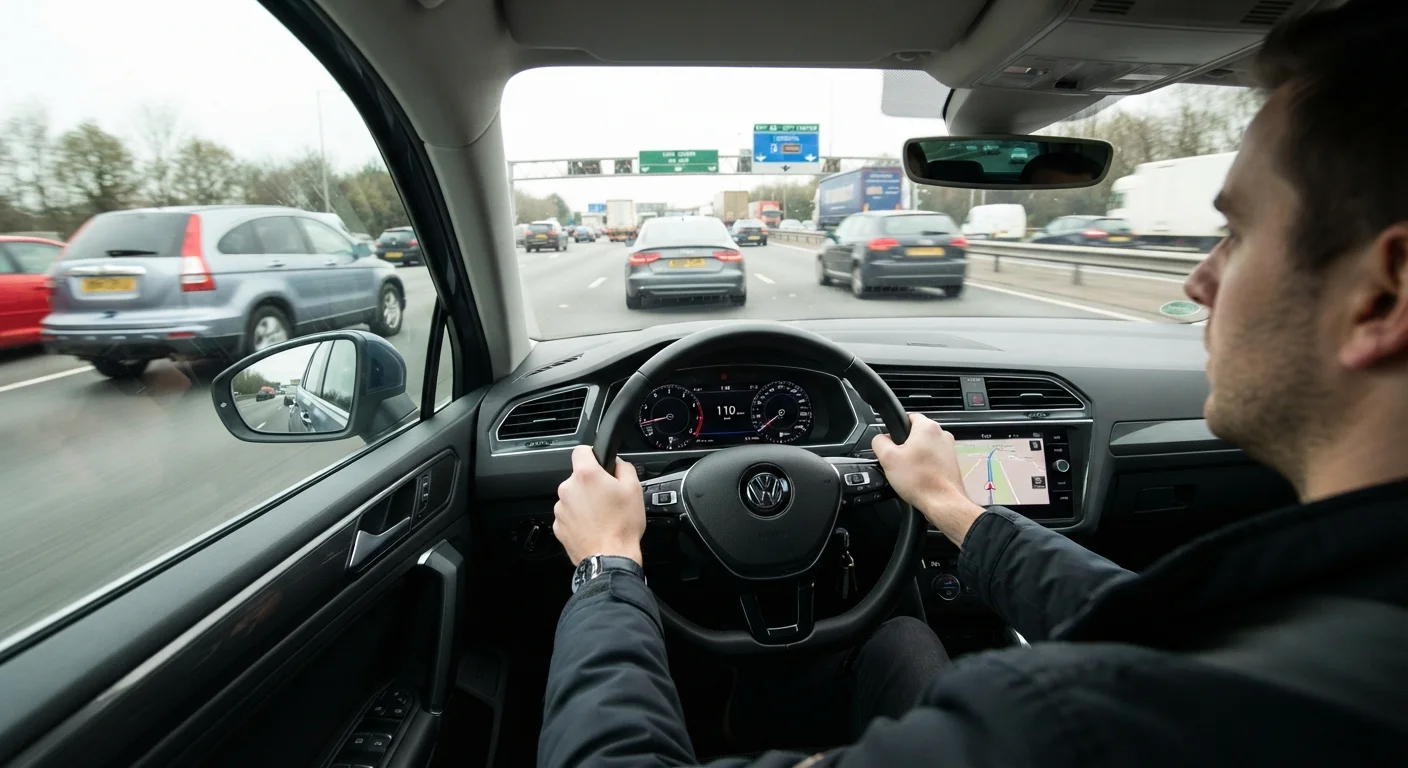
Most drivers assume their mirrors give them a complete picture of what's around the car. They don't. Even with mirrors correctly adjusted, there are areas on both sides of the vehicle — and directly behind it — that simply don't appear in any mirror at all.
The classic side blind spots sit at your rear corners, roughly where your rear bumper meets the lane beside you. A car sitting in that zone can be completely invisible until it's right next to you. The rear of the car has its own dead zone too, which is why reversing cameras became standard equipment — not as a luxury, but because the area directly behind many vehicles is genuinely impossible to see from the driver's seat.
There's also a less-discussed blind spot near the front of the car: the A-pillars (the diagonal frames on either side of your windshield) can obscure pedestrians at crosswalks and cyclists in tight urban intersections. It's a small zone but an important one at low speeds.
Blind Spots Aren't Just a Highway Problem
Urban driving introduces blind spots at intersections, crosswalks, and parking lots — often at lower speeds where cyclists and pedestrians appear. The A-pillar blind spot near the windshield frame is most relevant in these slower, tighter situations. Treat every environment as one where your mirrors have limits.
Why Blind Spots Are Larger Than You Expect
Most drivers underestimate how much space their blind spots actually cover. In a standard sedan, the rear-corner blind zone can easily swallow a motorcycle or a compact car. In an SUV, pickup truck, or minivan, that zone grows considerably — sometimes enough to hide a bicycle rider completely from both the side mirror and a casual shoulder glance.
Vehicle design is a big factor. Thicker roof pillars, higher beltlines (the height of the lower window edge), and smaller rear windows all reduce what you can naturally see. Modern vehicles designed to meet safety standards have traded some visibility for structural strength, which means the burden of actively managing blind spots falls more on the driver than it used to.
~840,000
Blind spot-related crashes annually in the U.S.
The National Highway Traffic Safety Administration has attributed hundreds of thousands of lane-change crashes each year to blind spot failures.
Up to 50 ft
Rear blind zone length on some large trucks
Federal Motor Carrier Safety Administration guidance notes that the rear blind zone directly behind large commercial trucks can extend up to 30 feet or more.
This is part of why defensive driving emphasizes spatial awareness — knowing not just what you can see, but where your visibility ends.
Habits That Actually Help
The most reliable tool for managing blind spots costs nothing: the shoulder check. Before changing lanes, glancing quickly over your shoulder fills in what mirrors miss. It takes less than a second and remains the most direct confirmation that a lane is clear.
Mirror adjustment matters too, and most drivers set theirs too far inward. A properly positioned side mirror should show just a sliver of your own car's rear quarter — enough for reference — with the majority of the view aimed outward. This expands your mirror coverage significantly.
Set Your Mirrors Before You Drive
Adjust your mirrors every time you get into an unfamiliar vehicle or after someone else has driven your car. Side mirrors that are even slightly too far inward dramatically increase your blind zone. Take 15 seconds to set them correctly — it makes a real difference on the road.
If your vehicle has blind spot monitoring (a system that alerts you when a vehicle enters your blind zone), treat it as a backup, not a substitute. These systems work well in most conditions but can lag on fast-approaching vehicles or fail to detect cyclists and narrow objects. Pair the technology with active habits rather than relying on it alone.
Being aware of your own blind spots also changes how you drive relative to others. If you're sitting in another driver's blind zone on the highway — lingering alongside their rear quarter — you're invisible to them. Moving forward or falling back clears that risk. For more on how following distance affects your safety margin overall, see what determines stopping distance. And if you find yourself driving alongside large trucks frequently, the same logic applies in reverse — trucks have enormous blind zones on all four sides, and lingering too close behind any vehicle puts you out of sight and out of safety margin.