

Key Takeaways
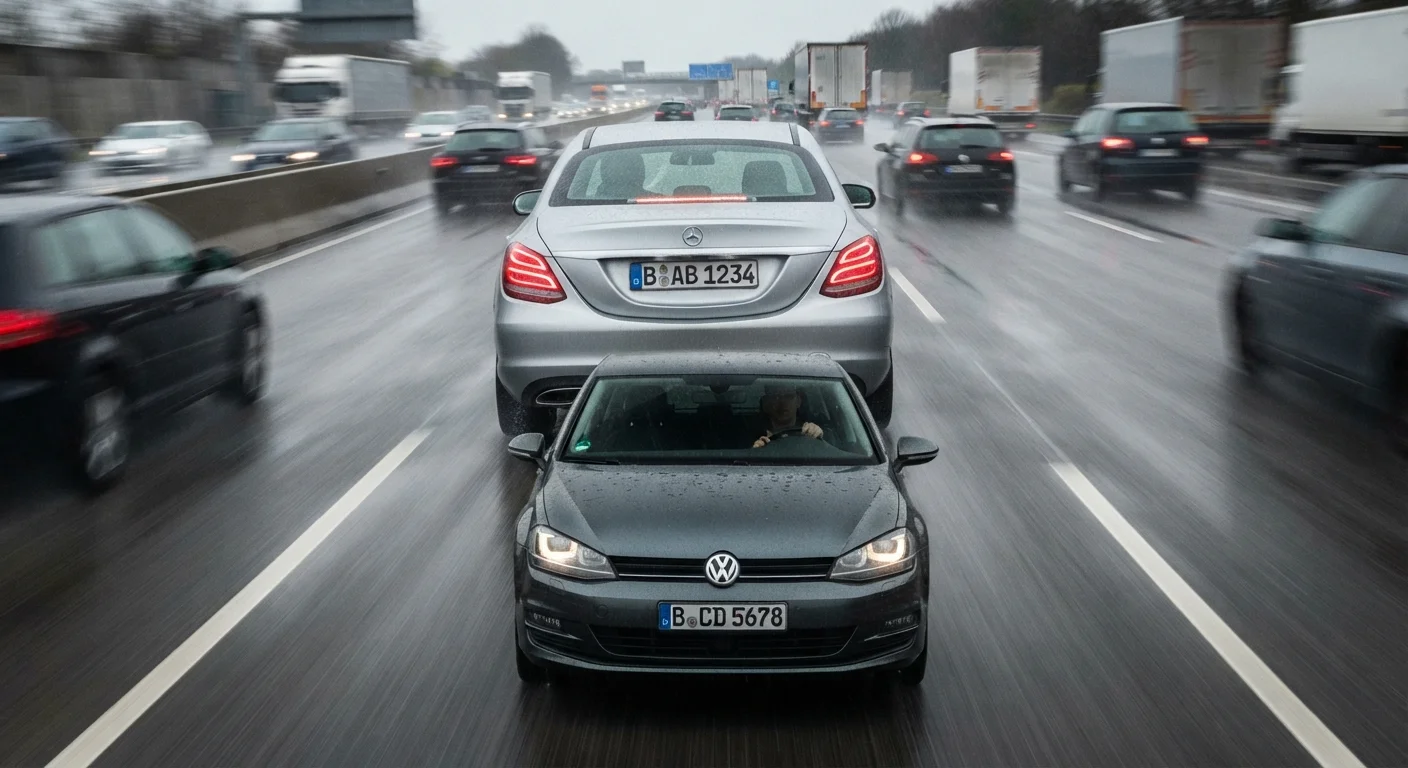
Tailgating
Tailgating means following the vehicle ahead of you more closely than is safe given your speed and road conditions. It leaves you with very little time or distance to stop if that driver brakes suddenly. Safety guidelines typically recommend maintaining at least a two-second gap behind the car in front — and more in wet or low-visibility conditions.
Stopping distance is not linear — at 60 mph, your total stopping distance (reaction time plus braking) can exceed 240 feet, a figure most tailgating drivers dramatically underestimate.
Why Drivers Follow Too Closely
Tailgating rarely starts as a conscious decision. Most drivers who do it are reacting to something — a deadline, slow-moving traffic ahead, or sheer frustration at another driver's pace. Research on driver behaviour consistently identifies a few recurring triggers:
- Time pressure. Running late compresses a driver's perception of acceptable risk. The gap between cars feels like wasted space rather than a safety buffer.
- Frustration with slower drivers. When someone is driving well below the flow of traffic, following drivers sometimes close the gap as a kind of pressure signal — even though it rarely speeds anything up.
- Habit and normalization. On busy roads, tight gaps become the norm. Drivers match the surrounding traffic and stop thinking critically about distance.
- Overconfidence in braking. Many drivers overestimate their vehicle's ability to stop quickly, especially at highway speeds.
None of these explanations make tailgating acceptable — but understanding them helps drivers recognize the moment they're about to do it themselves. That self-awareness is the first line of defense.
Catch Yourself Before You Close In
Next time you feel the urge to creep closer to the car ahead, pause and ask what's actually driving that impulse — are you late, frustrated, or just in autopilot mode? Recognizing the trigger in the moment is often enough to reset your following distance deliberately.
The Real Stopping Distance Problem
Here's the part most drivers get wrong: stopping a car is a two-stage process. First there's reaction time — the moment between seeing a hazard and actually pressing the brake. Then there's braking distance — how far the car travels while the brakes are doing their job. Both add up fast.
At 60 mph, average reaction time alone can cover around 66 feet before the brake pedal even moves. After that, braking adds well over 100 more feet depending on road surface, tire condition, and vehicle weight. The total can be close to 200 feet or beyond — longer than many drivers think.
A tailgating driver operating with a one-car-length gap at that speed has almost no margin at all. If the car ahead brakes suddenly for a stopped vehicle, a pedestrian, or debris in the road, a rear-end collision is nearly unavoidable.
Rain, worn tires, or a loaded vehicle extend these distances further. For a broader look at how situational awareness fits into safe driving, see our guide to defensive driving.
~29%
Of all US crashes that are rear-end collisions
According to the National Highway Traffic Safety Administration (NHTSA), rear-end crashes are consistently among the most frequent crash types on American roads.
240+ ft
Estimated total stopping distance at 60 mph
This figure combines average human reaction time with typical braking distance on dry pavement — and increases significantly in wet conditions or with worn tires.
2 seconds
Minimum recommended following gap
Safety organizations including the National Safety Council recommend at least a two-second following gap under normal conditions, with more buffer added for adverse weather.
Consequences Beyond the Crash
Rear-end collisions are the most common crash type on US roads, and tailgating is a significant contributing factor. The consequences go beyond vehicle damage:
- Injury risk. Even at moderate speeds, rear-end impacts can cause whiplash and other serious injuries to occupants in both vehicles.
- Legal and financial liability. If you rear-end someone, you are almost always considered at fault. That means potential traffic citations, insurance claims, and — in serious cases — civil liability.
- Chain-reaction crashes. On highways and busy roads, one rear-end collision can trigger a multi-vehicle pileup. Speed and following distance determine how far the chain reaction travels.
If you're regularly driving at highway speeds, following distance matters even more than it does in town. For new or less confident highway drivers, our guide to motorway driving covers lane discipline and spacing in more detail.
Tailgating and Road Rage Are Linked
Following too closely is one of the most common triggers for road rage incidents. The driver being tailgated may brake-check, slow down aggressively, or respond with hostility. If you're the one being tailgated, the safest response is to create space, not to retaliate. Escalation rarely ends well for anyone involved.
How to Break the Habit
Keeping a safe following distance is a skill that takes deliberate practice, especially if you're used to heavy traffic. A few strategies make it easier to maintain without feeling like you're constantly being cut off:
- Use the two-second rule actively. Pick a bridge, sign, or road marking. When the car ahead passes it, count — one-one-thousand, two-one-thousand. If you reach the same point before you finish counting, you're too close.
- Let people merge into your gap. A larger gap in front of you will invite other drivers to fill it. Accept this. It doesn't add meaningful time to your journey and it removes the temptation to close up again.
- Watch traffic further ahead. If you're focused on the car directly in front, you're reacting late. Looking two or three cars ahead gives you earlier warning of slowdowns. This is also one of the core habits in defensive driving.
- Adjust for conditions. Rain, glare, fatigue, and heavy loads all increase stopping distance. Double your following gap whenever conditions are less than ideal.
It also helps to check your mirrors regularly. Knowing whether someone is following you too closely changes how you manage your own braking. Our article on vehicle blind spots is worth reading alongside this one — awareness around you matters just as much as the gap in front.
This article is for general informational purposes only. Always follow the traffic laws applicable in your state or jurisdiction.