

Key Takeaways
Home Gutter System
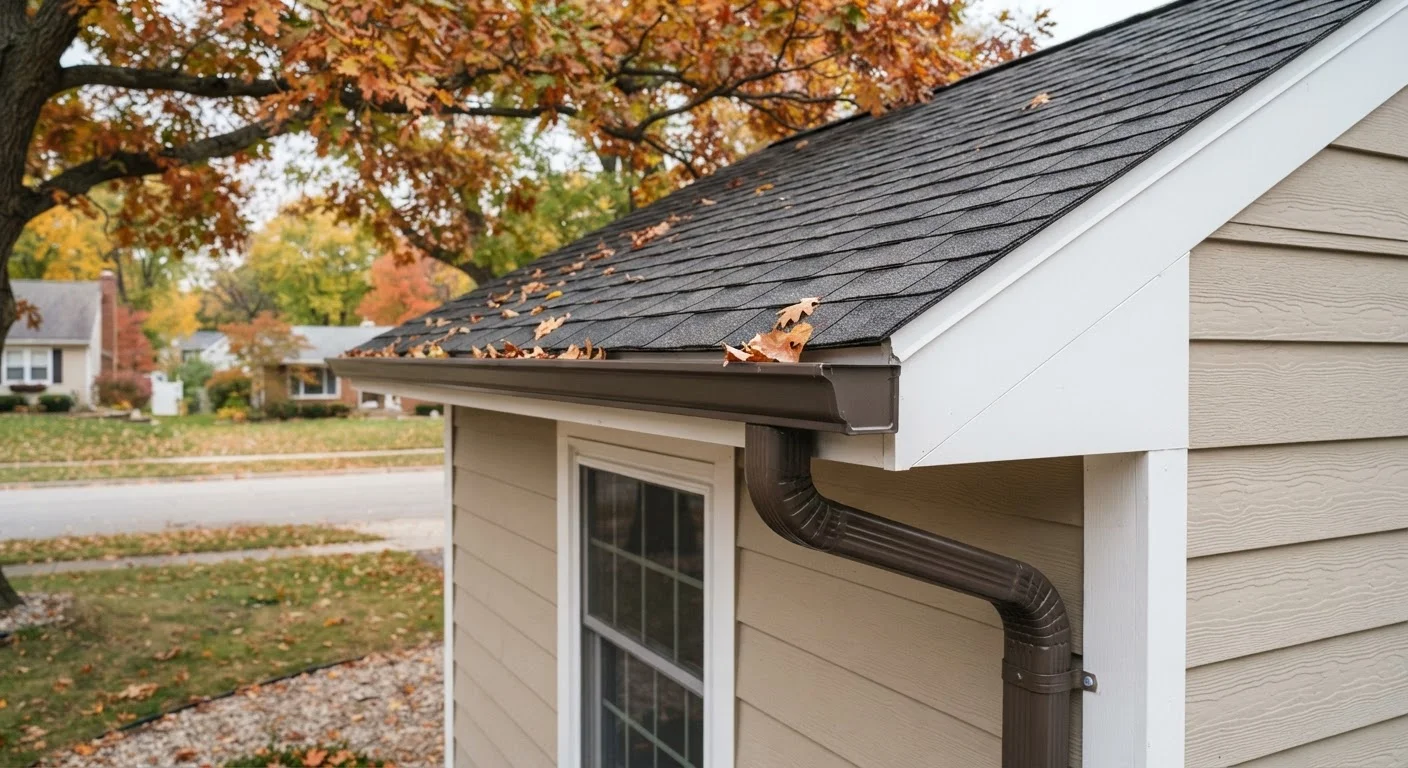
A gutter system is a network of channels and downspouts attached to a roof's edge that collects rainwater and directs it safely away from the home's foundation. Without it, water cascades off the roof in sheets, pooling against the structure and soaking into the ground directly beside your home. Gutters are the first line of defense against water damage affecting your foundation, siding, and landscaping.
Most residential gutters are made from aluminum, vinyl, or steel and are sized by cross-sectional area — typically 5-inch K-style or 6-inch half-round profiles — matched to the roof's drainage area and local rainfall intensity.
What Gutters Actually Do
Most homeowners think of gutters as a cosmetic trim element — something to match the house color. In reality, gutters perform a critical structural job: they intercept the enormous volume of water that runs off a roof during a rainstorm and channel it to a controlled discharge point away from the home.
Consider that a 1,500-square-foot roof sheds roughly 900 gallons of water for every inch of rainfall. Without gutters, that water falls directly onto the soil surrounding the foundation. Saturated soil expands and contracts, exerts pressure on foundation walls, and creates the conditions for basement seepage or, in severe cases, foundation movement.
Gutters also protect the fascia board — the horizontal board behind the gutter — and the soffit below it. When water sits or backs up due to a clog, it soaks into wood components and accelerates rot. That rot is invisible until it becomes structural. This is part of a larger picture covered in our seasonal roof maintenance guide, which explains how roof-edge components interact over time.
900 gal
Runoff per inch of rain on a 1,500 sq ft roof
A standard-sized home roof generates an enormous volume of water in even a moderate rainstorm, illustrating why controlled drainage matters.
4–6 ft
Minimum downspout extension from foundation
Building and waterproofing guidance consistently recommends this minimum distance to prevent foundation saturation from concentrated roof runoff.
2×/year
Recommended minimum gutter cleaning frequency
Most home maintenance guidelines suggest spring and fall cleanings, with additional cleanings needed for homes with heavy tree coverage.
The Real Consequences of Neglect
Gutter problems rarely announce themselves loudly. The damage accumulates over months or years, which is exactly why they're so commonly overlooked. Here's what's actually happening when gutters fail:
- Foundation damage: Consistently saturated soil next to a foundation can lead to hydrostatic pressure — water pressing against foundation walls. This is among the most expensive home repairs a homeowner can face.
- Fascia and soffit rot: Overflowing or leaking gutters drench the wood trim they're attached to, inviting rot and insect activity — including carpenter ants and termites.
- Siding and paint damage: Water spilling over the front of gutters runs down exterior walls, staining siding, bubbling paint, and creating entry points for moisture behind the cladding.
- Landscape erosion: Uncontrolled runoff carves channels in garden beds and lawns and can direct water toward patios or walkways.
These issues compound quietly. Our article on the real cost of skipping annual maintenance explores how small deferred tasks like this escalate into significant repair bills.
Check After Every Major Storm
Don't wait for scheduled cleanings if a heavy rain event or windstorm has passed through your area. A quick visual check from the ground — looking for sagging, overflow staining, or debris piles visible above the gutter edge — takes two minutes and can catch a problem before it deepens. A pair of binoculars makes this even easier.
Maintenance Basics Every Homeowner Should Know
Keeping gutters functional doesn't require specialized skills — it requires consistency. Here are the core tasks:
Cleaning
Remove leaves, seed pods, and debris from the gutter channel using a scoop or gloved hand. Flush remaining grit with a garden hose, working toward the downspout. Check that water exits freely at the bottom of the downspout. If flow is sluggish, the downspout may be clogged and can often be cleared with a plumber's snake or a directed hose stream.
Inspection
While cleaning, look for: sagging sections (indicating improper slope or failed hangers), gaps at seams, rust spots or holes, and gutters pulling away from the fascia. Small holes can be patched with gutter sealant; larger damage or sections pulling free typically warrant a professional assessment. Be cautious about improvisational repairs — our guide on DIY fixes that often make things worse outlines why well-meaning patches can sometimes delay proper fixes.
Downspout Positioning
A downspout that discharges water immediately against the foundation defeats the purpose of the entire system. Extensions and splash blocks should redirect flow at least 4–6 feet from the home on a slope that carries water further away, not toward it. Poor drainage around the home's perimeter can also affect garden beds — a problem explored in our article on garden watering mistakes.
Gutter Slope Matters
Gutters are not installed perfectly level — they're deliberately pitched toward the downspout at roughly 1/4 inch of drop per 10 feet of run. If a section appears level or tilts away from the downspout, water will pool inside, accelerating corrosion and providing a breeding environment for mosquitoes. A professional can re-pitch and rehang sections that have shifted over time.
When to Call a Professional
Routine gutter cleaning on a single-story home is a reasonable DIY task for a capable adult with a stable ladder and a helper. However, some situations call for a licensed contractor:
- Gutters that are visibly detaching from the roofline or fascia
- Evidence of water intrusion in the basement or crawlspace that coincides with rainfall
- Homes taller than one story, where ladder work carries significant fall risk
- Suspected fascia rot, which requires carpentry work before gutters can be properly reattached
Getting a professional assessment when in doubt is far less expensive than the repairs that follow ignored structural water damage. As a general principle, small home maintenance issues are almost always cheaper to address early — a theme this editorial team returns to often.
This article is for general informational and educational purposes only. Costs, timelines, and appropriate repairs vary by home and location. Always verify local building codes and consult a licensed contractor for structural or safety-related concerns.