

Key Takeaways
Why Good Intentions Lead to Bigger Bills
The impulse to fix something yourself is sensible: it saves money, builds confidence, and gives you direct control over your home. But there's a meaningful difference between repairs that reward a capable DIYer and those that quietly make the problem worse. Understanding that line isn't about discouraging initiative — it's about protecting both your home and your wallet.
For a broader look at which projects genuinely pay off and which carry hidden risk, see our guide to projects worth tackling yourself versus those better left to trades. The mistakes below are the ones that show up most often when that line gets crossed.
Patching over a leak instead of finding its source.
Why it happens: When water appears on a ceiling or wall, the visible stain looks like the problem. Homeowners apply sealant or paint, not realizing the leak originates elsewhere and is still active inside the wall or roof assembly.
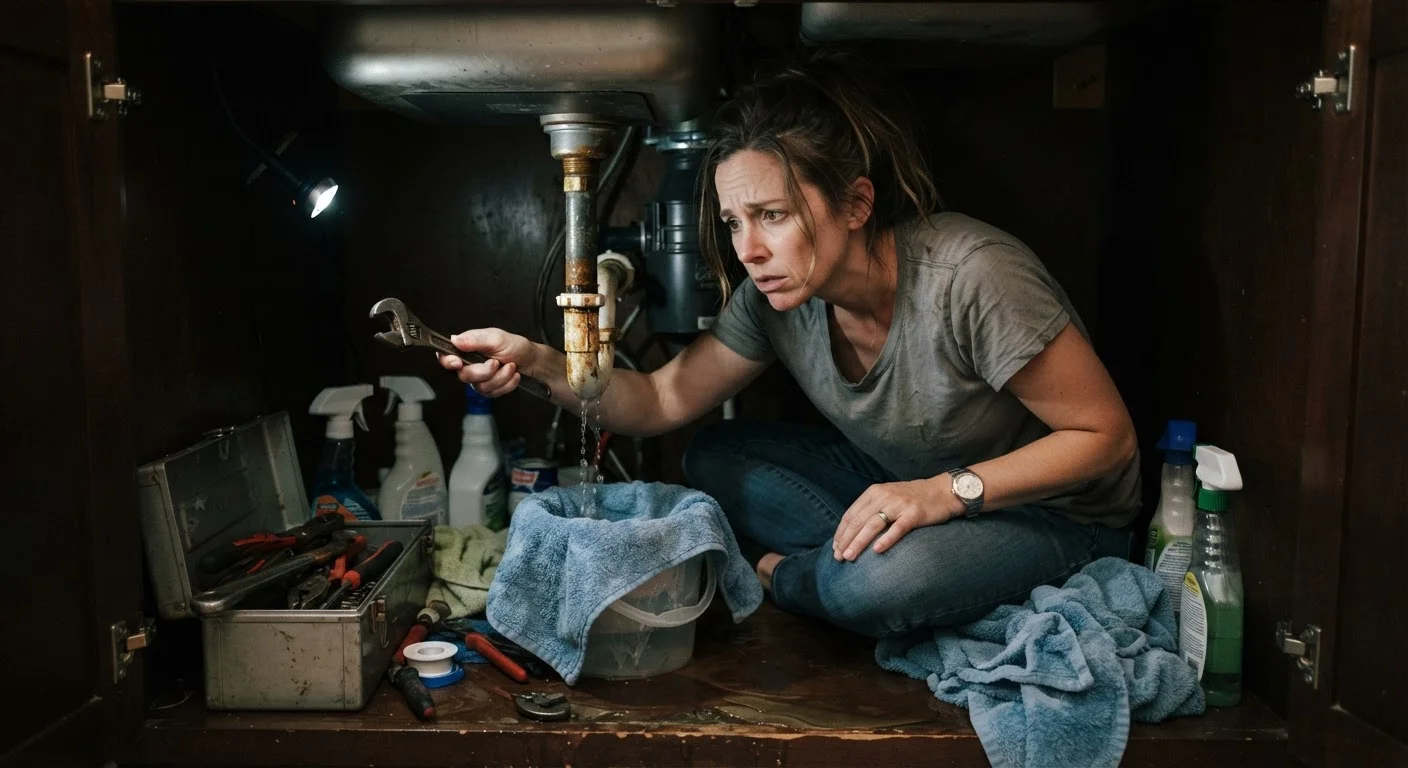
Over-tightening plumbing fittings until they crack or strip.
Why it happens: "Tighter is safer" feels logical when you're trying to stop a leak. But plastic fittings, ceramic valve seats, and even metal compression fittings have a point at which excess torque causes fractures or permanently damaged threads.
Resetting a tripped circuit breaker repeatedly without investigating why it tripped.
Why it happens: A tripped breaker is inconvenient, and flipping it back on seems like the obvious fix. Most homeowners don't realize that a breaker trips as a safety response to overload or a fault — resetting it without understanding the cause can allow dangerous heat buildup or an arc fault to continue.
Using the wrong caulk or sealant for the location.
Why it happens: Caulk is caulk — that's a common assumption. In reality, interior paintable caulk, kitchen-and-bath silicone, roofing sealant, and exterior elastomeric products have very different adhesion, flexibility, and moisture-resistance properties.
Clearing a gutter blockage without inspecting for underlying damage.
Why it happens: Removing debris feels like a complete fix. But gutters that overflow repeatedly often have underlying issues: improper pitch, separated joints, or damaged fascia that caused or worsened the blockage.
Making structural modifications — removing walls, cutting joists — without confirming load-bearing status.
Why it happens: Open floor plans are appealing, and interior walls can look non-structural. Without reading architectural drawings or consulting a professional, it's genuinely difficult to tell which walls carry the weight of the structure above.
When to Stop and Call a Professional
A useful rule of thumb: if a repair involves your home's electrical panel, gas supply, load-bearing structure, or the main plumbing supply line, stop and call a licensed contractor. These aren't areas where learning on the job is a reasonable option — errors can cause fires, gas leaks, structural failure, or flooding that dwarfs the original problem in cost and danger.
Never DIY Electrical Panel or Gas Work
Work inside an electrical panel or on a gas supply line is regulated in virtually every U.S. jurisdiction and must be performed by a licensed professional. These aren't areas where reading a tutorial is sufficient preparation. Errors can cause fires, explosions, or carbon monoxide hazards — outcomes that endanger your family and neighbors. Contact a licensed electrician or plumber for anything beyond replacing an outlet or a fixture on an already-safe, de-energized circuit.
Permits matter here too. Many of the repairs that go wrong do so partly because they were done without required local approval. Learn which projects typically need a permit before you start, not after. Skipping this step can affect your homeowner's insurance coverage and complicate a future sale.
If you're weighing the financial side, our comparison of DIY versus contractor costs can help you make a more informed decision before picking up a tool.
Unpermitted Work Can Affect Your Insurance
If an unpermitted repair causes damage — a fire from faulty wiring, a flood from improper plumbing — your homeowner's insurance policy may deny the claim on the grounds that the work was not code-compliant. Before starting any significant project, check with your local building department about permit requirements, and consult your insurer if you're unsure how it affects your coverage.