

Key Takeaways
The Case for Knowing Your Limits
There's genuine satisfaction in fixing something yourself — and real savings, too. But not every home improvement project rewards a confident DIYer equally. Some carry legal obligations (permits, licensed trades), others involve safety hazards that multiply quickly when things go wrong, and a few look simple on a tutorial video but demand experience that only comes from doing them repeatedly.
The list below separates common home projects into two clear camps: those that reward a careful, prepared homeowner, and those where calling a licensed professional is the smarter — and sometimes legally required — move. For a broader look at what happens when well-intentioned repairs backfire, see our guide on DIY fixes that often make things worse.
Interior painting — DIY-friendly
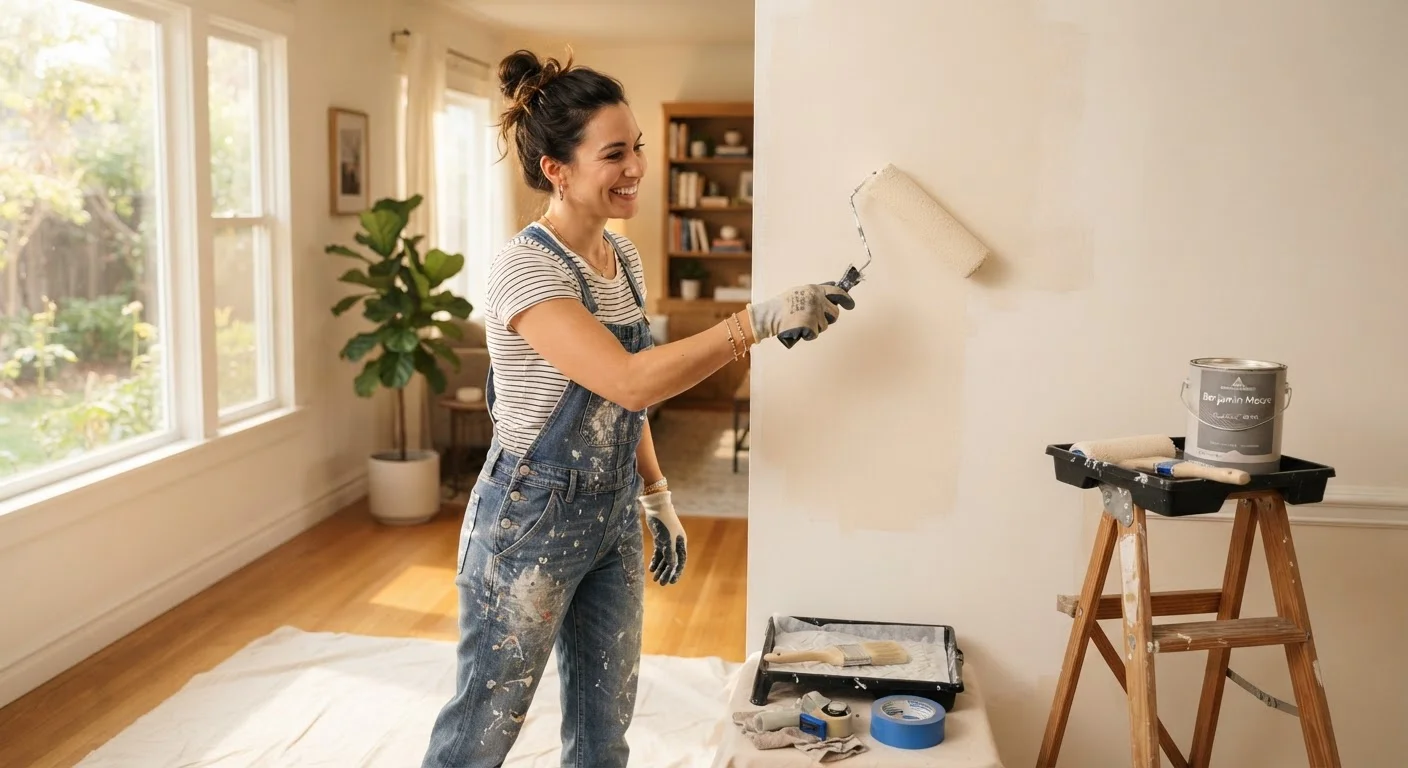
Painting interior walls is one of the most accessible home improvement tasks. The materials are affordable, the learning curve is manageable, and mistakes are correctable with another coat. Proper preparation — cleaning walls, taping trim, priming bare surfaces — accounts for most of the result quality.
Where homeowners stumble: rushing prep, skipping primer on patched spots, or choosing the wrong sheen for a room's light conditions. Take time with prep, use quality brushes and rollers, and work in good light. The payoff in both satisfaction and home appearance is high.
Good prep work — not expensive paint — is what separates a professional-looking result from a streaky one.
Drywall patching — DIY-friendly with caveats
Small holes from door handles, picture hooks, or minor impact damage are textbook DIY territory. A patching compound, mesh tape, a putty knife, and light sanding will handle most repairs under six inches in diameter. Our step-by-step drywall patching guide walks through the process clearly.
Larger structural openings — especially those near electrical wiring or that span studs — warrant more caution. If you're unsure what's behind the wall, probe carefully before cutting.
Most holes under six inches are manageable DIY fixes with the right compound and patience.
Caulking and weatherstripping — DIY-friendly
Replacing old caulk around tubs, windows, and door frames, or swapping out worn weatherstripping, requires only basic tools and a few hours. These are also high-value tasks: failed seals let moisture in, raise energy bills, and accelerate rot. Cutting the old caulk cleanly, cleaning the surface thoroughly, and applying an even bead with a caulking gun are skills anyone can develop quickly.
Choose the right caulk for the application — silicone for wet areas, paintable latex for trim — and allow full cure time before exposing the seal to water.
Replacing failed caulk is one of the highest-return, lowest-risk tasks any homeowner can handle.
Electrical panel work — leave it to a licensed electrician
Swapping a light switch or replacing an outlet is within reach for careful DIYers who know how to shut off the correct breaker and verify the circuit is dead with a non-contact voltage tester. But work involving the electrical panel — adding circuits, replacing breakers, upgrading service — is a different matter entirely.
Panel work carries genuine electrocution risk even when the main breaker is off (the utility lines into the panel remain live). In most jurisdictions, this work requires a licensed electrician and an inspection. Attempting it without proper credentials can void homeowner's insurance and create serious liability if something goes wrong later.
Electrical panel work remains live at the utility connection point — licensed help is a safety requirement, not just a suggestion.
Gas line repairs or extensions — always hire a licensed professional
Natural gas and propane systems are not a DIY domain in any practical sense. A leak that goes undetected can cause fires, explosions, or carbon monoxide buildup. In virtually all U.S. jurisdictions, work on gas supply lines requires a licensed plumber or gas fitter, a permit, and a pressure test inspection before the system can be used.
If you smell gas in your home, do not attempt to find or fix the source yourself. Leave the building immediately, avoid operating switches or devices, and call your gas utility's emergency line from outside. Plumbing problems can escalate quickly — gas problems even faster.
Gas line work is regulated, permitted, and inspected for a reason — no DIY attempt is worth the risk.
Structural modifications — hire a structural engineer and licensed contractor
Removing or altering walls — especially load-bearing ones — and modifying roof lines or foundation elements are among the most consequential changes you can make to a home. A load-bearing wall carries the weight of floors and roof above it; removing it without proper support can cause catastrophic failure.
Even identifying whether a wall is load-bearing reliably requires professional assessment. Any structural change will typically require permits, engineered drawings, and inspections. For first-time renovators, our planning and budgeting handbook covers how to sequence and scope projects that involve professional trades.
Structural changes affect the entire home's integrity — always consult a qualified professional before moving a single wall.
Making the Right Call Every Time
A useful rule of thumb: if a mistake could injure someone, cause structural damage, or void your homeowner's insurance, bring in a licensed trade. Projects that sit squarely in finish work — painting, patching, caulking, basic landscaping — are usually fair game with the right preparation.
A practical self-assessment before you start
Before committing to a DIY project, ask yourself three questions: Do I have (or can I safely borrow) the right tools? Have I watched and read enough to understand what can go wrong — not just how it goes right? And do I have time to do this properly, not just quickly? Answering 'no' to any of these is a reasonable reason to call a professional, not a personal failing.
Before starting any significant project, check whether a permit is required. Skipping permits can affect your insurance and resale value, so it pays to understand the rules in your municipality before you pick up a tool. And if you're weighing the true cost of doing it yourself versus hiring out, our breakdown of DIY vs. contractor costs for common home projects can help you decide with clear eyes.
This article is for general informational purposes only. Always verify local building codes, permit requirements, and safety regulations with your municipality or a licensed professional before beginning any home improvement project.