

Key Takeaways
Why Roof Maintenance Matters Year-Round
Your roof is your home's first line of defense against the elements, yet most homeowners only think about it when something goes wrong. A proactive, season-by-season approach to roof care can significantly extend its lifespan, help you avoid emergency repairs, and keep interior spaces protected from moisture damage.
Roofing systems are composed of multiple interdependent parts — shingles or other surface material, underlayment, decking, flashing, gutters, and ventilation. Each element degrades at a different rate and responds differently to seasonal conditions. Understanding the whole system is what makes targeted maintenance possible.
This guide pairs well with our quarterly home maintenance checklist, which covers the broader scope of seasonal upkeep tasks every homeowner should schedule. For roof-specific concerns, the sections below break down what to look for and what to do — season by season.
40%
Of home insurance claims involve water and freezing damage
Water-related damage, much of it traceable to roof and gutter failures, is among the most common categories of homeowner insurance claims according to industry loss data.
20–30 years
Typical lifespan of asphalt shingle roofs
Lifespan depends heavily on climate, ventilation quality, and maintenance history; neglected roofs often require replacement significantly sooner.
1 in 20
Homeowners file a roof-related insurance claim each year
Roof damage is one of the top drivers of homeowner claims, highlighting the financial stakes of deferred maintenance.
Spring: Post-Winter Assessment
Spring is the most important season for roof inspection. Winter's freeze-thaw cycles, ice, and snow load can cause damage that isn't immediately obvious but will worsen through warmer months if left unaddressed.
What to Check
- Shingles: Look for cracked, curled, missing, or lifting shingles from the ground using binoculars. Granule loss — visible as bare, discolored patches — is a sign of aging asphalt shingles.
- Gutters: Clear winter debris and look for granules accumulated in gutter troughs; heavy granule shedding indicates shingle wear. Check that gutters are firmly attached and pitched correctly toward downspouts.
- Flashing: Metal flashing around chimneys, skylights, and roof-to-wall joints is prone to pulling away or cracking. Gaps here are a leading cause of interior leaks.
- Attic inspection: On a bright day, check your attic interior for daylight visible through the roof deck, water stains on rafters, or signs of mold — all indicators of existing leaks.
Use binoculars from the ground rather than climbing onto the roof for your visual inspection — you'll cover more of the surface safely and still catch the most telling signs of wear.
Most falls from height occur on residential roofs during DIY inspection; ground-level assessment with optical aid is the safest and often equally effective approach for identifying shingle condition and gutter issues.
Check your attic after the first heavy rain of the season, not just in dry weather — active leaks are far easier to trace when water is moving through the structure.
Many small penetrations only allow water entry under wind-driven or high-volume rain conditions, making dry-weather attic checks easy to pass falsely.
Also check your downspouts are directing water well away from the foundation. Pooling water near the house can eventually affect structural integrity.
Summer: Preparation and Heat Protection
Summer heat and UV exposure degrade roofing materials over time, particularly asphalt shingles. High temperatures can cause shingles to become brittle and speed up the breakdown of sealant strips that bond shingle layers together.
Summer Maintenance Priorities
- Ventilation check: Adequate attic ventilation prevents heat buildup that accelerates shingle deterioration from underneath. Ensure ridge vents and soffit vents are clear of insulation or debris.
- Tree branches: Trim overhanging limbs that could scrape shingles in wind or deposit leaves into gutters. A 10-foot clearance is a commonly cited general guideline, though conditions vary.
- Moss and algae: Humid climates encourage biological growth on roofing surfaces. Dark streaks are typically algae; green or fuzzy patches are moss. Both hold moisture against the roof surface and accelerate material breakdown.
Summer is also a good time to schedule professional inspections, as roofers have greater availability and safer working conditions than during icy winter months.
Fall: Getting Ready for Cold Weather
Fall is your last practical window for repairs before freezing temperatures make roofwork hazardous and limit the effectiveness of sealants and adhesives. Our guide to maintenance tasks worth completing before winter outlines a broader pre-cold-weather checklist, but the roof deserves specific attention.
Time Your Gutter Cleaning Carefully
Cleaning gutters too early in fall means leaves will refill them before winter. Wait until the majority of deciduous trees in your yard have dropped their leaves — typically late October to November in most U.S. regions — for a single thorough clean that holds through the cold months. A second check after the first freeze is worthwhile if you have heavy tree coverage.
Fall Checklist
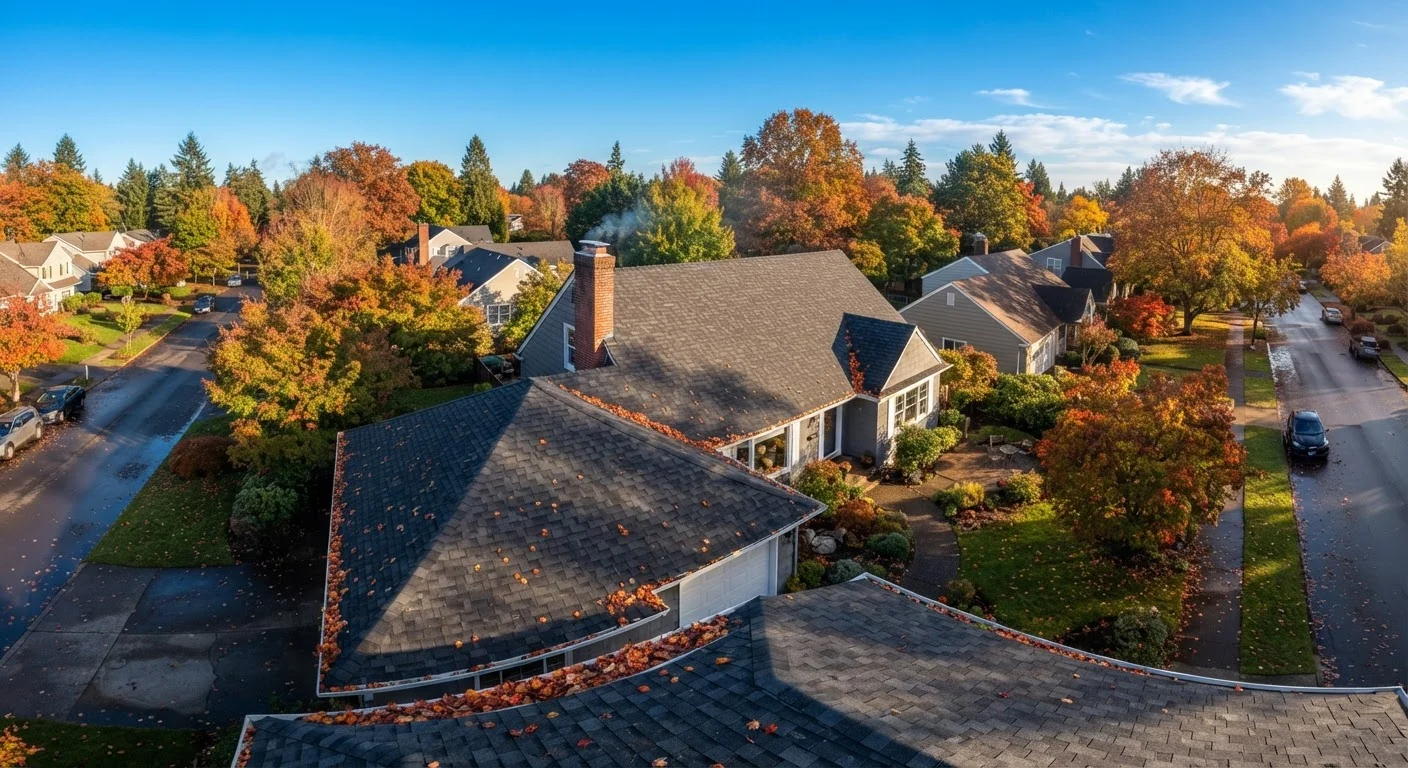
- Clear gutters thoroughly: Clogged gutters cause water to back up under shingles or freeze into ice dams along the eaves. Clean them after the last significant leaf fall in your area.
- Inspect and reseal flashing: Apply fresh roofing sealant to any gaps or lifting edges around flashing while temperatures are still above 40°F — most sealants require ambient warmth to bond properly.
- Check attic insulation: Proper insulation reduces heat loss through the roof deck, which in turn reduces ice dam formation. Uneven snow melt on your roof in winter is often a sign of insulation gaps.
- Secure loose shingles: Any shingles that are lifting or partially detached should be addressed before storm season; they can become projectiles or entry points for driving rain.
Winter: Monitoring and Safe Intervention
Active DIY roof work in winter is generally not recommended — surfaces are slippery, and cold conditions reduce both safety and repair quality. Your role during winter is primarily to monitor from the ground and the attic interior.
What to Watch For
- Ice dams: A ridge of ice forming at the roof's edge, often with icicles, indicates warm air escaping through the roof and melting snow that then refreezes at the colder eaves. Ice dams can force water under shingles and into the structure.
- Sagging roofline: Visible sagging, especially after heavy snow load, can indicate structural stress and warrants urgent professional evaluation.
- Interior leaks: Check attic and upper ceilings after significant snow or rain events. New stains or dripping are actionable signals.
Safe snow removal: A roof rake — a long-handled tool used from the ground — can remove snow from eave overhangs to reduce ice dam risk. Never climb onto a snow- or ice-covered roof.
Ice Dams Can Cause Serious Structural Damage
Ice dams are not simply a cosmetic issue — water backing up behind them can penetrate under shingles, saturate roof decking and insulation, and cause interior ceiling damage. If you notice ice dams forming repeatedly each winter, the underlying cause (typically inadequate attic insulation or ventilation) should be professionally assessed and corrected, not just managed season to season.
Early Warning Signs You Should Never Ignore
Across all seasons, certain signs indicate that a problem has moved beyond routine maintenance and requires prompt action. These include:
- Water stains on interior ceilings or walls — even small ones can signal active leaks
- Shingles that are visibly buckling, blistering, or absent across multiple areas
- Daylight visible from inside the attic
- Persistent moss or algae that returns after cleaning
- Flashing that is visibly bent, missing, or heavily rusted
- Granules accumulating in gutters after every rain event
If you notice any of these, document them with photos and notes. Keeping a log of roof observations over time helps you demonstrate the timeline of issues to your insurer or contractor. Our article on maintaining a property log explains how to build and use this kind of record effectively.
Interior wall cracking near the roofline may also indicate moisture intrusion; see what wall cracks are actually telling you for more guidance on reading those signs.
When to Call a Licensed Roofing Professional
Homeowner visual checks from the ground and attic interior are valuable — but they are not a substitute for professional inspection. A licensed roofer can safely access the surface, identify subtle failures invisible from ground level, and assess structural components most homeowners cannot safely reach.
Schedule a professional inspection if:
- Your roof is 15 or more years old
- You've experienced a significant weather event (hail, severe wind, ice damming)
- You suspect a leak but cannot locate the source
- You are buying or selling a home
- It has been more than three to five years since a qualified roofer last inspected the roof
When hiring a roofer, verify licensing and insurance for your state, ask for a written assessment with photos, and get multiple quotes for any proposed repairs. Be cautious of door-to-door solicitors appearing after storms — while many are legitimate, post-storm periods also attract unreliable contractors.
Note that roofing work of significant scope often requires a permit under local building codes. A reputable contractor will advise you on permit requirements; always verify with your local building department rather than assuming a permit isn't needed.
Seasonal Home Maintenance Checklist
A quarterly checklist covering the key inspections and upkeep tasks every homeowner should schedule through the year, including roof-related items in broader context.
Home Maintenance Property Log
Guidance on building a documented maintenance history for your home, which supports insurance claims, professional assessments, and resale disclosures.
Pre-Winter Home Maintenance Guide
A focused list of checks and minor tasks to complete before temperatures drop, covering roofs, pipes, and heating systems.
This article provides general home maintenance information. Roof conditions vary significantly by climate, material type, and building age. Always consult a licensed roofing professional before undertaking repairs, and verify local code and permit requirements with your municipality.