

Key Takeaways
Why Pre-Winter Maintenance Pays Off
Cold weather doesn't just bring discomfort — it puts real stress on roofs, pipes, heating equipment, and the building envelope of your home. The good news is that most preventive tasks are straightforward and require little more than a few hours and basic tools. Catching small problems in fall, before temperatures plummet, is far less expensive than dealing with burst pipes, failed furnaces, or water-damaged ceilings mid-January.
This list focuses on the checks and minor tasks that carry the highest payoff for typical single-family homes. For a broader look at year-round upkeep, see our quarterly home maintenance guide. And if you have a roof that hasn't been inspected recently, the roof maintenance seasonal guide is worth reviewing alongside this list.
Clean and inspect gutters and downspouts
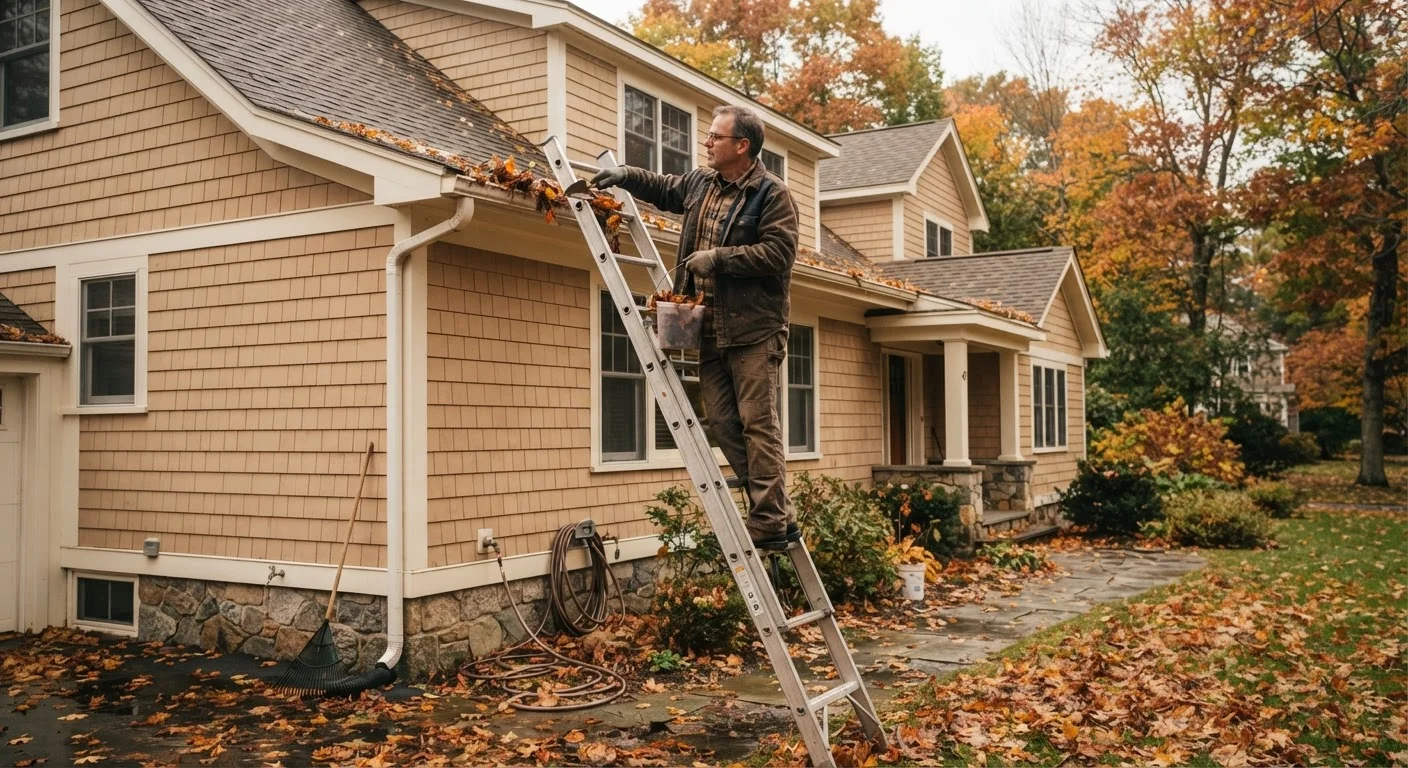
Clogged gutters are one of the leading causes of winter water damage. When debris blocks drainage, water backs up under shingles or freezes into ice dams that force moisture into your walls and ceilings. Clear all leaves, twigs, and buildup from gutters, then flush them with a hose to confirm water flows freely through downspouts and away from the foundation. While you're up there, look for sagging sections, loose hangers, or joints that have separated — these are easy fixes before they become expensive ones.
Ice dams caused by clogged gutters are among the most preventable sources of winter water damage.
Drain outdoor faucets and shut off irrigation
Water left in exterior hose bibs (outdoor spigots) and underground irrigation lines can freeze and crack the pipe or the valve body. Disconnect garden hoses, locate the interior shut-off valve for each outdoor faucet, close it, and then open the outdoor faucet briefly to release any remaining pressure and water. For in-ground irrigation systems, consult the system's manual or a licensed irrigation technician for proper winterization — compressed air blow-out procedures vary by system type and can damage components if done incorrectly.
Disconnecting hoses and shutting off outdoor water lines takes minutes but can prevent hundreds of dollars in burst-pipe repairs.
Test and service your heating system
Turn on your furnace or heat pump before cold weather arrives so you have time to address any issues. Replace the air filter if it hasn't been swapped in the past three months — a dirty filter restricts airflow, forces the system to work harder, and reduces heating efficiency. If you notice unusual sounds, a burning smell, or uneven heat distribution, schedule a service call with a licensed HVAC technician. Annual professional servicing of gas furnaces and heat pumps is generally recommended to maintain safe, efficient operation.
Testing your furnace weeks before you need it leaves time to schedule repairs without urgency or extra charges.
Inspect and seal gaps around doors and windows
Air leaks around window frames, door thresholds, and the sill plate (where your home's framing meets the foundation) are responsible for a surprising share of heat loss in older homes. Run your hand along these areas on a windy day — you'll feel drafts easily. Worn weatherstripping on exterior doors can be replaced inexpensively with materials available at hardware stores. Caulk small gaps around window trim and where utilities enter the wall. Avoid sealing combustion air openings near furnaces or water heaters, which require proper ventilation for safe operation.
Sealing drafts costs very little and delivers noticeable results on your heating bills throughout winter.
Test smoke and carbon monoxide detectors
Heating systems, fireplaces, and wood stoves all run more frequently in winter, making functional carbon monoxide (CO) detectors a genuine safety priority — not an optional task. Test every detector in the home using the built-in test button. Replace batteries in battery-operated units, and replace any detector that is more than seven to ten years old (check the manufacture date stamped on the back). CO is odorless and colorless; a working detector is your only reliable warning. Smoke detectors should be tested on the same schedule.
Carbon monoxide detectors are your home's only reliable defense against a silent, odorless winter hazard.
Insulate exposed pipes in unheated spaces
Pipes running through unheated garages, crawl spaces, or exterior walls are vulnerable to freezing when temperatures drop. Foam pipe insulation sleeves are inexpensive and easy to install — simply measure the pipe diameter, cut the sleeve to length, and wrap it around the pipe. Pay particular attention to pipes near exterior walls and in areas where temperatures can fall below freezing even briefly. If you're unsure whether your pipes are at risk, a licensed plumber can assess your home's layout and recommend appropriate protection.
Foam pipe insulation is one of the cheapest forms of winter protection available to homeowners.
Getting It All Done Before the Cold Arrives
None of these tasks require contractor-level expertise, but some — particularly anything involving your heating system's gas or electrical components — are best left to a licensed technician if you're not confident. When in doubt, a professional inspection is money well spent. For electrical, gas, or structural work, always verify whether permits or licensed trades are required in your area.
Work from the Top Down
A practical sequencing tip: start with roof and gutter checks while weather is mild, then work your way down to exterior faucets, doors, and finally indoor systems. This order helps ensure that exterior water management is sorted before you seal up the building envelope. Keep a simple checklist on your phone or a notepad so nothing gets skipped during a busy fall weekend.
Working through this list room by room can help ensure nothing gets overlooked. Our room-by-room seasonal inspection checklist pairs well with this guide if you want a more granular walkthrough. Don't forget your outdoor spaces either — the seasonal garden prep checklist covers what to do with plants, soil, and irrigation before frost arrives.