

Key Takeaways
Wall Crack Diagnosis
Wall crack diagnosis is the process of reading the size, shape, location, and pattern of cracks in interior or exterior walls to determine whether they signal routine settling, moisture movement, or a more serious structural problem. Most homes develop some cracks over time, and the majority are cosmetic. A small subset, however, indicates foundation movement or structural stress that requires professional evaluation.
In construction, cracks are broadly classified as "active" (still moving or widening) or "dormant" (stable). Active cracks generally warrant professional assessment regardless of size.
Why Walls Crack in the First Place
Every home moves — slightly, slowly, but constantly. Wood framing absorbs and releases moisture with the seasons, concrete foundations cure and shrink over years, and soil beneath the structure expands and contracts with rainfall and temperature. The result is that virtually every house develops wall cracks eventually. That fact alone is not alarming. What matters is understanding why a particular crack formed and whether it is stable or still moving.
The two primary drivers of ordinary wall cracking are settlement and moisture cycling. Uniform settlement — where the entire structure sinks gradually and evenly — rarely causes serious damage. Differential settlement, where one section of the foundation moves more than another, creates stress concentrations that produce more telling crack patterns. Moisture cycling causes drywall tape to bubble, plaster to craze, and paint to flake along predictable lines.
New Construction vs. Older Homes
Newly built homes commonly develop hairline cracks in the first one to three years as the structure undergoes initial drying and settlement — this is expected and generally not a concern. Older homes that have been stable for decades but suddenly develop new or widening cracks deserve more scrutiny, since the initial settling period has long passed.
Reading the Pattern: What Each Crack Type Signals
Shape and orientation are your first diagnostic clues.
- Hairline cracks (under 1/16 inch): Almost always cosmetic. Common in newly painted drywall or older plaster as it ages. No structural concern.
- Vertical cracks: Often result from a house settling evenly. If narrow and stable, they are generally minor. A wide vertical crack in a foundation wall may indicate concrete shrinkage or moderate settlement.
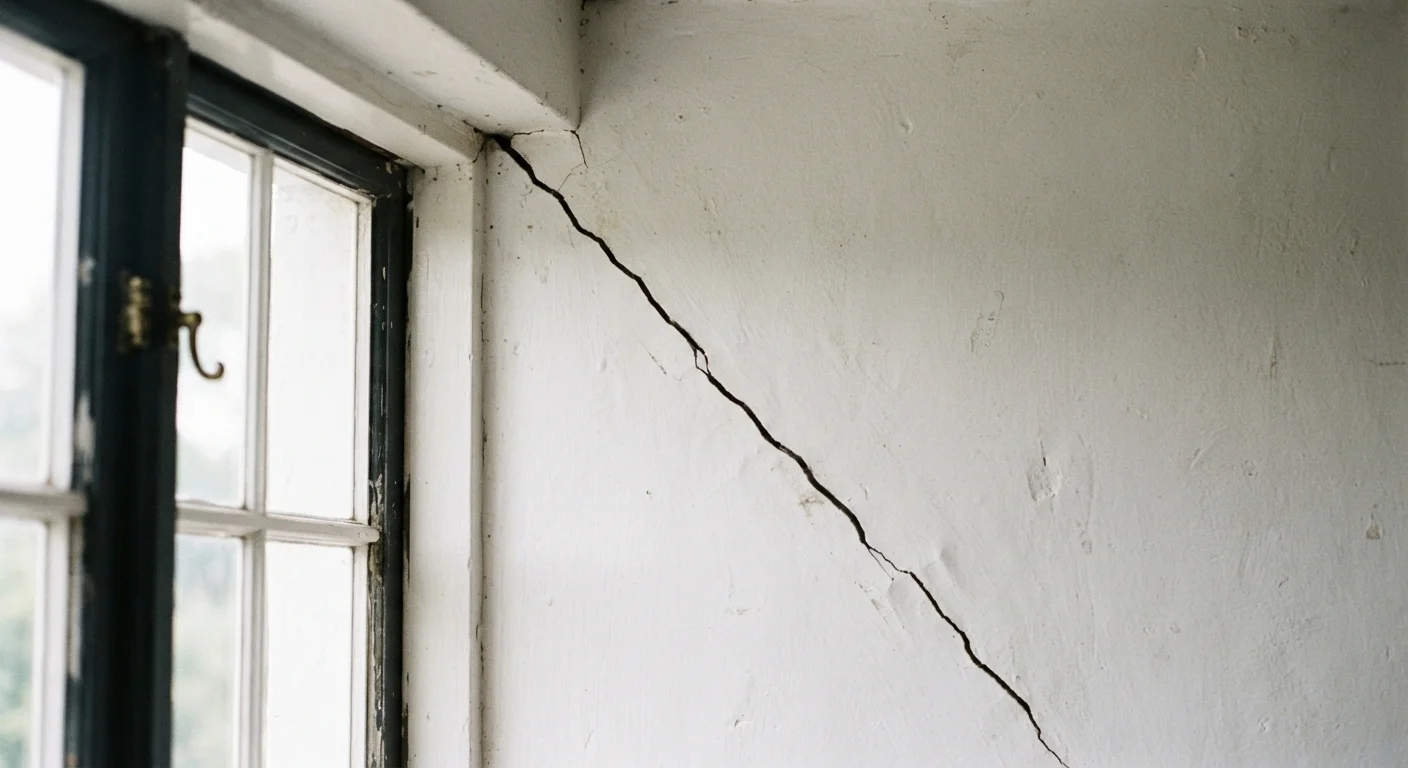
- Diagonal cracks from door or window corners: A classic sign of differential foundation settlement. The corner of an opening is a natural stress concentration point. One stable diagonal crack may be unremarkable; multiple or actively widening ones are a red flag.
- Stair-step cracks in brick or block: Follow mortar joints in a stair-step pattern and typically signal settlement or moisture intrusion in masonry construction. Often found in older brick homes and chimneys.
- Horizontal cracks: The most concerning category, especially in basement walls. They can indicate lateral earth pressure — soil pushing inward against the wall — which is a structural issue requiring professional attention.
~1/4 inch
Width threshold for professional evaluation
Building inspection professionals and structural engineers commonly cite cracks exceeding 1/4 inch wide as warranting a formal structural assessment.
90%+
Wall cracks that are cosmetic, not structural
Home inspection industry guidance consistently notes that the vast majority of wall cracks in residential homes are cosmetic, caused by settling or moisture — not structural failure.
4–6 weeks
Monitoring window to detect active cracks
Marking a crack's endpoints and checking after four to six weeks is a standard field method for determining whether a crack is dormant or still actively moving.
Location adds important context. Cracks near the top of walls at ceiling junctions often trace back to roof or attic framing movement rather than foundation issues — worth cross-referencing with periodic roof condition checks. Cracks that appear suddenly across multiple rooms at once warrant immediate professional evaluation.
The Four Factors That Determine Urgency
When assessing any crack, run through these four factors before deciding on a course of action:
- Width: Under 1/16 inch — cosmetic. Between 1/16 and 1/4 inch — monitor closely. Over 1/4 inch — seek professional evaluation promptly.
- Pattern: Isolated and matching a known benign cause (e.g., one diagonal from a window corner in a 30-year-old home) differs vastly from a web of cracks across multiple walls.
- Location: Interior drywall vs. exterior masonry vs. basement concrete block each carry different implications. Horizontal basement cracks are more urgent than a hairline in a bedroom ceiling.
- Activity: A dormant crack that has not changed in years is less concerning than one you noticed last month that is already visibly wider. Mark the ends with pencil and date it; recheck in four to six weeks.
If you are uncertain whether a crack is active, a simple approach is to bridge it with a small piece of tape or apply a thin bead of plaster over it. If the tape tears or the plaster re-cracks, the crack is still moving. See our seasonal inspection checklist for a structured way to track these changes over time.
When to Repair It Yourself — and When to Call a Professional
Cosmetic, dormant cracks in interior drywall or plaster are reasonable DIY territory. Filling them with a flexible spackle or joint compound, letting it cure, sanding smooth, and repainting is a manageable weekend task for most homeowners. Before you pick up a putty knife, however, confirm the crack is genuinely stable and cosmetic. Covering an active or structural crack with filler is a temporary fix that may hide a worsening problem. Our guide to DIY fixes that backfire covers exactly this scenario.
Document Cracks with Photos
Before filling any crack, photograph it next to a ruler or coin for scale and note the date. This creates a visual baseline that is invaluable if the crack returns, widens, or a professional needs to assess its history. A simple phone photo saved in a home maintenance folder can save significant time and cost later.
Call a licensed structural engineer — not a general contractor — if you observe any of the following:
- Cracks wider than 1/4 inch anywhere in the structure
- Horizontal cracks in basement or retaining walls
- Cracks accompanied by doors or windows that suddenly stick or no longer close squarely
- Visible gaps between walls and ceilings or floors
- Floors that feel springy or slope noticeably
- Multiple new cracks appearing at the same time
A structural engineer provides an independent, expert assessment — distinct from a foundation repair company that sells a specific remediation product. Permits and inspections may be required for any structural repair work; always check with your local building department before proceeding.
This article is for general informational purposes only and is not a substitute for professional structural, engineering, or construction advice. Always consult a licensed professional for evaluation of cracks you believe may be structural.