

Key Takeaways
What a Property Log Actually Is
A property log — sometimes called a home maintenance record or home history file — is a running account of every significant repair, inspection, upgrade, and service your home has received. Think of it as a health record for your house: it captures what was done, when, by whom, and at what cost.
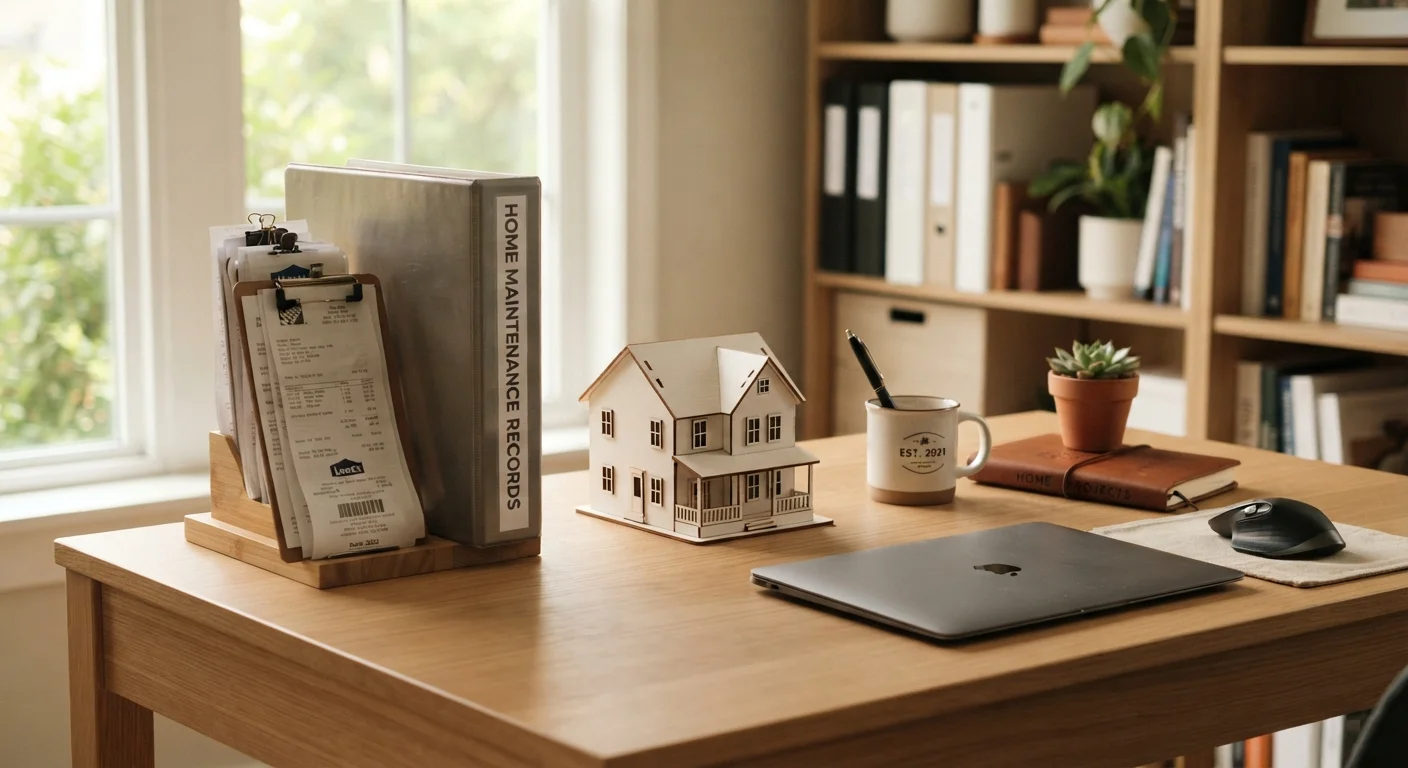
It doesn't need to be elaborate. At its simplest, a property log is a folder where you file dated invoices, contractor business cards, warranty documents, and brief notes about DIY work you completed yourself. Over time, this collection becomes one of the most useful documents you own.
If you're new to homeownership, our guide on understanding basic upkeep explains what systems and tasks deserve your earliest attention — a natural foundation for what to start logging first.
Best Practices for Building Your Record
The following practices help you build a log that's genuinely useful — not just a pile of paper.
Record every service visit within 48 hours of completion.
Memory fades quickly, and the details that matter — the exact fault diagnosed, the part replaced, the warranty period offered — are freshest immediately after the job. Delayed logging leads to vague, incomplete entries that offer little value later.
Include DIY repairs alongside professional work.
Work you complete yourself still affects your home's condition and future maintenance needs. Documenting it creates a complete picture and helps you recall product types, paint colors, or fixture models when you need to match them later.
Store warranty documents and manuals alongside service records.
A warranty is only useful if you can locate it and know what it covers. Keeping it adjacent to the service history for that appliance or system means you'll check it automatically when something goes wrong.
Photograph work before and after significant projects.
Photos document the scope of a project in ways that written notes cannot. They can show the condition of concealed spaces (inside walls, under decking) that are otherwise invisible, and serve as evidence of workmanship quality.
Note contractor details, license information, and contact numbers.
When a repair fails or a warranty issue arises, you need to reach the contractor quickly. A name alone isn't enough — businesses change numbers, move, or close. A full contact record protects you if you need to follow up.
Review and organise your log at least once a year.
An annual review helps you spot patterns — a system that needs service more frequently than expected, or an area of the home that hasn't been inspected in several years. It also keeps the file from becoming an unmanageable backlog.
Pair your log with a regular inspection habit. Our seasonal maintenance checklist gives you a quarterly framework that naturally generates entries worth recording.
Why Your Records Pay Off Over Time
~1%
Of home value spent on maintenance annually
A commonly cited rule of thumb among housing professionals suggests budgeting roughly 1% of a home's value each year for maintenance and upkeep — records help you track whether you're on target.
35%+
Of home sales involve negotiation over condition
Real estate professionals frequently note that documented maintenance history reduces buyer objections during inspection negotiations, though outcomes vary by market and property.
There are three situations where a well-kept property log delivers real, tangible value.
During Repairs and Emergencies
When a pipe bursts or an appliance fails, knowing the age of the system, the last service date, and the contractor who installed it cuts response time dramatically. You're not hunting through kitchen drawers for a receipt — the information is ready.
When Filing Insurance Claims
Insurers often ask for documentation of a home's condition and maintenance history, particularly for larger claims. A dated record of roof inspections, HVAC servicing, or water heater replacements can demonstrate that damage wasn't caused by neglect — a distinction that affects claim outcomes. General insurance policy terms vary widely, so always review your specific policy and consult your insurer or a licensed agent for guidance on your coverage.
At Resale
Buyers and their inspectors look hard at a home's maintenance history. A documented log signals responsible ownership and can reduce negotiating friction. For major systems like roofing, records of professional inspections are especially compelling — something our roof maintenance guide covers in detail.
Choosing a Format That You'll Actually Use
The most important thing about your record-keeping system is that you use it consistently. A sophisticated app you abandon after two weeks is worth less than a manila folder you update every time a contractor leaves your driveway.
Paper Systems
A three-ring binder with tabbed sections (Plumbing, HVAC, Electrical, Roof, Appliances, Exterior) works well for many homeowners. File physical invoices and print digital receipts to keep everything in one place.
Digital Systems
A shared cloud folder (organized by category and year) lets you scan and store receipts, add photos of completed work, and access records from anywhere. Dedicated home management apps offer structured templates, though any consistent digital filing system does the job.
Whichever format you choose, date every entry. Without dates, the history loses most of its value. If you're also tracking vehicle records, the same disciplined approach applies — you can read more about that mindset in our car maintenance hub.
For a broader sense of what skipping this documentation habit actually costs over time, see our article on the real cost of deferred maintenance.