

Key Takeaways
Prevents small issues from becoming structural failures
Catching a hairline crack in caulking or a loose flashing early takes minutes to fix; left unattended, the same entry point can allow water infiltration that damages framing, insulation, and interior finishes over time.
Extends the lifespan of expensive home systems
HVAC units, water heaters, and roofing materials all have rated service lives that assume basic upkeep. Neglecting servicing often shortens those lifespans considerably, advancing replacement costs by years.
Keeps home insurance claims viable
Insurers frequently deny claims tied to gradual, foreseeable deterioration. Documented maintenance activity demonstrates that damage was sudden and accidental rather than the result of neglect.
Supports home resale value and buyer confidence
Homes with documented maintenance histories typically fare better in inspections and appraisals, reducing the likelihood of price renegotiations or failed sales due to discovered defects.
Improves energy efficiency and lowers utility bills
Clean HVAC coils, sealed air gaps, and well-maintained insulation all reduce the energy load on your home's systems, which can translate to meaningfully lower monthly utility costs.
Upfront time and scheduling demands are real
Annual maintenance requires homeowners to carve out time, coordinate with contractors, and follow through consistently — which can feel burdensome alongside work and family responsibilities.
Some routine costs feel unnecessary when nothing is visibly wrong
Paying for a furnace tune-up or roof inspection when everything appears fine is psychologically difficult, even though that's precisely when the investment is most effective.
DIY maintenance carries its own risks if done incorrectly
Improperly applied caulk, incorrectly replaced weatherstripping, or amateur electrical work can create new problems or mask underlying issues rather than resolving them.
Costs accumulate even in good years
Regular servicing — HVAC, chimney, pest inspection, gutter cleaning — adds up annually, and for budget-constrained homeowners, prioritizing which tasks are most critical requires some knowledge and planning.
Finding trustworthy tradespeople takes effort
Homeowners who don't already have relationships with reliable contractors may spend significant time vetting service providers, particularly in markets with high demand and limited availability.
Our Verdict
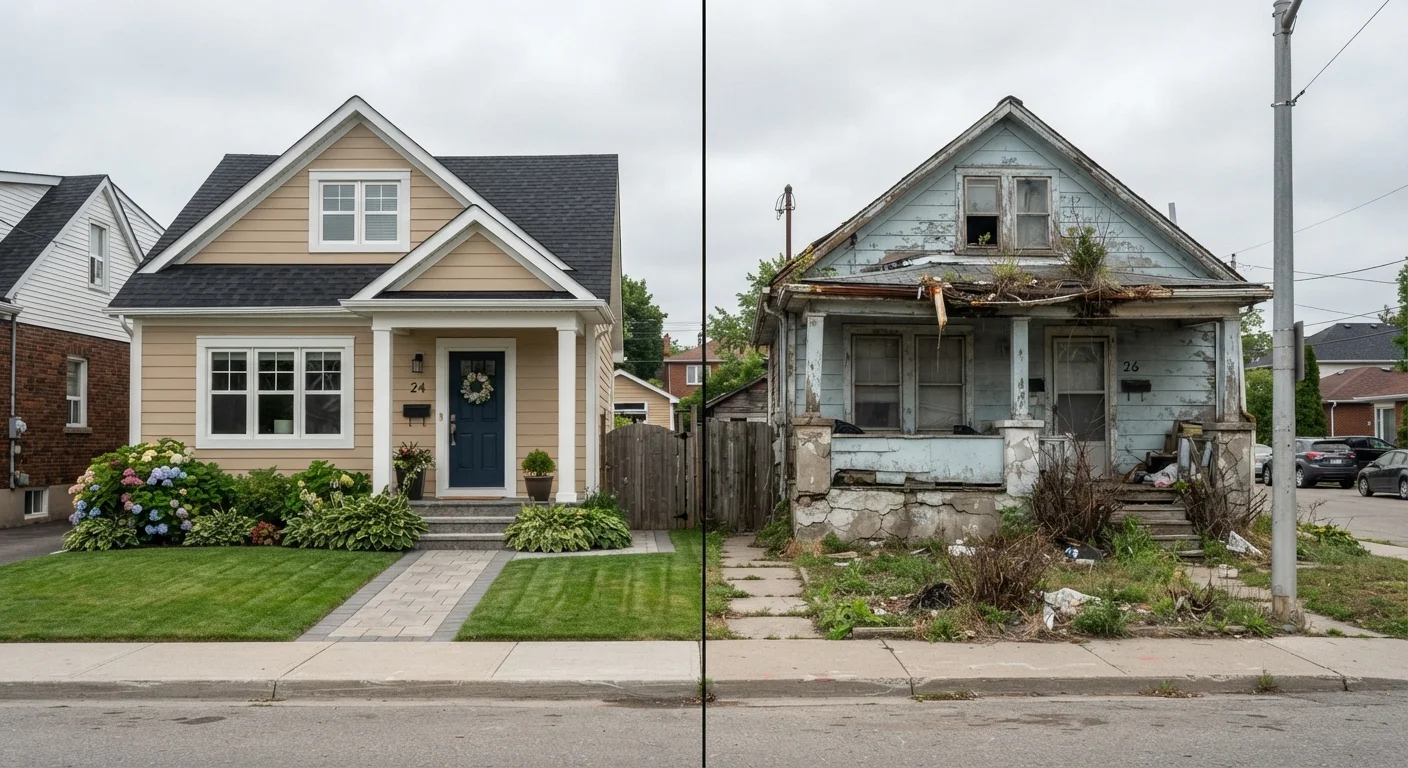
Annual home maintenance is not optional upkeep — it is cost control. Skipping it rarely saves money; it defers and amplifies expenses. While the upfront time and cost feel inconvenient, the alternative is a compounding cycle of reactive, emergency-level repairs that can strain budgets and reduce your home's value.
This article is most useful for homeowners — especially first-time buyers — who want to understand the long-term financial and structural consequences of deferring routine home care.
Why Deferred Maintenance Is Never Really Free
It's easy to put off a gutter cleaning or ignore a small roof shingle that lifted after a storm. Life is busy, and nothing catastrophic seems to happen right away. But deferred maintenance works against homeowners in a specific, financially painful way: small, cheap problems quietly become large, expensive ones.
A clogged gutter, for example, costs relatively little to clean. Left unaddressed through several wet seasons, it directs water against fascia boards and into soffits, promoting wood rot, insect intrusion, and eventually interior water damage. What started as a one-hour task can become a multi-trade repair job involving a roofer, carpenter, and possibly a waterproofing specialist.
This pattern repeats across nearly every home system — HVAC, plumbing, foundation drainage, weatherproofing, and electrical. The underlying logic is simple: most home damage accelerates once it begins. Moisture, pests, temperature stress, and structural load all work continuously. Maintenance interrupts those cycles early. Neglect lets them run.
Maintenance vs. Repair: A Key Distinction
Maintenance refers to scheduled, proactive tasks that keep systems functioning — cleaning, lubricating, inspecting, sealing. Repair is reactive work done after something has failed or deteriorated. The two are not interchangeable in cost or complexity. A maintained system rarely fails dramatically; a neglected one often fails at the worst possible time and requires more invasive work. Framing annual upkeep as 'optional' conflates maintenance with repair and misrepresents its actual purpose.
The Financial Reality: What Skipping Really Costs
Cost comparisons between routine maintenance and deferred-repair scenarios consistently show a stark gap. Replacing a water heater on a planned schedule, for instance, typically costs far less than emergency replacement after a failure that also causes water damage to flooring or drywall. Routine HVAC servicing — filter changes, coil cleaning, refrigerant checks — keeps units running efficiently and extends their lifespan; a neglected unit may fail prematurely, with replacement costs several times higher than cumulative service fees.
1% Rule
Annual maintenance budget guideline
A commonly cited rule of thumb suggests budgeting roughly 1% of a home's purchase price per year for maintenance — though actual costs vary by home age, condition, and region.
3–10×
Cost multiplier for deferred repairs
Home improvement and inspection professionals frequently observe that deferred maintenance repairs cost several times more than the original preventive task would have — particularly for water-related damage.
Homeowners who treat maintenance as discretionary spending often discover the hard way that their home's systems are interdependent. A leaking roof doesn't just damage shingles — it can compromise insulation, ceiling structure, drywall, and even electrical systems if water tracks along joists. At each stage of spread, repair complexity and cost multiplies.
It's also worth noting that insurance policies generally exclude damage resulting from long-term neglect. If a slow roof leak that went unaddressed for years eventually ruins a ceiling, an insurer may deny the claim on the grounds that the damage was foreseeable and preventable. That financial exposure falls entirely on the homeowner.
Pros of Staying on Top of Annual Maintenance
Committing to a structured annual maintenance routine offers meaningful advantages beyond simply avoiding disasters. Here's what consistent upkeep actually delivers:
Prevents small issues from becoming structural failures
Catching a hairline crack in caulking or a loose flashing early takes minutes to fix; left unattended, the same entry point can allow water infiltration that damages framing, insulation, and interior finishes over time.
Extends the lifespan of expensive home systems
HVAC units, water heaters, and roofing materials all have rated service lives that assume basic upkeep. Neglecting servicing often shortens those lifespans considerably, advancing replacement costs by years.
Keeps home insurance claims viable
Insurers frequently deny claims tied to gradual, foreseeable deterioration. Documented maintenance activity demonstrates that damage was sudden and accidental rather than the result of neglect.
Supports home resale value and buyer confidence
Homes with documented maintenance histories typically fare better in inspections and appraisals, reducing the likelihood of price renegotiations or failed sales due to discovered defects.
Improves energy efficiency and lowers utility bills
Clean HVAC coils, sealed air gaps, and well-maintained insulation all reduce the energy load on your home's systems, which can translate to meaningfully lower monthly utility costs.
For a practical framework to act on, see the seasonal room-by-room inspection checklist — it walks through every major home system in manageable sections.
Cons: The Real Barriers to Regular Maintenance
Understanding the drawbacks honestly helps homeowners plan around them rather than being caught off guard.
Upfront time and scheduling demands are real
Annual maintenance requires homeowners to carve out time, coordinate with contractors, and follow through consistently — which can feel burdensome alongside work and family responsibilities.
Some routine costs feel unnecessary when nothing is visibly wrong
Paying for a furnace tune-up or roof inspection when everything appears fine is psychologically difficult, even though that's precisely when the investment is most effective.
DIY maintenance carries its own risks if done incorrectly
Improperly applied caulk, incorrectly replaced weatherstripping, or amateur electrical work can create new problems or mask underlying issues rather than resolving them.
Costs accumulate even in good years
Regular servicing — HVAC, chimney, pest inspection, gutter cleaning — adds up annually, and for budget-constrained homeowners, prioritizing which tasks are most critical requires some knowledge and planning.
Finding trustworthy tradespeople takes effort
Homeowners who don't already have relationships with reliable contractors may spend significant time vetting service providers, particularly in markets with high demand and limited availability.
Before hiring out any repair work, it's worth reviewing what DIY versus contractor costs actually look like — labor savings aren't always as straightforward as they seem. Separately, well-intentioned repairs attempted without the right knowledge can escalate problems; the article on DIY fixes that often make things worse is worth reading before picking up a caulk gun.
How to Build a Realistic Maintenance Habit
The most effective approach is systematic rather than reactive. Homeowners who keep a simple log of their home's systems — when each was last serviced, its approximate age, and any known issues — are far better positioned to prioritize spending and catch deterioration early.
Annual inspections of roof, gutters, foundation perimeter, HVAC filters and coils, water heater, weatherstripping, and visible plumbing take a few hours and cost little. Many homeowners choose to schedule a professional home inspection every few years as a more thorough check, particularly for systems like electrical panels, crawl spaces, or areas with limited visibility.
The underlying principle is the same one that applies to vehicles: consistent, low-cost attention extends service life and prevents expensive failures. If you're curious how that comparison plays out specifically for cars, the real cost of skipping routine vehicle maintenance follows the same compounding logic in an automotive context.