

Key Takeaways
Why Getting Watering Right Is Harder Than It Looks
Garden watering feels intuitive — plants are wilting, so you water them. But that simple logic leads to some of the most common and costly mistakes homeowners make outdoors. Watering errors don't just stress individual plants; they degrade soil structure over time, encourage pest and disease problems, and waste a resource that matters both ecologically and financially.
The good news is that most irrigation mistakes follow predictable patterns. Identifying which ones apply to your garden is the first step toward healthier plants and a more efficient outdoor routine. Understanding your soil is equally important — our article on soil health and composition explains how soil type directly affects how water moves and drains around your plants' roots.
Overwatering — giving plants more water than their roots can absorb or the soil can drain.
Why it happens: It feels like attentive care, and wilting (which can be caused by both drought and root rot) is easy to misread as a signal to add more water.
Shallow, frequent watering that keeps only the top inch of soil damp.
Why it happens: Brief watering sessions feel sufficient, especially when the surface looks wet. Many gardeners also set timers for short intervals out of habit.
Watering in the middle of the day, particularly during summer heat.
Why it happens: Daytime is when gardeners are most active and notice plants looking stressed. Heat wilting during the afternoon often looks identical to drought stress.
Using a fixed sprinkler or timer schedule regardless of weather or season.
Why it happens: Set-and-forget irrigation feels efficient, and many timers don't account for rainfall or temperature shifts automatically.
Watering foliage rather than directing water to the soil and root zone.
Why it happens: Overhead sprinklers and hoses are convenient, and wetting leaves can seem like thorough coverage of the plant.
Building Better Watering Habits
Correcting watering mistakes isn't about buying expensive equipment — it's about adjusting timing, technique, and expectations. A few consistent habit changes deliver outsized results.
50%
Outdoor water lost to inefficient irrigation
The U.S. Environmental Protection Agency estimates that roughly half of all outdoor water used by American households is wasted through evaporation, wind, or overwatering.
6–8 inches
Target soil depth for effective watering
Horticultural guidance consistently recommends that garden irrigation penetrate six to eight inches to encourage deep, drought-resilient root development.
Check before you water. Push a finger or a thin probe about two inches into the soil near the plant's root zone. If it feels moist, wait. This simple check takes seconds and prevents the single most common mistake: watering soil that doesn't need it yet.
Water deeply and less often. Rather than a light daily sprinkle, aim for a thorough soak that reaches six to eight inches below the surface. For most garden beds in moderate climates, this means watering two to three times per week at most during active growing seasons — and far less during cooler or wetter periods.
Time it right. Early morning — roughly between 6 a.m. and 10 a.m. — is the most effective window. Temperatures are lower, wind is calmer, and the foliage has time to dry before evening, reducing fungal risk. Midday watering loses significant moisture to evaporation before it reaches roots. Evening watering keeps foliage damp overnight, creating conditions where fungal diseases thrive.
Evening Watering and Fungal Disease
Watering late in the day leaves foliage and soil surface damp overnight — conditions that strongly favour fungal diseases such as powdery mildew, grey mould, and damping off in seedlings. This is especially problematic for tomatoes, cucumbers, and roses. If morning watering isn't possible, aim water directly at the soil and avoid wetting any leaves.
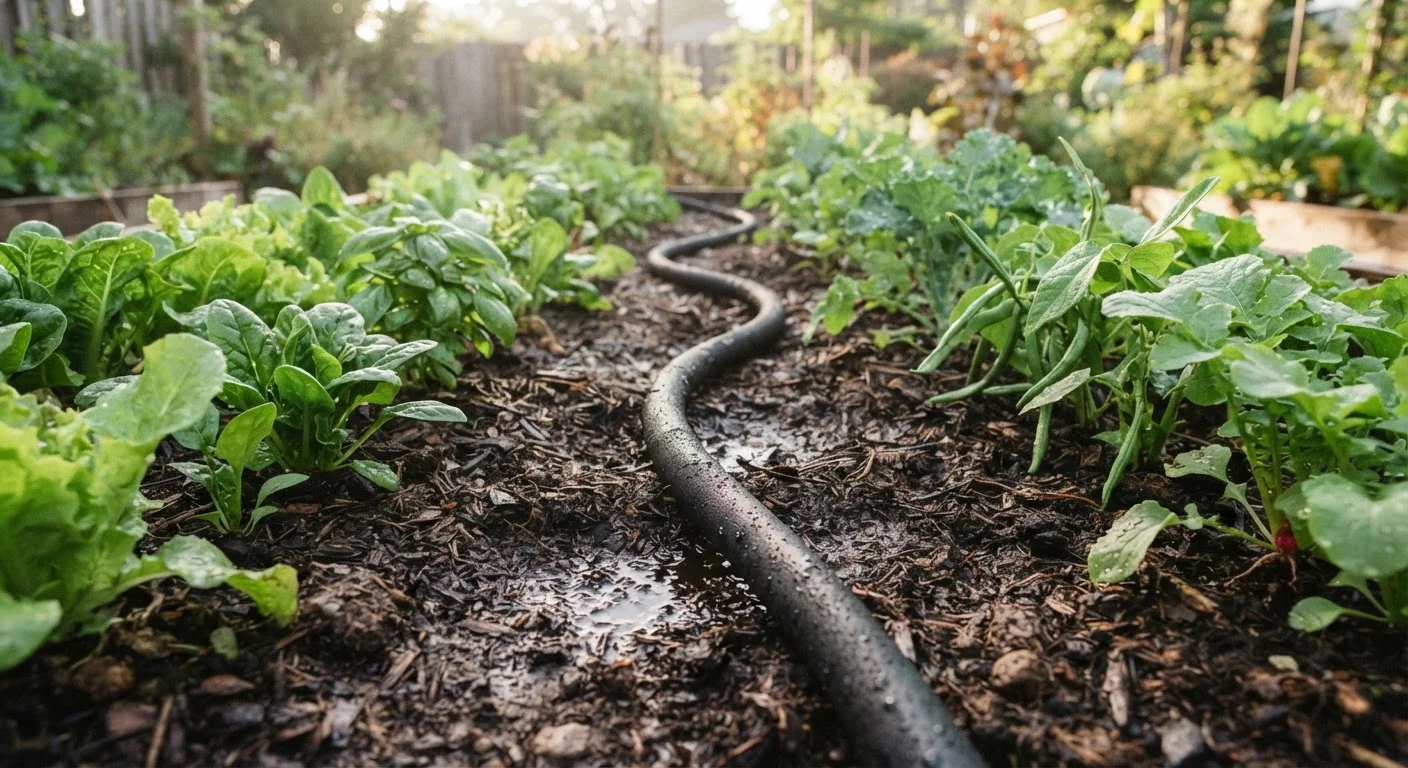
Target the root zone, not the leaves. Aim water at the base of each plant. Wet foliage, particularly on vegetables, tomatoes, and roses, is an open invitation for common fungal diseases like powdery mildew and blight. Drip lines and soaker hoses make this easy, but even a watering can with a long spout directed at ground level works well.
Container plants deserve special mention. Pots dry out much faster than garden beds and may need daily attention during hot spells — our guide on growing food in containers covers the watering demands of common edible crops in pots. Similarly, if your outdoor water use is linked to a dripping outdoor tap, even a slow leak can quietly waste hundreds of gallons over a season. And if you're relying on gutters to direct roof runoff away from garden beds, keeping gutters clear prevents waterlogged soil near foundations. See also our related piece on lawn watering myths for habits that waste time and water on grass.