

Key Takeaways
Workable on balconies, patios, and small yards
Containers let you grow food in spaces where a traditional garden bed isn't an option, including rental properties and apartments with only a small outdoor area.
Control over soil quality and drainage
You choose the potting mix, which means you're not working around poor native soil. This can actually give crops better growing conditions than a neglected garden bed.
Easy to manage pests and disease
Isolated containers are simpler to inspect and treat than large beds. If one pot develops a problem, it's easier to quarantine before it spreads.
Flexible placement to follow sunlight
Pots can be moved to take advantage of shifting light through the season or to protect plants from late frosts — something fixed garden beds can't offer.
Lower initial commitment and cost
Starting with a few containers requires less upfront investment than building raised beds or clearing and amending an in-ground plot.
Dries out quickly, demanding frequent watering
Container soil loses moisture much faster than in-ground beds, especially in hot weather. Inconsistent watering is one of the leading causes of container crop failure.
Limited root depth restricts crop options
Most containers can't accommodate the deep root runs that large vegetables need, effectively ruling out crops like parsnips, corn, and full-size squash.
Nutrients deplete faster than in-ground soil
Regular watering flushes nutrients from the potting mix, meaning container crops generally need supplemental feeding throughout the growing season to stay productive.
Can overheat in direct summer sun
Dark-colored or metal containers absorb heat and can warm the root zone to damaging temperatures. This is particularly problematic for cool-season crops like lettuce in midsummer.
Total yield is smaller than a garden bed
Even a well-managed container garden produces less food than an equivalent area of in-ground or raised-bed planting, which is worth factoring into expectations.
Our Verdict
Container food growing is genuinely productive when you match the right crops to the right conditions. Herbs, salad leaves, peppers, and compact tomato varieties can deliver a real harvest from a balcony or patio. Larger, deep-rooted, or space-hungry crops — think corn, pumpkins, or parsnips — are unlikely to reward the effort in most container setups.
Ideal for renters, apartment dwellers, or anyone with limited outdoor space who wants to grow some of their own food without committing to a full garden bed.
Why People Grow Food in Containers
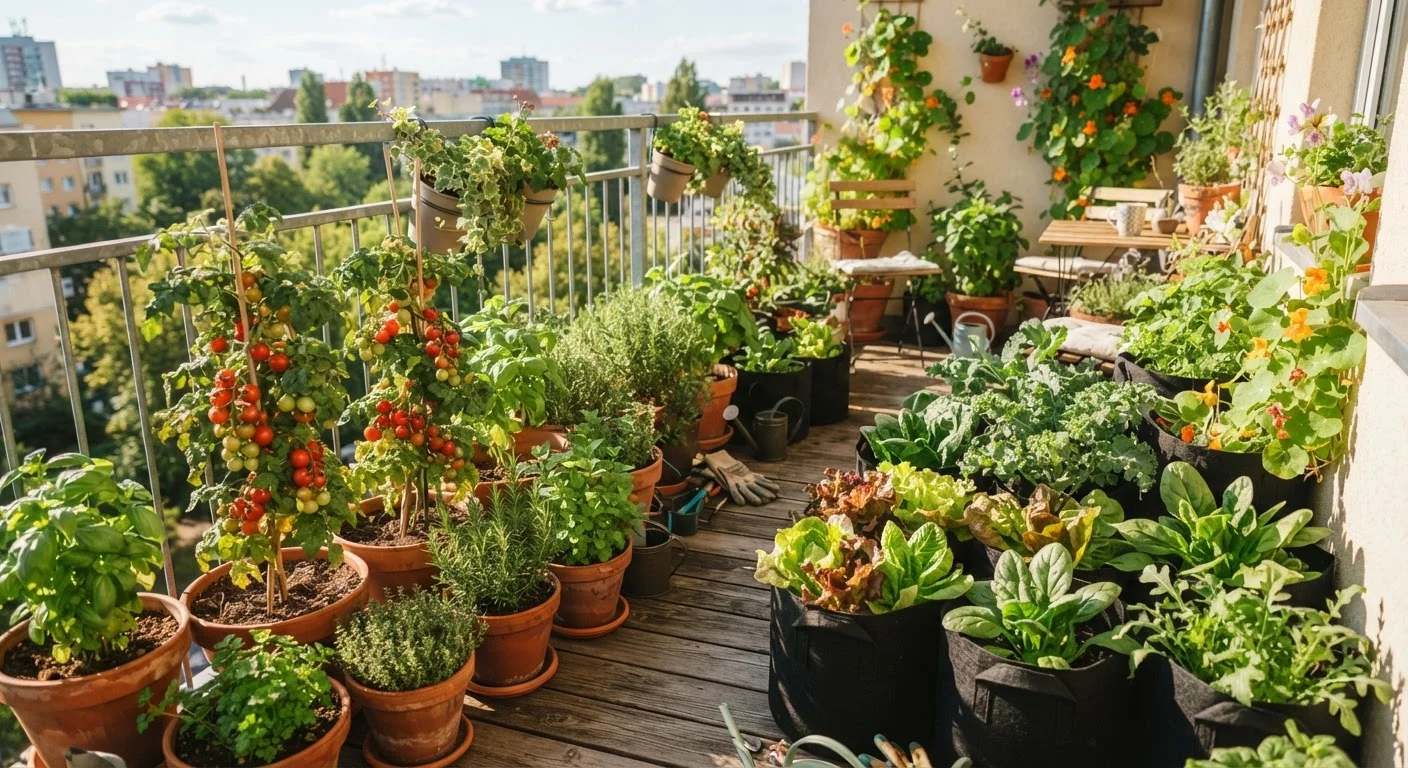
Container food gardening has grown steadily in popularity, driven by smaller yards, apartment living, and the appeal of growing at least some of your own food. A pot on a sunny windowsill or a cluster of grow bags on a patio can produce a meaningful harvest — but success depends heavily on understanding what containers can and cannot offer.
Unlike in-ground beds, containers give you control over your growing medium, placement, and drainage. They're also portable, meaning you can shift plants to follow sunlight or move them indoors before a frost. If you're curious about how growing conditions scale up, our guide on raised beds vs. in-ground planting covers the broader trade-offs.
But containers impose real constraints — on root depth, moisture retention, and nutrient availability. Knowing those limits is what separates a productive container garden from a frustrating one.
Crops That Genuinely Thrive in Pots
Some food plants are naturally well-suited to container life. These tend to be compact, shallow-rooted, or productive enough that even a modest yield feels worthwhile.
Workable on balconies, patios, and small yards
Containers let you grow food in spaces where a traditional garden bed isn't an option, including rental properties and apartments with only a small outdoor area.
Control over soil quality and drainage
You choose the potting mix, which means you're not working around poor native soil. This can actually give crops better growing conditions than a neglected garden bed.
Easy to manage pests and disease
Isolated containers are simpler to inspect and treat than large beds. If one pot develops a problem, it's easier to quarantine before it spreads.
Flexible placement to follow sunlight
Pots can be moved to take advantage of shifting light through the season or to protect plants from late frosts — something fixed garden beds can't offer.
Lower initial commitment and cost
Starting with a few containers requires less upfront investment than building raised beds or clearing and amending an in-ground plot.
Herbs are arguably the best container crop available. Basil, parsley, cilantro, chives, and mint all grow happily in smaller pots, tolerate some neglect, and give you a harvest within weeks of planting. Mint, in particular, actually benefits from being contained — in the ground it spreads aggressively.
Salad greens (lettuce, arugula, spinach, and cut-and-come-again mixes) have shallow roots, grow quickly, and can be harvested repeatedly. A wide, shallow planter or window box is ideal. Sow a small batch every few weeks for a continuous supply.
Cherry and patio tomatoes are the standout fruiting crop for containers. Compact or dwarf varieties bred for pot growing can produce impressive yields in a 5-gallon or larger container. They need consistent watering and feeding, but the results are reliable when conditions are right.
Peppers, radishes, green onions, and compact bush beans also perform well, provided the container is appropriately sized and gets adequate sun — typically at least six hours of direct light daily.
Crops That Struggle Without Sufficient Space
Not every vegetable translates to container growing. Some crops fail because their root systems need more depth than most pots can offer; others produce so little in a confined space that the effort rarely feels worthwhile.
Dries out quickly, demanding frequent watering
Container soil loses moisture much faster than in-ground beds, especially in hot weather. Inconsistent watering is one of the leading causes of container crop failure.
Limited root depth restricts crop options
Most containers can't accommodate the deep root runs that large vegetables need, effectively ruling out crops like parsnips, corn, and full-size squash.
Nutrients deplete faster than in-ground soil
Regular watering flushes nutrients from the potting mix, meaning container crops generally need supplemental feeding throughout the growing season to stay productive.
Can overheat in direct summer sun
Dark-colored or metal containers absorb heat and can warm the root zone to damaging temperatures. This is particularly problematic for cool-season crops like lettuce in midsummer.
Total yield is smaller than a garden bed
Even a well-managed container garden produces less food than an equivalent area of in-ground or raised-bed planting, which is worth factoring into expectations.
Corn is a practical non-starter in containers. It needs significant root space, pollinates by wind (meaning you need multiple plants in close proximity), and grows very tall. The harvest-to-effort ratio in a pot is low.
Large vining crops — including pumpkins, full-size butternut squash, and sprawling cucumber varieties — need both deep root runs and significant horizontal space. While some compact cucumber varieties can manage in large containers, standard types will struggle.
Root vegetables like parsnips and large carrots require deep, loose soil to form properly. Shallow containers produce stunted, forked, or misshapen roots. Shorter carrot varieties (sometimes called 'round' or 'baby' types) are a partial exception if you use a container at least 12 inches deep.
Understanding your growing medium matters here too. For a grounding in how soil composition affects what plants can do, see our piece on soil health and what your garden is actually growing in.
Practical Factors That Determine Container Success
5 gal+
Minimum container size for fruiting tomatoes
Most horticultural guidance recommends at least 5 gallons of volume for compact tomato varieties to develop a productive root system.
6 hrs
Daily sun needed for most fruiting crops
Fruiting vegetables like tomatoes, peppers, and beans generally require at least six hours of direct sunlight per day to flower and set fruit reliably.
12 in
Minimum soil depth for short carrot varieties
Compact or round carrot varieties need at least 12 inches of loose, well-draining potting mix to form properly shaped roots in containers.
Beyond crop selection, a few practical decisions have an outsized effect on whether your container garden produces a real harvest.
Container Size and Drainage
Bigger containers retain moisture more evenly and give roots room to develop. A common mistake is starting with pots that are too small. For tomatoes, aim for at least 5 gallons of volume. For herbs and salad leaves, smaller pots work — but they'll dry out faster and need more frequent watering. Drainage holes are non-negotiable; standing water causes root rot quickly.
Potting Mix Quality
Standard garden soil compacts in containers and restricts root growth. Use a quality potting mix designed for containers, which typically includes materials like perlite or coir to keep the mix airy and well-draining. Adding homemade compost to your potting mix improves nutrient content — our home composting guide explains how to make it.
Watering and Feeding
Containers dry out faster than garden beds, especially in warm weather or terracotta pots. Checking soil moisture daily in summer isn't excessive — it's often necessary. Container-grown food crops also exhaust available nutrients faster than in-ground plants, so a balanced liquid feed applied regularly through the growing season helps maintain productivity.
If you're working with a limited outdoor footprint, pairing container growing with thoughtful layout decisions can make a real difference — see our guidance on designing a small outdoor space for practical ideas.
Potting Mix vs. Garden Soil: Not Interchangeable
Garden soil — even good-quality garden soil — compacts when used in containers, reducing the air pockets roots need to grow. Always use a purpose-made potting mix for container growing. Look for mixes that include perlite, vermiculite, or coir fiber, which help maintain structure and drainage over time. Refreshing or replacing potting mix each season helps prevent nutrient depletion and soil-borne disease buildup.