

Key Takeaways
Why Small Spaces Demand Smarter Design
A small outdoor space — whether a city balcony, a narrow side yard, or a modest patio — presents a specific design challenge: every element competes for limited real estate, and mistakes are harder to hide. The good news is that constraint often produces better design. Forced to think carefully about what each square foot does, small-space gardeners frequently end up with outdoor areas that feel more intentional and more comfortable than sprawling, underplanned yards.
The principles below aren't aesthetic preferences — they're structural ideas that change how the eye moves through a space and how people actually use it. Understanding them helps you make confident choices rather than guessing.
Core Design Principles That Deliver Results
Apply these practices thoughtfully and your compact garden will feel both larger and more useful.
Match furniture and plant scale to the actual dimensions of your space.
Oversized furniture crowds a small area and blocks sightlines, making the space feel like an obstacle course rather than a retreat. Pieces that are proportionate allow comfortable movement and let the eye travel freely, which psychologically expands the perceived size.
Use vertical surfaces as your primary planting canvas.
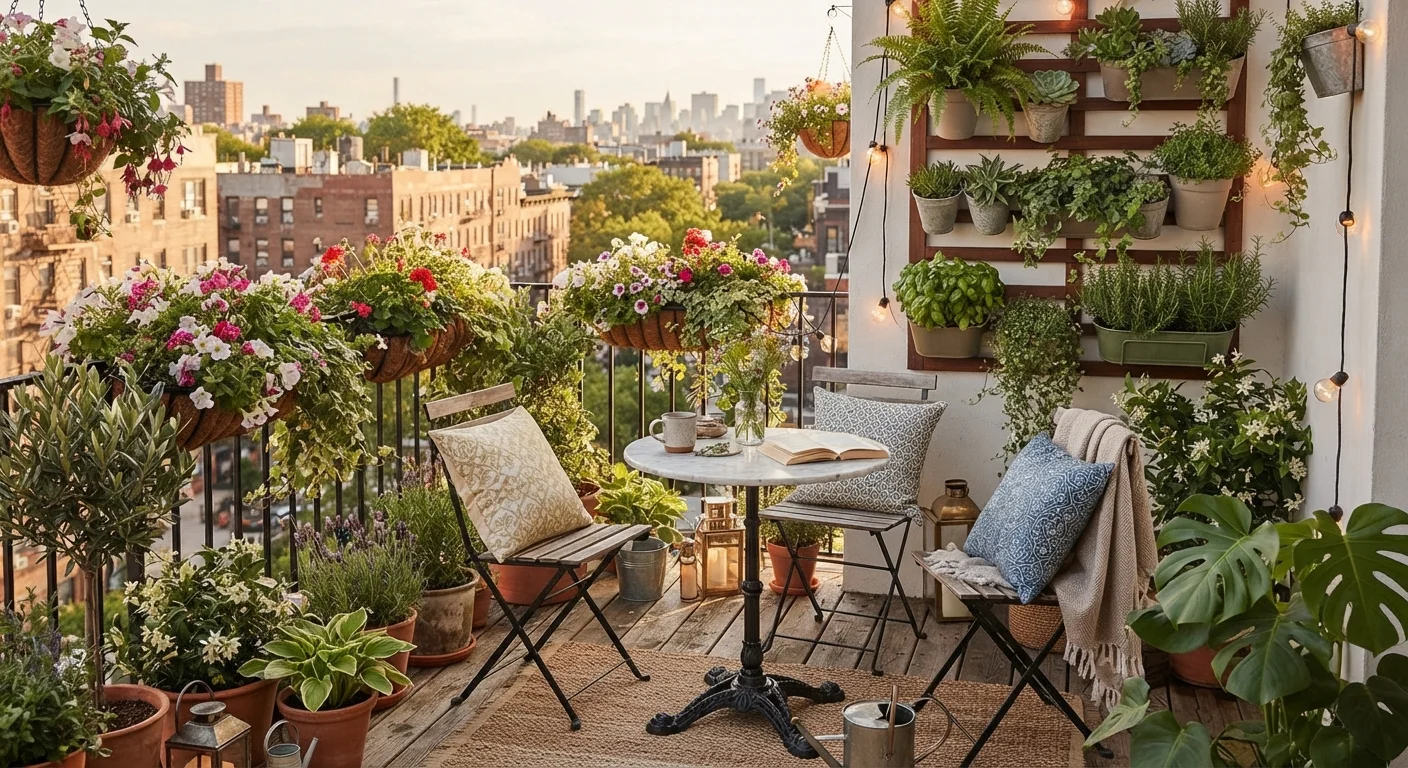
Floor space is finite, but walls, fences, and trellises offer substantial planting area that most small-space gardeners underuse. Vertical planting draws the eye upward, which heightens the perceived volume of a space the same way high ceilings do indoors.
Establish one clear focal point and orient everything else around it.
A space without a focal point feels visually restless because the eye has nowhere to land. One strong anchor — a specimen plant, a water feature, or a well-placed pot — organizes the composition and creates a sense of arrival and intention.
Zone the space into distinct use areas, even in a very small footprint.
Counterintuitively, dividing a small space into two or three zones — seating, planting, and a path or transition area — makes it feel larger than one undifferentiated area would. Zones give a sense of discovery and purpose as you move through them.
Limit your material palette to two or three complementary surfaces.
Visual clutter from competing textures and colors shrinks a space optically. A restrained palette — say, pale stone, dark timber, and green foliage — creates calm and cohesion, allowing individual plants and features to stand out rather than fight for attention.
For inspiration on layering plants effectively across different heights, see our guide on choosing the right plant layer.
Quick Ways to Start Today
You don't need to overhaul everything at once. A few targeted actions can produce immediate improvement.
Once your layout is taking shape, lighting plays a surprisingly large role in how the space reads after dark — our article on outdoor lighting for gardens walks through practical and atmospheric options. If growing food interests you, container gardening is perfectly suited to small spaces; see growing food in containers for a clear-eyed assessment.
Light Colors Reflect and Expand
Painting a boundary wall or fence in a pale, warm color — soft white, stone, or sage — reflects light and makes it recede visually, pushing the perceived edge of your space further away. Dark boundary colors do the opposite. This single change can meaningfully alter how open a small area feels, and it costs little beyond time and paint.
Keeping It Working Season to Season
Good design isn't static. Plants grow, furniture weathers, and needs change. A small space requires more regular editing than a large one — an overgrown container or a broken chair reads more loudly when there's less around it to absorb the visual noise.
Small Spaces Show Wear More Quickly
Because there's less total area, a cracked paving slab, a dead plant, or weathered furniture is more noticeable in a compact garden than in a large one. Build a brief annual review into your routine — checking surfaces, structures, and containers for damage before the growing season starts. This keeps the space looking intentional rather than neglected.
Plan for seasonal transitions early. Our seasonal garden prep checklist gives a practical task list for keeping your outdoor space in good shape through planting, pruning, and protection cycles across the year.
Finally, keep budget realism in mind. Thoughtful design doesn't require expensive materials — it requires good decisions. If you're managing home projects within a tighter budget, general guidance on saving and managing debt can help you prioritize where outdoor investment delivers the most value.