

Key Takeaways
Our Verdict
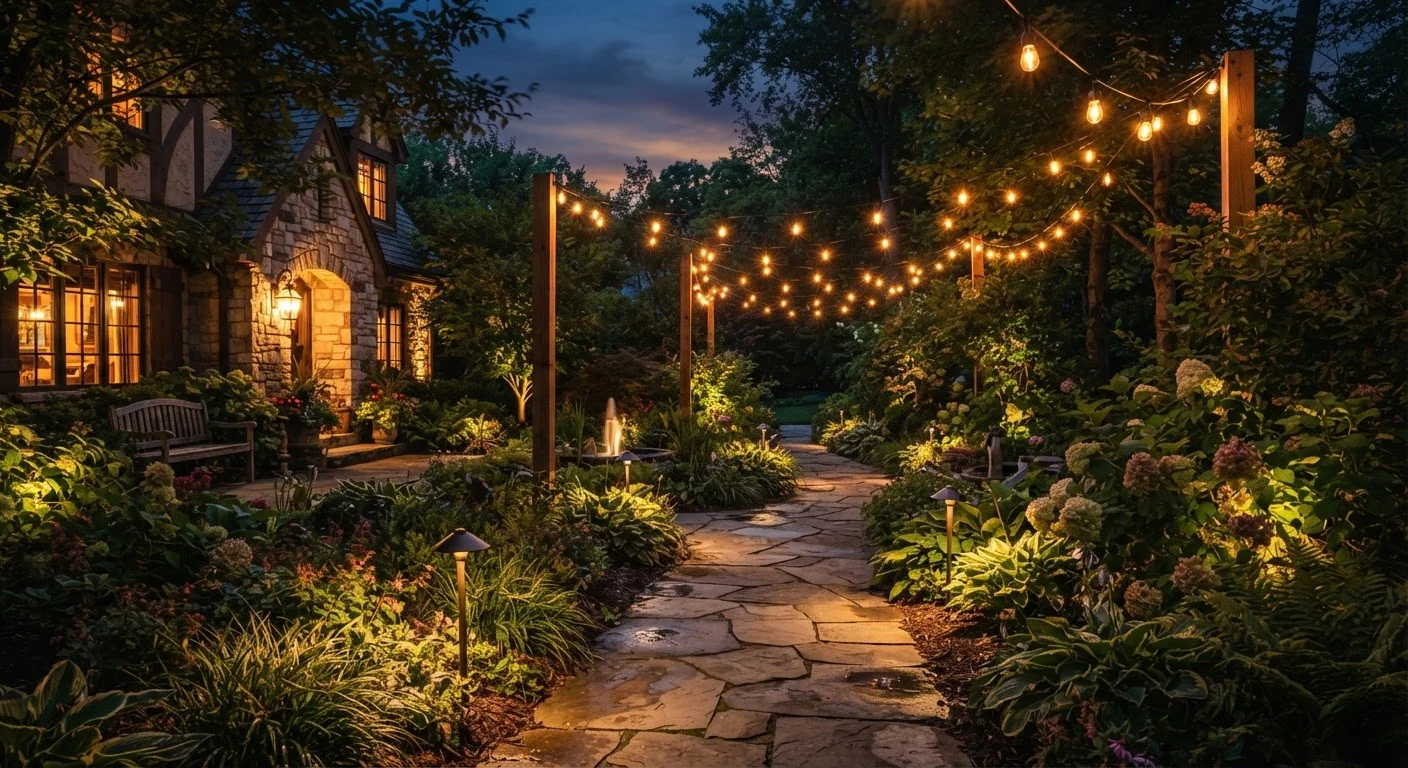
No single garden lighting type does everything well. Path lights handle safety reliably, uplighting adds drama and structure, and string lights create warmth for entertaining spaces. The most functional and visually appealing gardens usually combine approaches, scaled to the size and purpose of the space.
| Best for | Recommended |
|---|---|
| Homeowners focused on safety and navigation | Path Lights |
| Those wanting to highlight trees, walls, or garden focal points | Uplighting |
| Casual entertaining and relaxed outdoor dining areas | String Lights |
| Gardeners wanting minimal wiring and low running costs | Solar-Powered Fixtures |
Why Garden Lighting Deserves Thoughtful Planning
Outdoor lighting serves two distinct roles that are easy to conflate: functional safety and atmospheric appeal. A well-lit path prevents accidents; a softly lit pergola invites you to linger outside after dinner. The challenge most homeowners face is choosing which types of lighting address which goals — and avoiding a garden that ends up overlit, underlit, or simply mismatched in mood.
Before purchasing any fixtures, consider three factors: the areas you want to illuminate, how much wiring you're willing to install (or avoid), and how the garden is actually used after dark. Entertaining spaces, for instance, have different needs than a side passage you cross twice a week. For broader inspiration on making outdoor spaces work harder, see our guide to designing a small outdoor space.
Start with a Night-Time Walk-Through
Before buying any fixtures, walk your garden after dark with a flashlight to identify genuine dark spots and trip hazards. Note which areas feel unsafe versus which simply feel uninviting — the two problems call for different solutions. This simple exercise prevents over-purchasing and keeps your lighting plan focused on real needs.
Path Lights: Safety First
Path lights are low-profile fixtures installed along walkways, driveways, and steps. Their primary job is to make surfaces visible and reduce trip hazards — particularly important on uneven paving or garden steps. Most are stake-mounted and positioned 6 to 8 feet apart to create a continuous visual guide without over-illuminating the surface.
Low-voltage LED path lights are among the more energy-efficient options available and are widely used in residential gardens. Many systems run on a 12-volt transformer plugged into a standard outdoor outlet, making installation manageable without an electrician — though any work involving your home's main electrical supply should be handled by a licensed professional. Solar path lights eliminate wiring entirely but depend on consistent sun exposure to charge adequately; shaded garden beds may leave them dim by late evening.
| Path Lights | Uplighting | String Lights | Solar Fixtures | |
|---|---|---|---|---|
| Primary purpose | Safety & navigation | Drama & focal points | Ambiance & entertaining | Low-effort general lighting |
| Installation complexity | Low–moderate | Moderate | Very low | Very low |
| Energy efficiency | High (LED) | High (LED) | High (LED) | Very high (no grid power) |
| Performance in shade | Good | Good | Good | Poor |
| Weatherproofing needed | Yes (IP44+) | Yes (IP65+) | Yes (IP44+) | Manufacturer-rated |
| Best location | Walkways, steps | Trees, walls, sculptures | Pergolas, patios | Sunny paths, borders |
Uplighting: Adding Drama and Depth
Uplighting involves placing fixtures at ground level and directing light upward — typically into the canopy of a tree, across a textured wall, or onto a garden sculpture. The effect draws the eye upward, adds perceived depth to the space, and can make a modest garden feel significantly more designed.
Spotlights and well lights (fixtures recessed flush into the ground) are the most common uplighting tools. Warm white LEDs in the 2700K–3000K color temperature range tend to complement plant material and stone without the harsh blue tone of cooler bulbs. Uplighting works especially well for plants with interesting structure — ornamental grasses, multi-stem trees, or climbers trained against a wall. If you're still deciding which plants suit your garden's structure, the article on trees, shrubs, climbers, and ground cover covers plant layering in depth.
75%
Energy saved versus halogen equivalents
LED garden fixtures typically use around 75% less energy than older halogen equivalents, according to the U.S. Department of Energy's general LED efficiency data.
25,000+
Average LED bulb lifespan (hours)
Quality outdoor LED bulbs commonly last 25,000 hours or more, significantly reducing replacement frequency compared to incandescent options.
String Lights: Ambiance on a Budget
String lights have become a staple of outdoor entertaining areas, and for good reason: they're inexpensive, easy to reposition, and create warm, diffused light that flatters both people and planting. Draped across a pergola, strung between fence posts, or wrapped loosely around a tree trunk, they shift a patio from functional to genuinely inviting.
The key purchasing consideration is weatherproofing. Look for fixtures rated IP44 or higher — this indicates protection against splashing water. Fully outdoor-rated bulbs (IP65 and above) handle rain and hose spray without issue. LED string lights use considerably less electricity than incandescent versions and last substantially longer, making them a practical choice for lights left on regularly. String lights generally aren't suited to task or safety lighting — they're best layered over path lights or other functional fixtures rather than used alone.
Check Outdoor Ratings Before You Buy
Not all lights labeled 'outdoor' are suitable for direct rain exposure. Fixtures rated IP44 handle splashing water but may not withstand heavy rain or sprinkler contact; IP65 or above offers full weather protection. Using under-rated fixtures outdoors creates both a safety risk and a reliability problem — connections can corrode and bulbs can fail quickly. When in doubt, consult the product specifications or a licensed electrician.
Choosing and Combining Your Approach
Most well-lit gardens use at least two light types. A practical starting point: install path lights along any route you use regularly after dark, then add one or two uplights on your strongest visual feature — a mature tree, a focal wall, or a statement planter. String lights or lanterns can complete an entertaining zone without requiring additional infrastructure.
Energy use is worth factoring into any decision. LED fixtures across all categories consume a fraction of what older halogen or incandescent equivalents used, and timer controls or dusk-to-dawn sensors prevent lights from running unnecessarily through the night. If you're planning a broader garden refresh, our seasonal garden prep checklist can help you time installations alongside other outdoor projects. For renovation-minded homeowners, home improvement ideas and guidance on essential home maintenance are also worth exploring.