

Key Takeaways
Why Plant Layers Matter in Any Garden
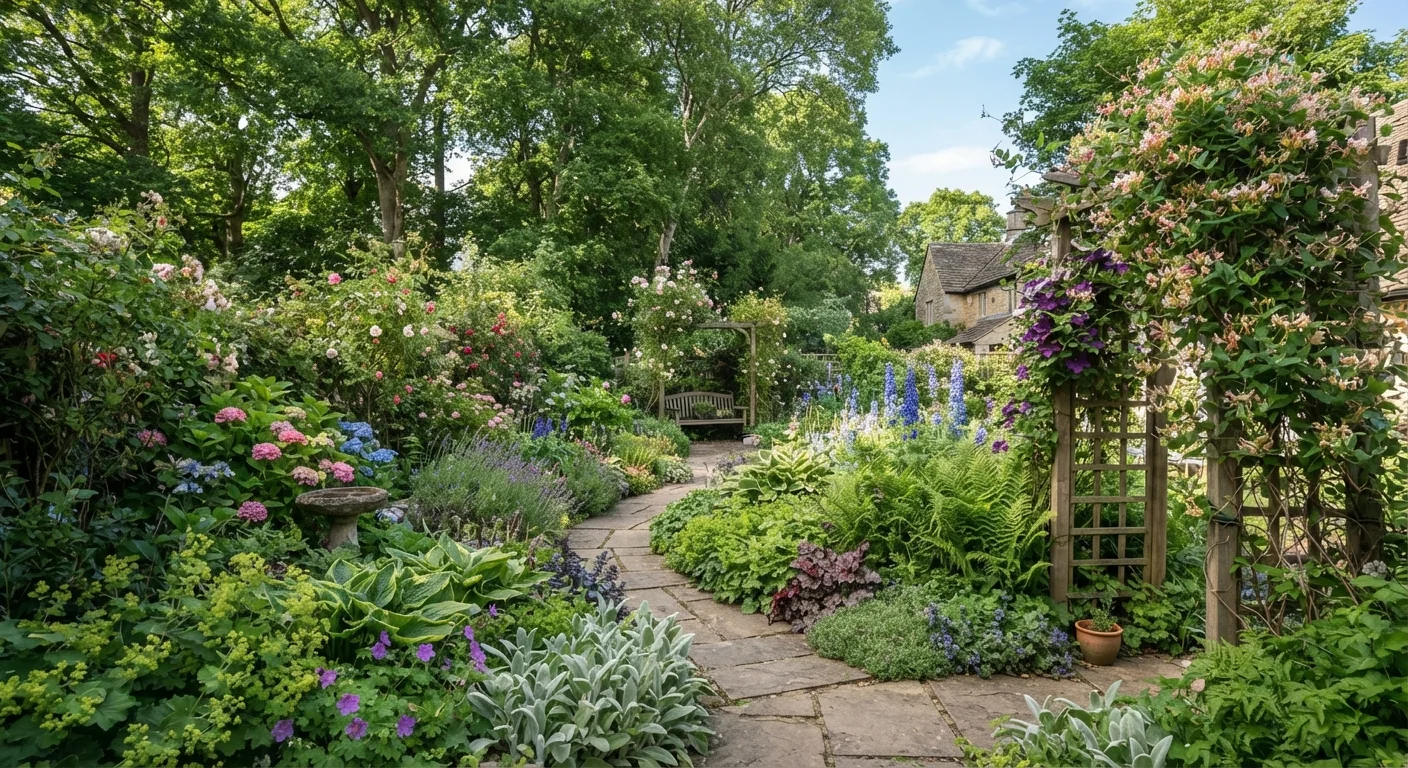
Most thriving gardens — from formal estates to modest backyards — share one underlying design principle: they use multiple plant layers working together. Rather than filling space with a single type of planting, layering stacks different plant categories by height and habit, creating structure that looks deliberate and supports itself over time.
The concept mirrors how plants grow naturally in woodland and meadow ecosystems. A forest canopy shades the understory shrubs below, which in turn shelter ground-hugging plants. Each layer earns its place by performing a function — blocking wind, preventing soil erosion, attracting pollinators, or simply filling in visual gaps across seasons.
Before choosing plants for any layer, it helps to understand what your soil is actually capable of supporting. Our guide on soil health and composition explains pH, drainage, and organic matter — all of which influence what will thrive where. Once your site is understood, the layering decisions become much clearer.
Trees: The Framework Layer
Trees form the uppermost layer and set the character of everything below them. Before planting, consider their mature size — not just how they look in the nursery pot. A tree planted too close to a structure, fence, or other planting zone will eventually cause problems that are expensive to correct.
Deciduous trees (those that shed leaves in autumn) are often the more flexible choice for residential gardens. They provide summer shade while allowing winter light to reach lower layers. Evergreen trees anchor year-round structure and work well as windbreaks or privacy screens along boundaries.
In smaller gardens, consider multi-stem or columnar varieties that deliver canopy benefits without spreading wide. Always check the tree's expected root spread alongside its height — root systems can affect foundations, drainage, and neighboring plants over time.
A tree's mature size matters far more than how it looks at planting time.
Shrubs: The Structural Middle Layer
Shrubs are the workhorse of any layered planting scheme. Sitting between canopy trees and low ground cover, they define garden rooms, soften hard edges, and provide reliable structure throughout the year — particularly when chosen to include both evergreen and deciduous varieties.
Evergreen shrubs (such as boxwood, holly, or viburnum) hold form and color through winter when the rest of the garden has died back. Deciduous flowering shrubs (like forsythia, lilac, or hydrangea) bring seasonal spectacle then step back gracefully. Combining both types means the shrub layer never looks completely empty.
When spacing shrubs, plant for their mature spread, not their current size. Overcrowding is one of the most common shrub mistakes — it leads to poor airflow, disease pressure, and the constant need for aggressive pruning. Check the expected width on the plant label and resist the urge to fill gaps with extra plants in year one.
Mixing evergreen and deciduous shrubs ensures your middle layer never looks bare.
Climbers: Making the Most of Vertical Space
Climbers are among the most efficient plants in a garden because they grow upward rather than outward, making them ideal for small plots, narrow side passages, or any space where horizontal room is limited. They can transform an ugly fence, soften a bare wall, or add a second season of interest to a tree or pergola.
Different climbers attach themselves in different ways, and matching the right climber to the right support structure matters. Self-clinging climbers like Virginia creeper use adhesive pads and need no tying — but they can damage soft mortar on older masonry walls. Twining climbers like wisteria or honeysuckle need horizontal wires or trellis panels. Scrambling roses or clematis need loose tying to supports as they grow.
Be aware that some vigorous climbers — particularly certain wisteria varieties — can become very heavy over time and may require robust structures. Plan the support before you plant, not after the climber has established.
Climbers grow upward, not outward — making them ideal for space-limited gardens.
Ground Cover: The Low Maintenance Floor
Ground cover plants are the unsung heroes of a well-layered garden. Their primary job is to cover bare soil densely enough that weeds struggle to establish — a natural alternative to constant mulching or hand-weeding. But well-chosen ground cover also contributes texture, color, and ecological value.
The most effective ground cover plants spread reliably, tolerate the light levels beneath taller layers, and don't require frequent division or replanting. Options like creeping thyme, pachysandra, ajuga, and hardy geraniums perform well in a range of conditions. For shadier spots under trees, epimedium is notably tough and low-maintenance once established.
It's worth pairing your ground cover choice with the right mulch strategy during the establishment phase. Even dense ground cover needs 12 to 18 months to knit together, and mulching between young plants during that period prevents weed competition while the coverage fills in.
Dense ground cover crowds out weeds naturally, cutting long-term maintenance significantly.
Seasonal Continuity: Thinking Across All Layers
One of the biggest advantages of layered planting is the ability to plan for year-round interest across every level simultaneously. Rather than choosing plants purely by how they look in spring, think about what each layer contributes in each season — and where the gaps might be.
A winter-flowering shrub like witch hazel fills a period when most other layers are dormant. An autumn-coloring tree bridges the gap between the end of summer perennials and the first frosts. Spring bulbs can naturalize beneath ground cover, pushing through before the canopy leafs out and blocks light.
Understanding plant lifecycles helps enormously here. Our plain-English plant glossary covers annuals, perennials, and biennials — categories that slot into any of these layers and can fill seasonal gaps without permanently altering the structure you've built.
Planning each layer for seasonal contribution prevents the garden from going bare in any month.
Putting It All Together
The goal of layering isn't complexity for its own sake — it's about choosing plants that work together so your garden becomes progressively easier to manage. A canopy tree shades out weeds beneath it. Ground cover locks in moisture, reducing how often you need to water or mulch. Shrubs fill the middle with seasonal structure so the garden never looks bare.
Start With One Layer at a Time
If you're establishing a garden from scratch, focus on trees and large shrubs first — these take the longest to mature and define where everything else goes. Once the structural layer is in place, add climbers and shrub borders in year two, and fill ground-level space last. Rushing all layers at once often leads to overcrowding as plants reach maturity.
If you're working with a compact space, vertical planting through climbers and wall shrubs can deliver the impact of multiple layers without consuming ground area. Our article on designing a small outdoor space covers scale and zoning in detail.
For the plant combinations within each layer, pairing compatible species thoughtfully can also reduce pest pressure and improve growing conditions. See our piece on companion planting for practical guidance on which plants support each other. Building your garden in layers isn't a one-season project — but the structure you establish now pays dividends in beauty and lower effort for years ahead.