

Key Takeaways
Companion Planting
Companion planting is the practice of growing different plants in close proximity because they may benefit one another — or at least avoid competing with each other. The idea is that certain plant combinations can deter pests, attract helpful insects, improve soil, or make better use of space. It's one of the oldest strategies in home gardening, rooted in both traditional farming knowledge and ongoing horticultural research.
Companion planting effects are thought to arise through mechanisms like chemical signaling (allelopathy), volatile organic compound release, and habitat modification for beneficial insects — though evidence strength varies considerably by pairing.
Where the Idea Comes From
Companion planting isn't a modern invention. Indigenous agricultural traditions across North America practiced it long before European settlement — most famously with the combination of corn, beans, and squash known as the Three Sisters. Each crop served the others: corn provided a climbing structure for beans, beans added nitrogen to the soil, and squash leaves shaded the ground to retain moisture and suppress weeds.
That combination remains one of the most studied and consistently supported examples of companion planting in practice. If you're curious about the soil mechanics behind why nitrogen matters, our guide to soil health explains what's actually happening underground when legumes do their work.
Over centuries, farmers and gardeners built up extensive lists of supposed plant relationships — some based on careful observation, others passed down as lore without clear evidence. Today, horticulturalists and agricultural researchers continue to test these claims, with results that are genuinely mixed.
What the Evidence Actually Shows
It's worth being honest: not all companion planting claims hold up under scrutiny. Some are well-supported by research; others remain plausible but unproven at a garden scale.
~33%
Yield increase in Three Sisters polyculture vs. monocultures
Research published in agricultural journals has found that traditional Three Sisters combinations can produce meaningfully higher total yields per area than the same crops grown separately.
70%+
Of flowering plants depend on animal pollination
According to the U.S. Department of Agriculture, the majority of flowering plants — including most fruit and vegetable crops — rely on pollinators, underlining why attracting them with companion flowers matters.
Stronger evidence exists for:
- Nitrogen fixation: Legumes (beans, peas, clover) host bacteria in their root nodules that convert atmospheric nitrogen into a form plants can use. Neighboring plants can benefit from this, particularly after legumes decompose.
- Pest confusion through diversity: Research does support the idea that mixed plantings can make it harder for specialist pests to locate host plants compared to monocultures.
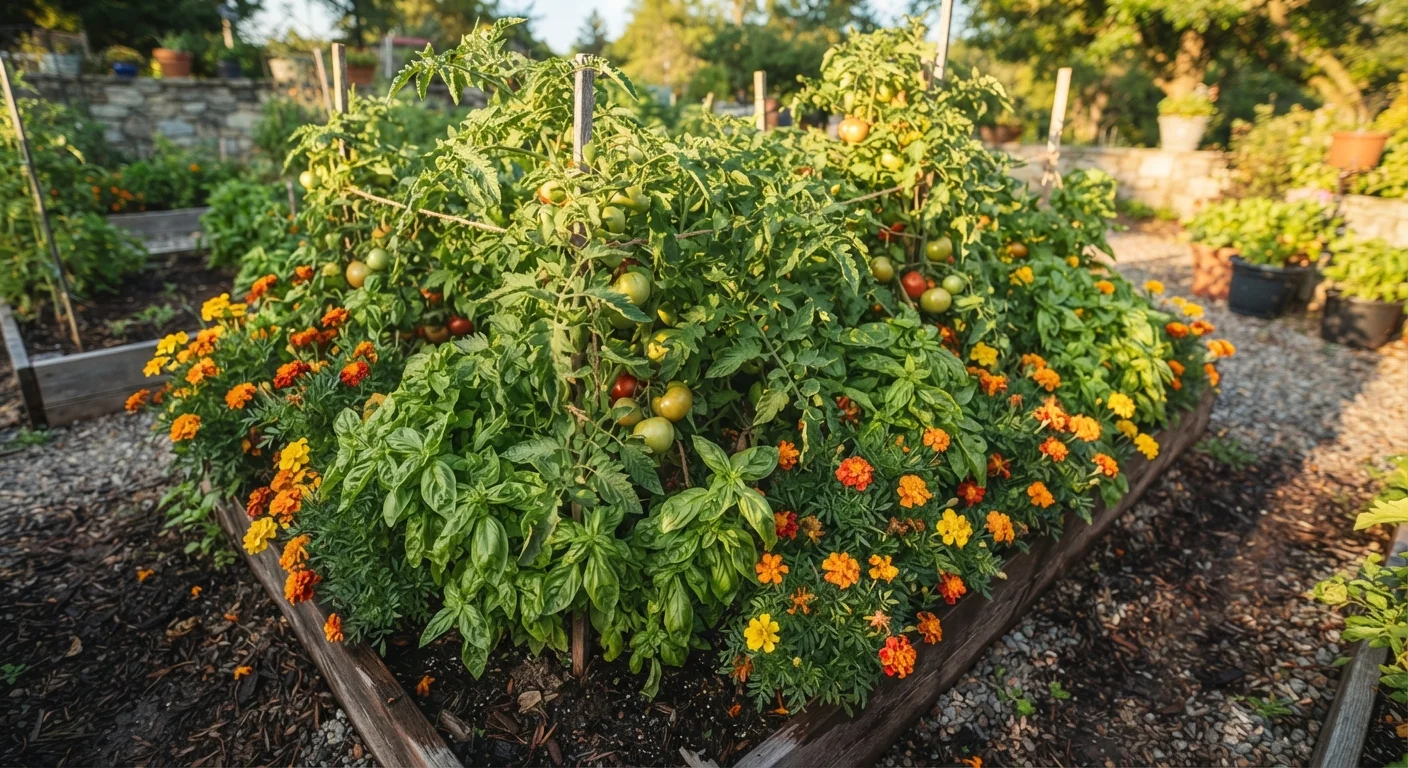
- Pollinator attraction: Flowering companions like marigolds, borage, and nasturtiums reliably attract bees and other beneficial insects, which can improve fruit set in flowering vegetables.
Thinner evidence exists for:
- Specific claims that one plant "repels" a named pest from a neighbor — these are harder to replicate consistently in garden conditions.
- Flavor enhancement claims (e.g., basil improving tomato taste) — appealing, but not well-supported by data.
Treating companion planting as a helpful framework rather than a guaranteed system sets realistic expectations.
Practical Pairings Worth Trying
Even with the nuance around evidence, several pairings make intuitive and practical sense for home gardeners:
Beyond specific pairings, think about functional groupings: tall plants providing shade for heat-sensitive crops, ground covers suppressing weeds under taller plants, and deep-rooted plants loosening soil for shallower neighbors. These structural benefits are often more reliable than chemical or pest-deterrent effects.
If you're starting a vegetable garden from scratch, companion planting can be built into your layout from the beginning rather than retrofitted later.
How to Use Companion Planting in Your Garden
Start simple. Pick one or two well-documented pairings and observe what happens over a season. Keeping a basic garden journal — noting pest pressure, plant vigor, and yield — helps you build your own evidence base over time.
Keep It Simple Your First Season
Resist the urge to redesign your entire garden around companion planting charts. Choose two or three pairings relevant to what you're already growing, and observe the results honestly. One season of careful observation teaches you more than any planting guide can guarantee.
A few practical principles:
- Plan for each plant's needs first. Sun, spacing, water, and soil requirements matter more than companion relationships. A good companion in the wrong conditions won't rescue either plant.
- Use companions to fill space strategically. Compact or trailing companions can fill gaps that would otherwise become weed habitat, which links naturally to good soil fertility practices.
- Think about bloom time. If you want pollinators visiting your vegetable flowers, make sure your companion flowers are actually blooming at the same time.
- Avoid confirmed antagonists. Keep fennel away from most vegetables, and keep alliums (onions, garlic) away from legumes.
For gardeners working with limited space, companion planting pairs naturally with vertical and layered planting strategies. See our article on choosing the right plant layer for how this thinking scales up.