

Key Takeaways
Option A
Raised Beds
The controlled, accessible growing environment.
Best for: Gardeners with poor native soil, limited mobility, or small defined spaces who want consistent drainage and easy weed management.
Option B
In-Ground Planting
The traditional, low-cost, large-scale approach.
Best for: Growers with healthy existing soil, room to expand, and an appetite for longer-term, lower-infrastructure gardening.
If your native soil is heavy clay, compacted, or potentially contaminated
Raised Beds
Raised beds let you bypass problematic native soil entirely by filling with a custom growing mix, giving plants the drainage and nutrition they need from day one.
If you want to grow food across a large area on a tight budget
In-Ground Planting
In-ground planting requires little upfront infrastructure — you dig, amend, and plant, making it far more economical at scale.
If you have mobility challenges or back pain
Raised Beds
A raised bed built at a comfortable working height significantly reduces bending and kneeling, making gardening more physically accessible.
If you want to grow deep-rooted crops like parsnips or squash at volume
In-Ground Planting
In-ground soil provides unlimited root depth and natural moisture retention, giving large or tap-rooted plants room to develop without hitting a bed's base.
If you're a first-time vegetable grower wanting reliable early results
Raised Beds
The controlled soil environment and improved drainage reduce common beginner frustrations like waterlogging and poor germination.
What Each Approach Actually Involves
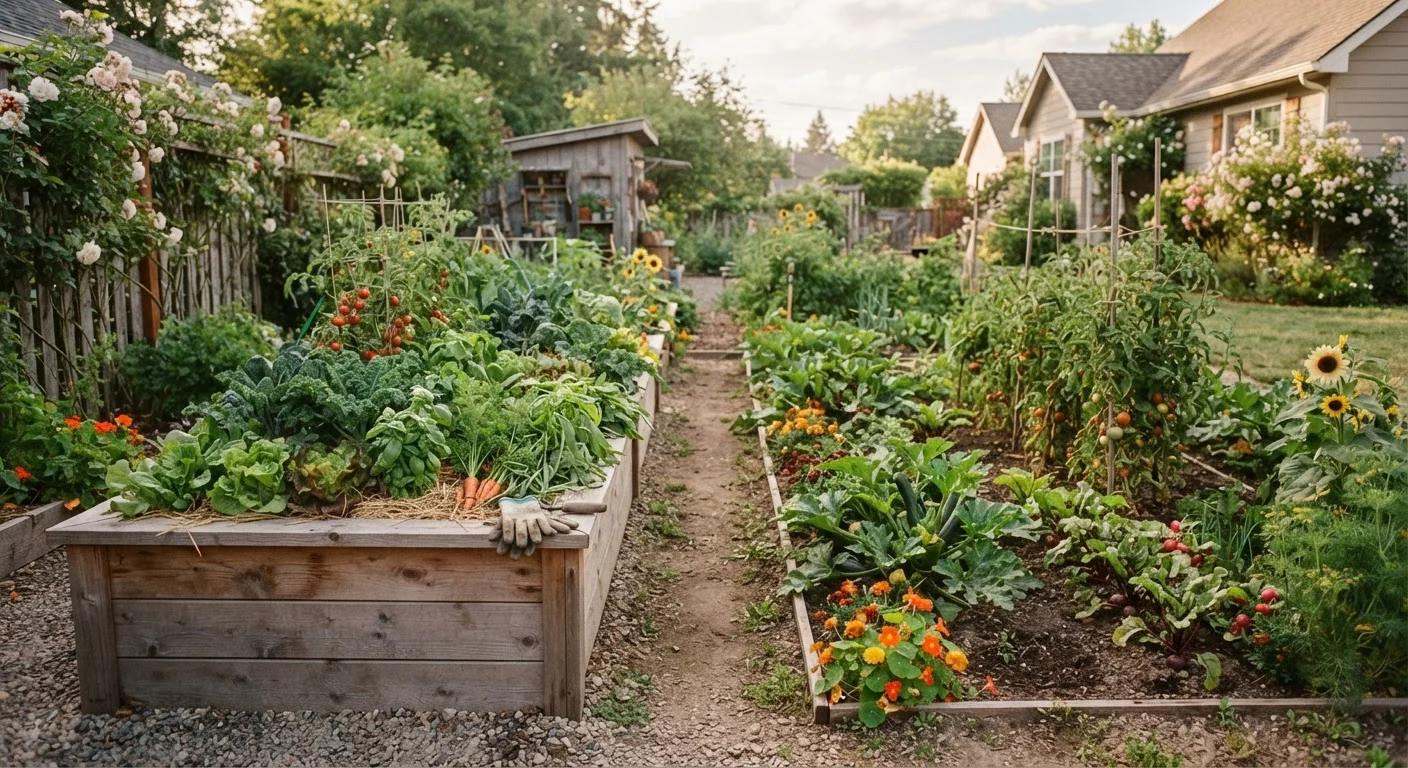
Raised beds are enclosed growing areas — typically framed with timber, metal, or stone — filled with a custom soil mix sitting above ground level. In-ground planting means preparing and cultivating the existing soil directly where it lies, sometimes with amendments worked in but without a surrounding structure.
Both methods can produce abundant crops and beautiful planting schemes, but they ask different things of you in terms of upfront investment, physical effort, and ongoing management. Understanding those differences is the starting point for making a practical choice. If you're new to growing and want a broader foundation, the beginner's guide to starting a vegetable garden covers site selection and planning from scratch.
| Criterion | Raised Beds | In-Ground Planting |
|---|---|---|
| Upfront cost | Higher (materials + fill soil) | Lower (amendments only) |
| Soil control | Full — you choose the mix | Limited by existing conditions |
| Drainage | Fast; rarely waterlogged | Varies by native soil type |
| Spring warmup speed | Faster — earlier planting | Slower in cold climates |
| Scalability | Expensive at large scale | Easy to expand cheaply |
| Weed pressure | Generally lower | Higher without consistent management |
| Accessibility | Can be built to any height | Requires bending to ground level |
| Long-term soil biology | Good with regular compost additions | Excellent; improves naturally over years |
Soil, Drainage, and Growing Conditions
Soil quality is where the two approaches diverge most sharply. In-ground planting means working with what's already there — and native soil ranges from ideal loam to dense clay or nutrient-poor sand. Improving it takes time, organic matter, and patience. That said, established in-ground beds develop rich, layered soil ecosystems over years, with earthworms, fungi, and bacteria all contributing to fertility naturally.
Raised beds let you sidestep that process entirely by filling with a blend you choose — typically topsoil, compost, and other amendments mixed to suit your plants. This is particularly useful on sites with compacted subsoil, drainage problems, or any history of contamination. For a deeper look at what makes soil actually work, see our explainer on soil health and composition.
Drainage is another practical difference. Raised beds drain faster by design, which reduces waterlogging risk and means the soil warms up earlier in spring — useful in cooler climates for getting a head start on the season. In-ground soil holds moisture longer, which can be an advantage during dry spells but a problem in wet regions with heavy clay.
6–8 weeks
Earlier season start possible with raised beds
Raised beds in cooler climates can warm up several weeks sooner than ground-level soil, according to general horticultural guidance from university extension programs.
50%+
Reduction in weed pressure reported by raised bed users
Many gardeners report significantly fewer weeds in raised beds due to the use of clean fill soil and the absence of established weed seed banks found in native ground.
Cost, Effort, and Long-Term Maintenance
Upfront cost differences are real. Building raised beds requires materials — timber, metal panels, screws, corner posts — plus enough quality growing mix to fill them, which adds up quickly for anything larger than a few square feet. A single 4×8-foot raised bed, including materials and soil, can cost anywhere from $100 to several hundred dollars depending on materials and your region. In-ground planting's main costs are soil amendments, seeds, and your time.
Over time, though, the equation shifts. Raised beds can last many years with minimal upkeep, and their contained footprint makes weeding, mulching, and watering easier and more targeted. Speaking of mulch, choosing the right covering matters in both systems — our comparison of organic and inorganic mulch options explains what each type does and where it fits.
In-ground gardens require ongoing soil improvement — adding compost, managing compaction, and sometimes aerating — but they don't depreciate or rot. Large growing areas are simply impractical to raise, making in-ground the only sensible choice at scale. If space is the constraint rather than ground access, container growing is worth considering as a third option.
A Note on Timber and Material Safety
If you build raised beds from timber, avoid wood treated with older preservatives that may leach chemicals into soil. Look for lumber rated safe for vegetable gardens — heat-treated pine and cedar are commonly used options. For food growing, lining beds with heavy-duty fabric can add an extra layer of separation between wood and soil. When in doubt, check guidance from your local cooperative extension service.