

Key Takeaways
Our Verdict
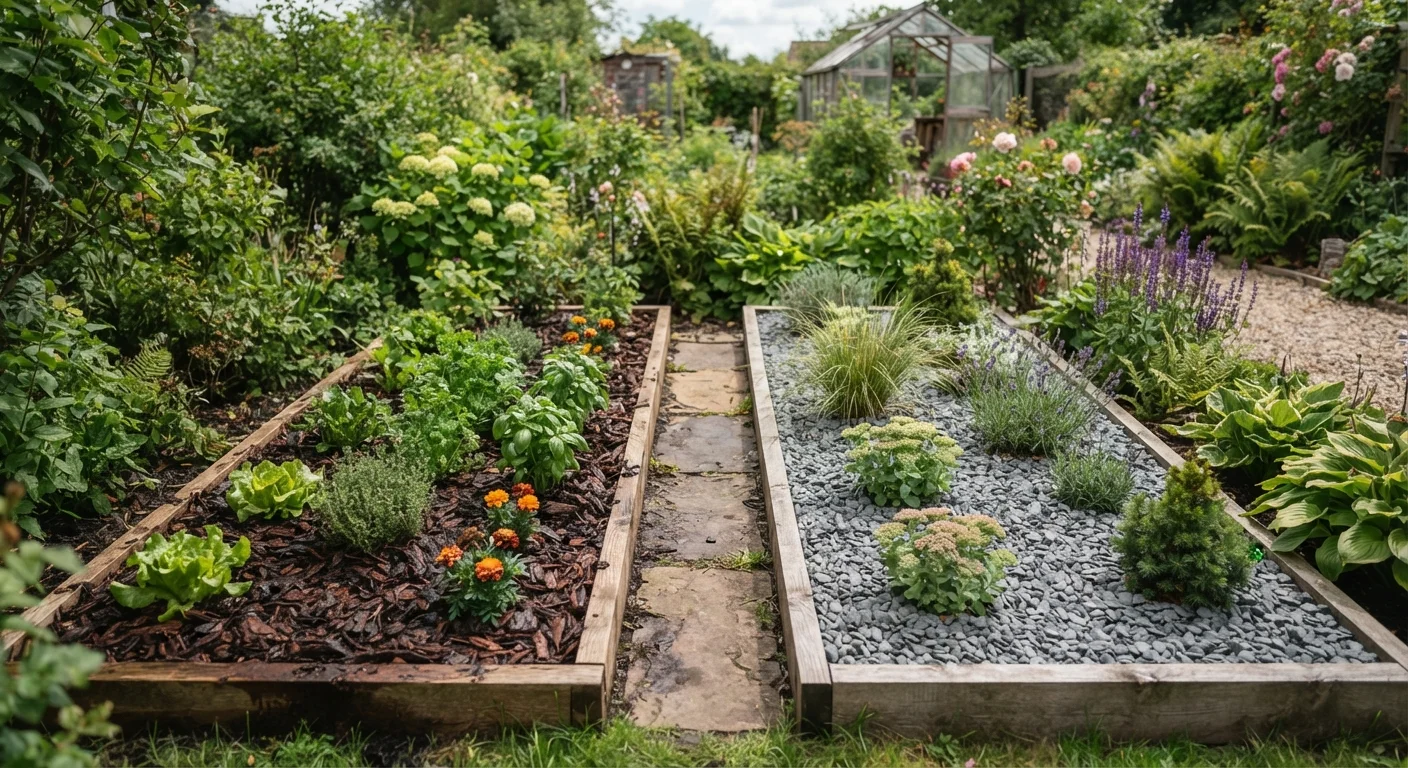
Organic mulches are generally the stronger choice for planting beds where soil health and plant growth are priorities. Inorganic mulches earn their place in high-traffic pathways, rock gardens, slopes prone to erosion, and areas where permanence outweighs fertility. Most homeowners will benefit from using both types in different zones of the same yard.
| Best for | Recommended |
|---|---|
| Gardeners focused on soil improvement and plant nutrition | Organic mulch (bark, compost, straw) |
| Low-maintenance pathways, driveways, and decorative areas | Inorganic mulch (gravel, crushed stone) |
| Slopes or areas with heavy rainfall and erosion risk | Inorganic mulch or coarse bark chips |
| Vegetable gardens and annual flower beds | Organic mulch (straw, shredded leaves, compost) |
What Mulch Actually Does in Your Garden
Mulch is any material spread over the soil surface around plants. Its core jobs are to retain soil moisture, suppress weeds, regulate soil temperature, and protect plant roots from weather extremes. What separates organic mulch from inorganic mulch is straightforward: organic types are made from once-living material and will decompose; inorganic types are mineral- or synthetic-based and hold their form indefinitely.
Understanding this distinction is the foundation for making the right call. When organic mulch breaks down, it feeds soil microbes and slowly improves your soil's structure and nutrient content — which matters greatly if you're growing edibles or trying to build a healthier planting bed. See our guide to soil health for a deeper look at what's happening beneath the surface.
Inorganic mulch doesn't decompose, so it never feeds the soil — but it also never needs replacing. That tradeoff defines where each type earns its keep.
Organic Mulch: Types, Benefits, and Drawbacks
Common organic mulches include shredded bark, wood chips, straw, shredded leaves, grass clippings, and compost. Each has slightly different characteristics:
- Bark and wood chips: Long-lasting among organic options (1–3 years before breakdown), excellent for shrub beds and trees.
- Straw: Lightweight and affordable, ideal for vegetable gardens and newly seeded lawns, but breaks down within a single season.
- Shredded leaves: A free resource from your own yard that works well mixed into planting beds — pairs naturally with home composting practices.
- Compost: Offers the highest immediate nutrient value but breaks down quickly and provides less weed suppression than coarser materials.
The primary benefit of organic mulch is its contribution to long-term soil biology. As it decomposes, it adds organic matter that improves drainage in clay soils and water retention in sandy soils. The main drawbacks: it requires periodic replenishment (typically once or twice a year), can harbor slugs or fungal issues if piled against plant stems, and some wood-based types may temporarily tie up soil nitrogen during breakdown.
Avoid the Mulch Volcano
One of the most common mulching mistakes is piling material into a cone shape against tree trunks — sometimes called a 'mulch volcano.' This traps moisture against bark, invites fungal disease, and can girdle (choke) the tree over time. Spread mulch in a flat, even layer and keep it well clear of the trunk base.
Inorganic Mulch: Types, Benefits, and Drawbacks
Inorganic mulches include gravel, crushed stone, river rock, lava rock, and landscape fabric. Each has specific applications:
- Gravel and crushed stone: Durable, attractive, and excellent for drainage-sensitive plants like ornamental grasses, succulents, and Mediterranean herbs.
- River rock: Heavier and more stable than gravel, suited to slopes and high-traffic areas where lighter material would scatter.
- Landscape fabric: Designed to suppress weeds while allowing water through, though effectiveness decreases as soil and debris accumulate on top over time.
Inorganic mulches are a sensible choice when permanence is more valuable than soil enrichment — think pathways, rock gardens, or utility areas. They also work well around plants that prefer dry, well-drained conditions. The key drawbacks: they don't improve soil, they can raise soil temperature significantly in summer (which may stress shallow-rooted plants), and removing them later is labor-intensive. Landscape fabric in particular often fails after a few years as weed seeds germinate in the debris layer that forms on top.
| Organic Mulch | Inorganic Mulch | |
|---|---|---|
| Soil enrichment | Yes — improves soil as it breaks down | No — does not feed soil |
| Longevity | 1–3 years before replenishment needed | 5+ years, minimal replacement |
| Weed suppression | Good at proper depth (2–3 inches) | Good, but fabric degrades over time |
| Moisture retention | Excellent | Moderate; stone can reduce evaporation |
| Summer heat impact | Insulates and cools soil | Stone can raise soil temperature |
| Best uses | Planting beds, edibles, tree rings | Paths, rock gardens, slopes |
| Maintenance level | Moderate — seasonal top-up required | Low — periodic raking only |
Matching Mulch Type to Garden Goals
The decision isn't really organic versus inorganic — it's about matching material to purpose. Here's a practical framework:
- Planting beds with edibles or annuals: Choose organic. Straw or shredded leaves work well here, and you can work spent mulch into the soil at season's end.
- Established shrub or tree borders: Bark chips or wood mulch at 2–3 inches depth keeps moisture in and weeds down with minimal intervention.
- Paths and utility zones: Gravel or crushed stone is more practical and longer-lasting than any organic option.
- Slopes and erosion-prone areas: Heavy organic mulch (coarse bark) or river rock holds better than fine materials that wash away. Common lawn myths often overlook mulch's role in slope stabilization.
- Rock or xeriscape gardens: Gravel or lava rock complements drought-tolerant plants and reinforces the design intent.
For layered planting schemes — such as trees underplanted with shrubs and ground cover — your mulch should match the most moisture-sensitive plant layer present. Our article on choosing the right plant layer explains how plant layers interact, which directly affects mulch decisions.
Application Tips That Apply to Both Types
Regardless of which mulch you choose, a few universal principles protect your plants and get the most from your investment:
- Depth matters: Most mulches perform best at 2–3 inches. Too thin and weeds push through; too thick and water can't penetrate or roots may suffocate.
- Keep mulch away from stems and trunks: Piling mulch against plant bases traps moisture and encourages rot and pest damage. Leave a 2–3 inch gap around stems.
- Prepare the area first: Pull existing weeds before laying any mulch. Mulch slows new weed growth but won't reliably kill established ones.
- Replenish organic mulch seasonally: Check depth each spring and top up as needed. Inorganic mulch typically needs only periodic raking to redistribute.
If you're weighing mulch needs as part of a broader garden setup — for example, choosing between raised beds versus in-ground planting — your bed structure will influence which mulch type makes the most practical sense.
Landscape Fabric Has Real Limitations
Despite its popularity, landscape fabric often underperforms over time. Weed seeds germinate in the debris layer that accumulates on top, and the fabric itself becomes difficult to remove once embedded in soil. For most planting beds, a proper depth of organic mulch provides equal or better weed control without the long-term complications.