

Key Takeaways
Dripping Tap
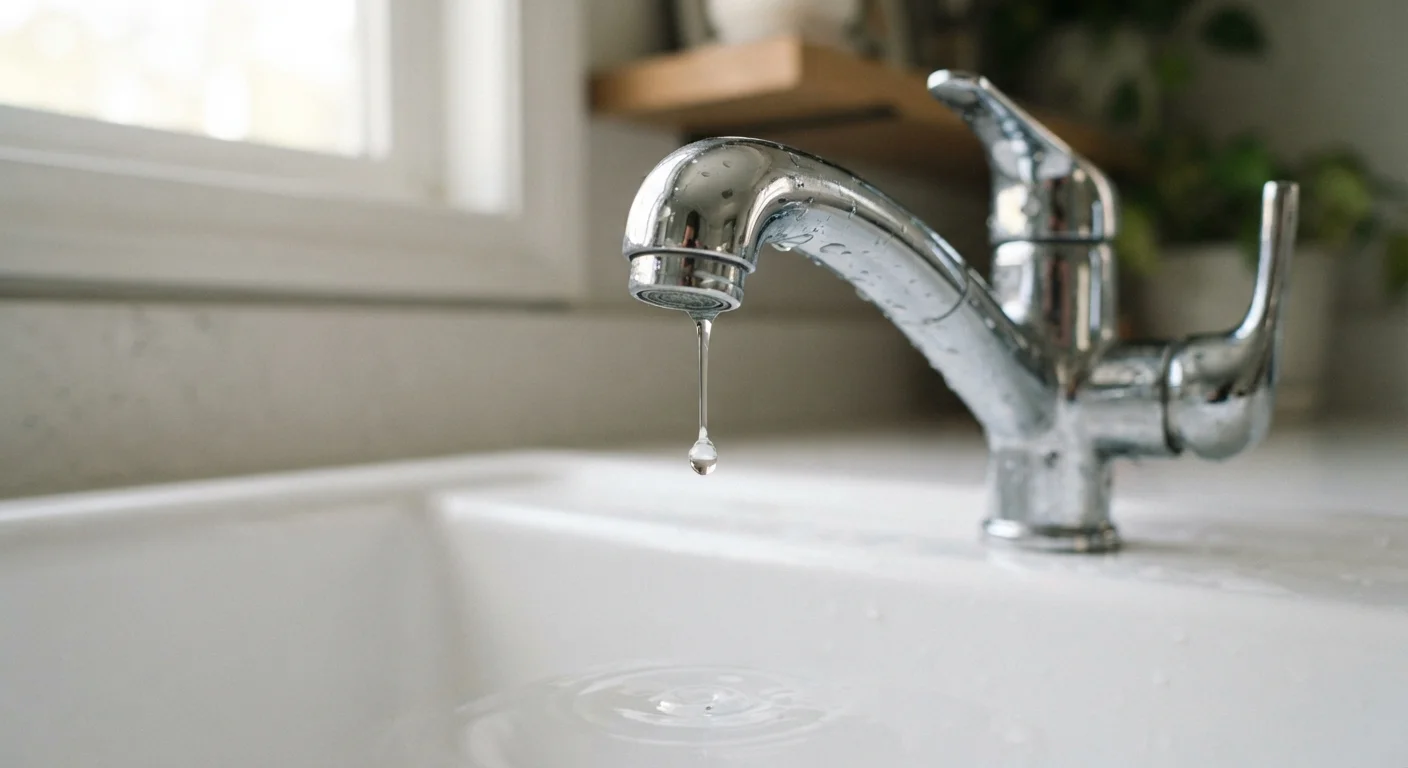
A dripping tap is a faucet that releases water even when fully turned off. The drip usually results from worn internal components — most commonly a washer, O-ring, or cartridge — that no longer create a watertight seal. While it looks trivial, an unresolved drip can waste significant water over time and may indicate deeper plumbing issues.
Compression faucets rely on a rubber washer pressed against a seat to stop flow; ball, cartridge, and ceramic-disc faucets use different mechanisms, so the repair approach varies by faucet type.
What a Drip Is Really Telling You
A dripping tap is rarely just a nuisance — it's a symptom. The specific location and nature of the drip often point to which internal component has failed. A drip from the spout when the faucet is off almost always means the sealing mechanism inside the valve body has worn out. A leak around the base of the faucet, on the other hand, suggests a deteriorating O-ring or a loose packing nut.
Understanding this distinction matters because it shapes the fix. Replacing a washer is straightforward; addressing corrosion or a cracked valve seat is a different task entirely. Before assuming the worst, turn off the water supply valve beneath the sink and remove the faucet handle to inspect what's inside. You'll typically find a rubber washer, a cartridge, or a ceramic disc depending on the faucet type — and visible wear, cracking, or mineral buildup will often be obvious.
Before You Disassemble Anything
Always turn off the water supply valve under the sink before opening a faucet. Keep the drain stopper closed so small parts — washers, screws, O-rings — don't disappear. Take a photo of the faucet assembly before disassembly so you have a reference when reassembling.
The Hidden Costs of Waiting
Homeowners tend to tolerate drips because they seem harmless. But inaction compounds the problem. Water waste is the most immediate cost — a faucet dripping at one drop per second loses a meaningful volume of water annually, which accumulates on utility bills without delivering any benefit.
Beyond water waste, prolonged moisture accelerates corrosion. Mineral deposits from hard water can pit the valve seat — the metal surface the washer presses against — making a simple washer replacement insufficient. Once the seat is damaged, the repair becomes more involved and more expensive. This pattern echoes what happens across home systems when routine issues are dismissed: as explored in the real cost of skipping routine maintenance, deferred fixes rarely stay small.
Moisture under a sink cabinet is also an invitation for mold. Even a slow drip that pools on cabinet flooring can cause wood rot and mold colonies in weeks, turning a $15 washer replacement into a cabinetry repair.
~3,000 gal
Water wasted per year by a single dripping faucet
The U.S. Environmental Protection Agency estimates a faucet dripping at one drop per second wastes approximately 3,000 gallons annually.
10%
Homes with leaks wasting 90+ gallons daily
According to the EPA's WaterSense program, about 10% of U.S. homes have leaks that collectively waste 90 gallons or more of water every day.
8–10 years
Typical lifespan of braided supply line hoses
Plumbing professionals generally recommend inspecting and replacing flexible supply line hoses every 8–10 years to reduce the risk of sudden failure.
Signs the Problem Is Bigger Than the Faucet
Some drips signal issues that go beyond the fixture itself. Watch for these warning signs:
- Water under the cabinet that doesn't trace to the faucet spout — this may indicate a supply line connection or shut-off valve failure.
- A drip that returns immediately after you replace the washer — the valve seat is likely damaged and needs resurfacing or replacement.
- Discolored or rusty water accompanying the drip — corrosion inside pipes or the water heater may be involved.
- Low water pressure combined with dripping — occasionally signals a broader supply line issue rather than a faucet problem.
- Drips at multiple fixtures simultaneously — points to a systemic pressure or supply issue, not isolated faucet wear.
Any of these scenarios warrants a call to a licensed plumber. Attempting complex valve or supply-line repairs without experience can escalate costs quickly — a point reinforced in our overview of DIY fixes that often make things worse.
What to Do Before You Call Anyone
A few straightforward steps help you arrive at the right decision — and give a plumber useful information if you do call.
- Identify the faucet type. Compression, ball, cartridge, or ceramic-disc faucets each require different parts. Check the brand and model number, usually stamped on the faucet body.
- Locate and test the shut-off valves. Turn the valves under the sink to confirm they fully stop the water flow. A valve that won't fully close is itself a problem to flag.
- Note the drip location. Spout drip versus base leak versus cabinet moisture each point to different causes.
- Check water pressure. Most homes operate between 40–80 psi. Excessively high pressure causes accelerated wear on washers and seals throughout the house.
If the problem appears isolated to the faucet and you're comfortable with basic tool use, a washer or cartridge replacement is a reasonable first attempt. For anything involving supply lines, main shut-offs, or recurring leaks, a licensed plumber is the appropriate call. Permits are not typically required for faucet-level repairs, but any work involving new plumbing connections may require inspection — always verify your local code requirements.
This article is for general informational purposes only. Plumbing regulations and requirements vary by location. Consult a licensed plumber for diagnosis and repairs specific to your home.