

Key Takeaways
Option A
River Cruising
The intimate, destination-first way to cruise.
Best for: Travelers who want cultural immersion, walkable port towns, and a calm, unhurried pace.
Option B
Ocean Cruising
The feature-rich, wide-ranging cruise experience.
Best for: Travelers who want on-ship entertainment, long sea-day relaxation, and flexible port variety.
If you want deep cultural immersion with minimal planning
River Cruising
River itineraries dock steps from historic city centers, and most lines bundle guided excursions into the fare so exploration is built-in from the start.
If you're traveling with kids or a mixed-age group
Ocean Cruising
Large ocean ships offer dedicated kids' clubs, pools, arcades, and varied dining that keep different age groups entertained throughout the voyage.
If you're a first-time cruiser on a moderate budget
Ocean Cruising
Entry-level ocean cruise fares are generally lower, and the sheer range of onboard activity means you'll never feel at a loss even on sea days.
If you prefer a small-group, quieter atmosphere
River Cruising
With passenger counts rarely exceeding 200, river ships feel more like boutique hotels than floating resorts — ideal for travelers who dislike crowds.
If you want to cover far-flung destinations in one trip
Ocean Cruising
Ocean itineraries can span multiple countries and continents, from the Caribbean to Alaska, in ways no river route can match geographically.
Ship Size and Atmosphere
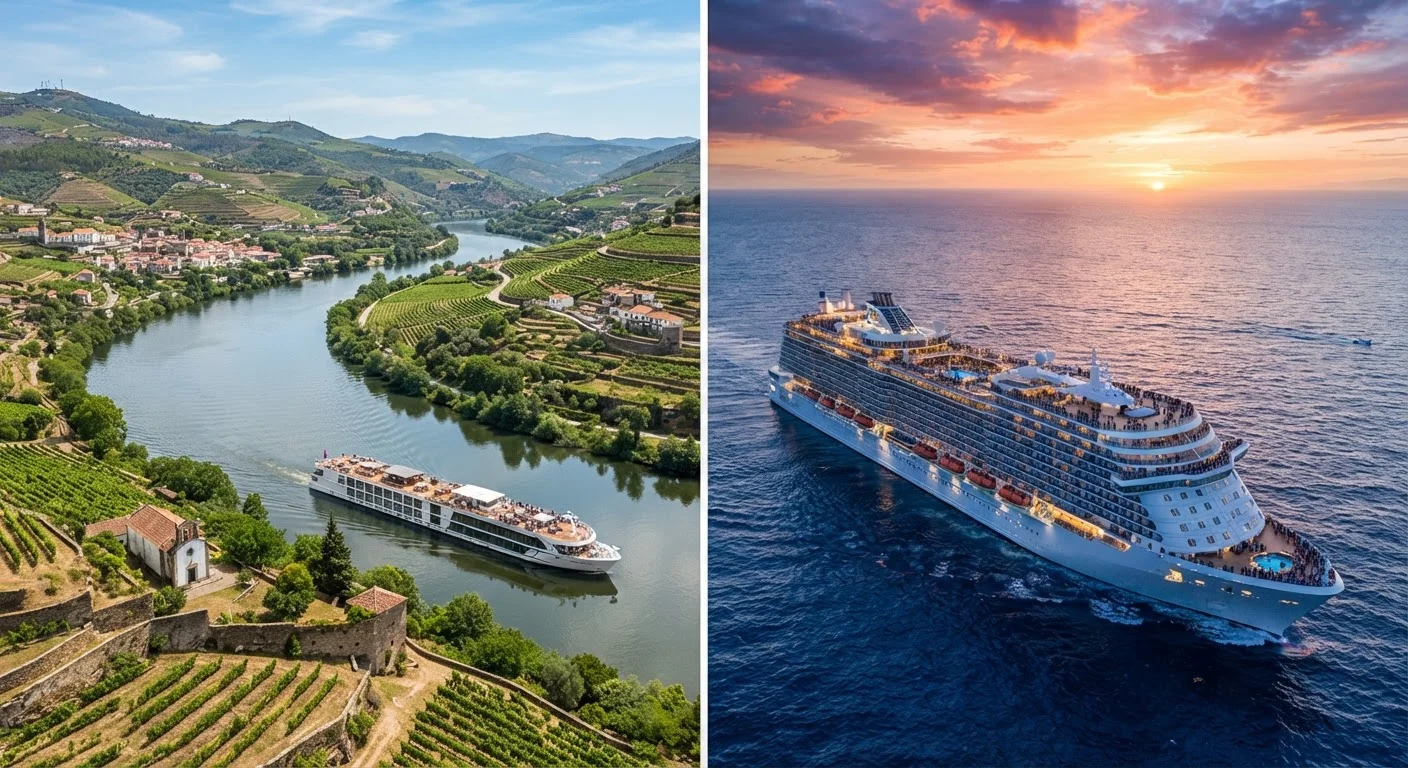
The most immediate difference between the two styles is scale. River ships — sometimes called longships — are purpose-built to fit within the locks and bridges of Europe's inland waterways, the Mekong, the Nile, and other river systems. That constraint keeps passenger counts low, typically between 100 and 200 guests. The atmosphere is conversational and unhurried; you'll likely recognize fellow passengers by day two.
Ocean ships operate on an entirely different scale. Midsize vessels carry around 1,000–2,000 passengers, while the largest ships in operation hold well over 5,000. That volume supports sprawling amenity decks — multiple pools, Broadway-style theaters, rock-climbing walls, and dozens of dining options. For travelers who want the ship itself to be part of the holiday, ocean cruising delivers that in full.
If the idea of navigating a crowd to reach the breakfast buffet sounds exhausting, a river ship's smaller footprint may suit you better. If you'd rather have a new restaurant to try every night of the week, size is your friend.
| Criterion | River Cruising | Ocean Cruising |
|---|---|---|
| Typical passenger count | 100–200 guests | 1,000–5,000+ guests |
| Onboard amenities | Dining, lounge, sun deck | Pools, shows, multiple dining, gym, spa |
| Port access | Docks in city centers | Often docks at port terminals |
| Excursions included | Usually yes | Usually extra cost |
| Base fare per night | Generally higher | Generally lower |
| Motion sickness risk | Very low | Low to moderate depending on route |
| Geographic range | Single river region | Multi-country, global routes |
| Best for families | Limited kids' programming | Extensive family amenities |
Itineraries, Ports, and How You Explore
River cruise itineraries are geographically compact by nature. A classic eight-day Danube voyage, for example, might visit five or six cities — but each is walkable from the dock. Ships tie up directly in town centers, meaning you can step ashore independently at almost any hour. That access changes how you experience a destination; you're not bused in from a distant terminal, and you're not racing back for a sailaway.
Ocean itineraries offer broader geographic reach. A single Caribbean voyage might touch four or five island nations. A Mediterranean sailing could span three countries in a week. The trade-off is that ocean ships often dock at large commercial port terminals located miles from the city center, requiring a shuttle, taxi, or organized excursion to reach the highlights. Planning your shore excursions becomes more important as a result.
River cruises also tend to include guided excursions as part of the base fare, which simplifies budgeting considerably. Ocean lines usually charge for excursions separately, though the freedom to explore independently — or skip a port entirely and stay onboard — is a genuine perk for some travelers. For help matching a wider itinerary to your travel personality, see our guide on choosing a cruise itinerary.
Cost, Inclusions, and What You're Actually Paying For
River cruises carry a higher sticker price per night than most ocean sailings — a seven-night European river voyage can run $2,000–$5,000 per person or more depending on the line, season, and cabin category. However, that fare typically bundles shore excursions, most alcoholic and non-alcoholic beverages, gratuities, and Wi-Fi. The all-in nature of river cruise pricing makes the final cost easier to predict.
Ocean cruise base fares are often lower and more promotable, but the onboard spending model is very different. Specialty dining, drinks packages, Wi-Fi, gratuities, and excursions are usually add-ons. A couple who boards with a modest base fare can still disembark with a substantial onboard bill if they aren't tracking their spending throughout the voyage.
~$300–$500
Average all-in river cruise cost per person per day
Industry estimates suggest fully bundled river fares frequently fall in this range once excursions, beverages, and gratuities are accounted for.
330+
Rivers navigable by cruise ship worldwide
According to cruise industry sources, itineraries now span rivers across Europe, Asia, Africa, and the Americas.
Neither model is inherently more expensive — the math depends heavily on how you cruise. If you plan to drink wine at dinner, take guided tours at every port, and use Wi-Fi daily, a river cruise's bundled fare may come out comparable to an ocean sailing once extras are added. If you're disciplined about onboard spending and prefer independent exploration, an ocean cruise can be quite economical. Before booking anything, our first cruise guide walks through what's typically included across both formats.
Motion, Comfort, and Who Travels Each Style
One practical consideration often overlooked in the excitement of planning: motion. River ships sail on calm, sheltered waterways, so seasickness is rarely an issue. Ocean crossings — even on large stabilized vessels — can involve meaningful swells, particularly in the North Atlantic or during storm season. Travelers with motion sensitivity should factor this in when choosing a region and season for an ocean voyage.
River cruising skews toward an older, culturally curious demographic, and itineraries are typically designed around history, cuisine, and local heritage. That doesn't mean younger travelers won't enjoy it — many do — but the pace and programming reflect that orientation. Ocean cruising, by contrast, spans a much wider age range. Family-friendly megaships are built around entertainment for all ages, and cruising with kids on an ocean vessel is a genuinely well-supported experience.
Solo travelers will find both formats accommodating in different ways — ocean ships offer more social programming while river ships provide an easier environment to meet fellow passengers organically. For a fuller look at what solo cruising actually involves, our solo cruising guide covers the real trade-offs.
Cabin Size Differs Significantly
River ship cabins are typically smaller than ocean ship cabins at the same price tier, due to the constraints of building narrow vessels that fit inland waterways. If cabin space is a priority, compare square footage carefully before booking. Our cabin types guide explains what to look for across both cruise formats.