

Key Takeaways
Our Verdict
Neither approach is universally better — the right choice depends on the destination, your comfort level, and how tightly scheduled your port day is. Ship excursions win on reliability and ease; independent tours win on cost and customization. Most experienced cruisers end up using both strategies across a single itinerary.
| Best for | Recommended |
|---|---|
| First-time cruisers or those unfamiliar with a destination | Ship-booked excursions |
| Budget-conscious travelers seeking flexible, smaller-group experiences | Independent tours |
| Ports with complex logistics, remote locations, or limited transport | Ship-booked excursions |
| Well-connected ports with easy walkability or established local operators | Independent tours |
Why the Excursion Decision Matters
A port day is one of the most valuable parts of any cruise itinerary. How you spend those few hours ashore — and who you book through — can mean the difference between a memorable highlight and a frustrating, rushed experience. If you're new to cruising, our first-cruise guide covers how port days typically work alongside the broader logistics of ship life.
At nearly every port, you face the same core choice: purchase an excursion directly through the cruise line, or arrange your own activities independently through a local operator, a travel platform, or on your own. Both paths have genuine advantages and real trade-offs. Understanding them before you sail helps you plan more confidently — and spend your time ashore wisely.
Ship-Booked Excursions: What You're Paying For
Cruise lines sell organized tours at every port on their itinerary. These range from city bus tours and snorkeling trips to cooking classes and adventure hikes. The appeal is straightforward: everything is coordinated, pre-vetted, and integrated with the ship's schedule.
The most significant benefit is the guaranteed re-boarding policy. If a ship-sponsored tour runs long due to traffic or delays, the ship will wait for you. That safety net disappears the moment you book independently — if you're late to the pier, the ship can and does leave without you.
Ship excursions also come with a degree of vetting. Cruise lines contract with local operators and, in theory, hold them to service and safety standards. For travelers visiting a destination for the first time or navigating a port with limited English-language infrastructure, that layer of assurance has real value.
The trade-off is cost and crowd size. Ship-sponsored tours are consistently more expensive than comparable independent options, sometimes by 30–50%. Groups tend to be large, itineraries are fixed, and you'll often spend time waiting for fellow passengers. If a port's signature attraction is something you could easily reach by taxi or on foot, paying a premium for a group bus tour may not feel worthwhile.
| Ship-Booked Excursions | Independent Tours | |
|---|---|---|
| Cost | Higher — cruise line markup applies | Lower — book direct with operators |
| Ship waits if you're late | Yes — guaranteed re-boarding policy | No — you're responsible for return |
| Group size | Often large (20–50+ people) | Smaller, more personal |
| Itinerary flexibility | Fixed schedule, limited customization | Adaptable to your interests |
| Ease of booking | One-stop via cruise line app or desk | Requires independent research |
| Operator vetting | Pre-screened by cruise line | Your responsibility to verify |
| Best suited for | First-timers, remote or complex ports | Experienced travelers, well-connected ports |
Independent Tours: Flexibility at a Trade-Off
Booking independently means arranging your own activities — through a local tour company, a reputable online platform, a private guide, or simply exploring on your own. Done well, this approach offers a richer, more personal experience at a lower price point.
Independent operators often specialize in smaller groups, which means less waiting, more access, and guides who can adapt the tour to your interests. You can linger at a market, skip a stop that doesn't interest you, or swap a generic city tour for a cooking class with a local family.
Build In a Return Buffer
When booking independently, plan to be back at the pier at least 60–90 minutes before the official all-aboard time. Traffic, unexpected delays, and longer-than-expected activities are common. Giving yourself a generous buffer protects against the worst-case scenario of missing the ship entirely.
Cost savings are real but variable. In some ports, taxis from the pier are inexpensive and safe; in others, distances are long and transport options are limited. Research is essential before you commit. Check travel forums, consult your cruise line's port guide for independent travelers (many publish these), and verify that any local operator you book through has strong, recent reviews.
The critical limitation: if your independent tour runs late, the ship will not hold for you. You'd need to arrange and fund your own transportation to the next port — which can be expensive and stressful. This risk is higher in ports where traffic is unpredictable or where the pier is far from the attractions. It's wise to build in a buffer of at least 60–90 minutes before the all-aboard time when planning independently. For a broader look at managing cruise costs, see our breakdown of what's covered in your cruise fare.
How to Decide Port by Port
Most experienced cruisers don't commit to one strategy for the entire voyage. Instead, they evaluate each port individually using a few practical criteria.
- Port complexity: Is the pier walkable to town, or do you need transportation? Remote or tender ports (where you arrive by small boat) can make independent arrangements harder to coordinate.
- Schedule tightness: If the ship is only in port for four hours, the margin for error is small. A shorter port call often favors the reliability of a ship excursion.
- Destination familiarity: In a port you know well or have researched thoroughly, independent travel is easier to manage. In an unfamiliar location with a language barrier, a guided ship tour adds real comfort.
- Activity type: Logistically complex activities — remote beach access, island-hopping, or transfers to distant landmarks — are often more safely handled through operators familiar with the ship's schedule.
You might also consider travel insurance that covers trip interruptions, including missed departures. For general guidance on coverage types, our insurance hub explains how policies typically work. For more ways to make the most of your time at sea and ashore, explore our travel tips hub.
A Word on Safety and Verification
Regardless of how you book, always verify safety conditions and any entry requirements for a port before you go. Entry rules, health requirements, and local advisories can change. Check official government travel advisory sites (such as the U.S. State Department's travel portal) and your cruise line's port briefings — which are typically available in your daily ship newsletter or via the onboard app.
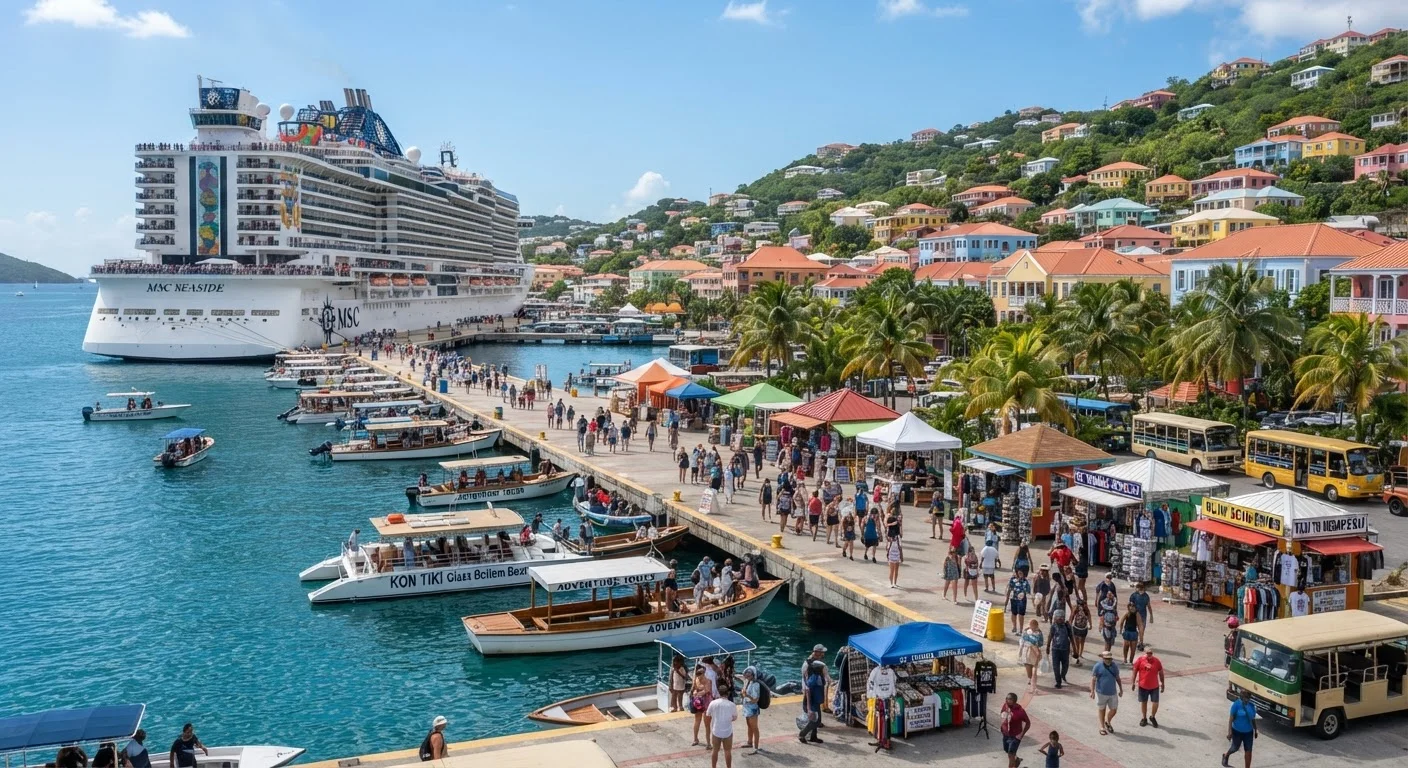
Be cautious about booking tours through solicitations at the pier. While many pier-side operators are legitimate, it's harder to vet them without advance research. Booking any independent tour in advance — so you can read reviews and confirm credentials — is generally more reliable than booking on the spot. If a port day is your only opportunity to see a particular destination, that's a port where caution tends to pay off.
This article provides general travel information only. Entry requirements, safety conditions, and local services vary by destination and change over time. Always verify current conditions with official government sources and your cruise line before traveling.