

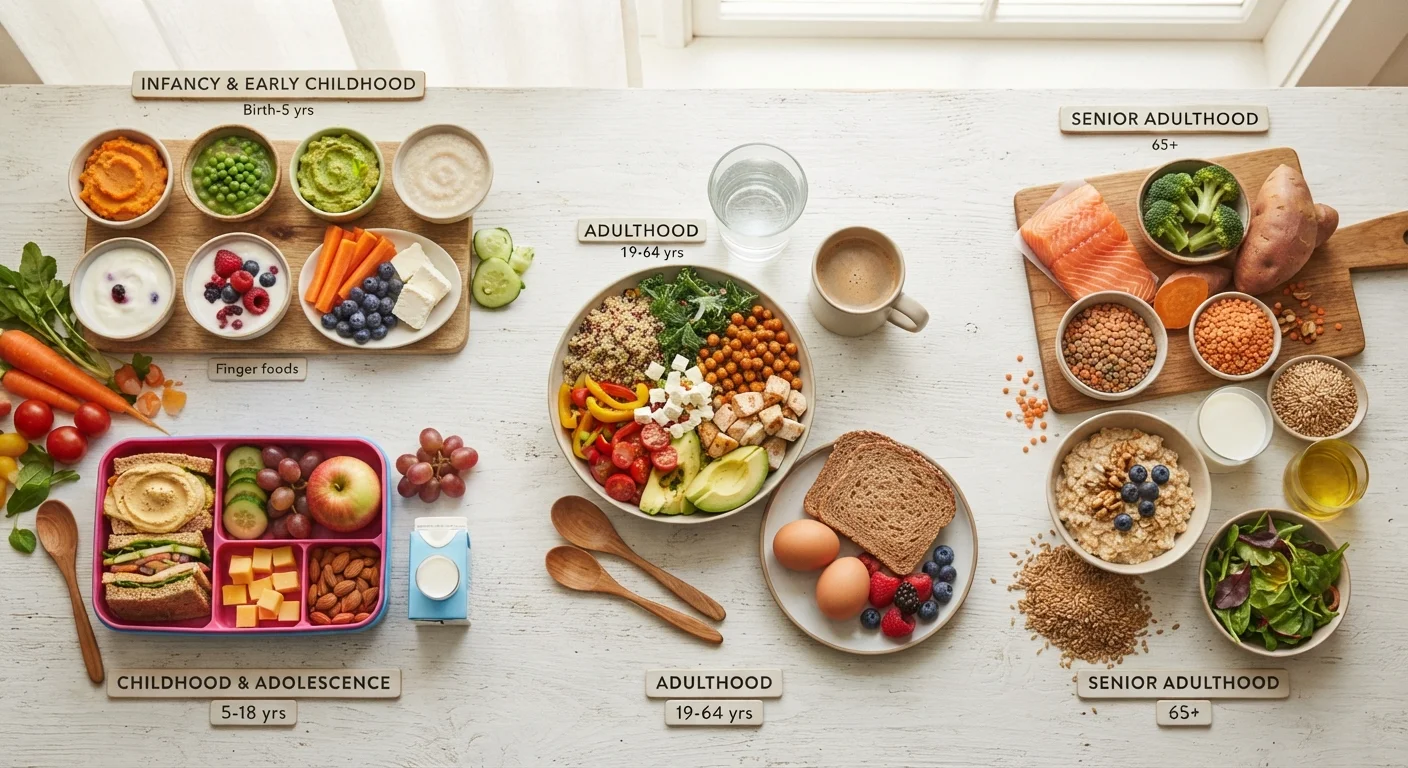
Key Takeaways
Why Nutritional Needs Change as You Age
The food your body needs at 25 is meaningfully different from what it needs at 65 — not because the fundamentals of nutrition change, but because your physiology does. Metabolism slows. Hormones shift. Muscle mass naturally decreases. The digestive system absorbs some nutrients less efficiently. And lifestyle factors — activity levels, stress, medication use — layer on top of all of this.
Understanding these shifts helps you make intentional food choices at every life stage rather than defaulting to generic advice. The eating patterns nutrition research consistently supports share certain qualities across all ages — variety, whole foods, adequate fiber — but the specific emphasis changes decade to decade.
~1%
Annual muscle mass loss after age 30
Research estimates adults lose roughly 1% of muscle mass per year beginning in the fourth decade, a process that accelerates after 60.
90%
Americans under-consuming dietary fiber
According to dietary survey data from the USDA, approximately 90% of American adults do not meet recommended daily fiber intake.
42%
U.S. adults with vitamin D insufficiency
National Health and Nutrition Examination Survey data has estimated that over 40% of U.S. adults have insufficient vitamin D blood levels.
Your 20s: Building the Foundation
Your 20s are a critical window for building bone density, establishing lean muscle mass, and developing eating habits that will shape your health trajectory for decades. Bone mass typically peaks around age 30, which means this decade is your best opportunity to maximize that reservoir through adequate calcium and vitamin D intake.
Iron is another priority — especially for women, who lose iron through menstruation and may struggle to meet the higher recommended intake through diet alone. Lean meats, legumes, fortified cereals, and leafy greens are practical sources. Pairing plant-based iron sources with vitamin C enhances absorption.
Don't wait until bone loss is diagnosed to prioritize calcium. The bone density you build before age 30 acts as a long-term reserve — getting enough calcium and vitamin D throughout your 20s is one of the most protective things you can do for your skeletal health decades later.
Peak bone mass is established primarily in early adulthood; a larger reservoir reduces the clinical impact of age-related bone loss later in life.
When reading nutrition labels, scan the ingredient list first, not just the calorie count. A product can be low-calorie and still deliver little fiber, protein, or micronutrient value — ingredients tell a more complete story about food quality.
Nutrient density — not just energy content — is the primary driver of diet quality, especially as caloric needs decline with age.
Caloric needs are generally at their highest during this decade, particularly for active individuals — but that doesn't mean quality should take a back seat to quantity. This is also an excellent time to build shopping habits that support long-term health. The guide to grocery shopping with nutrition in mind offers a practical framework for stocking a health-supportive kitchen.
Your 30s: Sustaining Energy and Managing Change
Metabolism begins a gradual slowdown in the 30s — typically modest, but noticeable over time if eating patterns don't adjust. Many adults in this decade also face major life demands: careers, young children, compressed schedules. These pressures can push nutrition toward convenience and away from quality.
Protein becomes increasingly important for preserving lean muscle mass, which begins its slow natural decline around this time. Distributing protein across meals — rather than concentrating it in one sitting — is generally more effective for muscle protein synthesis. Eggs, legumes, fish, poultry, and low-fat dairy are versatile, protein-dense options.
For people who are pregnant or planning a pregnancy, folate (found in leafy greens, legumes, and fortified foods) is critically important for fetal neural development. Anyone in this situation should consult a healthcare provider about specific needs, including supplementation. See our complementary resource on children's nutrition factors parents rarely consider for context on how early nutrition shapes long-term outcomes.
Spread Protein Across the Day
Rather than loading most of your protein into one meal, aim to include a meaningful protein source at breakfast, lunch, and dinner. Research suggests this distribution is more effective for maintaining muscle mass than consuming the same total amount concentrated at a single sitting. Practical additions include eggs at breakfast, legumes at lunch, and fish or poultry at dinner.
Your 40s: Protecting Your Heart and Metabolism
Cardiovascular risk factors — blood pressure, cholesterol, blood sugar — tend to become more prominent in the 40s, making heart-protective nutrition increasingly relevant. Diets rich in fiber, omega-3 fatty acids, and minimally processed foods are associated with more favorable cardiovascular profiles in population research.
Practical dietary targets in this decade include: increasing soluble fiber (oats, beans, barley, apples), prioritizing fatty fish like salmon or sardines two or more times per week for omega-3s, and reducing sodium-dense processed foods. These aren't prescriptions — they're patterns supported by consistent evidence.
Heart Health Markers Deserve Medical Attention
Dietary changes can meaningfully support cardiovascular health, but they are not a replacement for medical monitoring. If you haven't had blood pressure, cholesterol, or blood glucose checked recently, the 40s are a practical time to establish those baselines with your physician. Nutrition works best as part of a broader, medically informed picture of cardiovascular risk.
Caloric needs have typically declined enough by the mid-40s that portion awareness becomes genuinely useful, particularly for those with more sedentary jobs. Avoiding common meal planning pitfalls like skipping meals or over-relying on processed "health" foods becomes especially important when metabolic margin is narrower.
Your 50s and 60s: Bone Health, Muscle, and Hormones
Menopause in women and gradual testosterone decline in men both affect body composition and bone density during this period. Calcium and vitamin D requirements increase after age 50 for most adults according to the Dietary Reference Intakes, while the ability to absorb vitamin B12 from food can decrease as stomach acid production declines with age.
Dairy, fortified plant milks, leafy greens, and canned fish with bones (like sardines and salmon) support calcium intake. Vitamin D is harder to get from food alone — fatty fish, egg yolks, and fortified foods contribute, but many older adults have lower blood levels, particularly those with limited sun exposure. This is a question worth raising with a healthcare provider.
Protein needs may actually increase in this decade to counter accelerated muscle loss (a process called sarcopenia). Research increasingly suggests that older adults may benefit from slightly higher protein intake than younger adults, distributed throughout the day. For a useful reference on specific nutrients, see vitamins and minerals at a glance.
70 and Beyond: Eating Well When Appetite Shifts
Appetite commonly diminishes with age due to hormonal changes, slower gastric emptying, reduced taste and smell sensitivity, and in some cases medications or social isolation. This creates a real challenge: caloric needs may drop further, but nutrient needs remain substantial — or even increase.
Nutrient density becomes the guiding principle at this stage. Every meal and snack should work hard: eggs, legumes, whole grains, colorful vegetables, and fortified foods pack more nutrition per calorie than refined or processed alternatives. Hydration also deserves attention — the thirst sensation often dulls with age, increasing dehydration risk.
Social Factors Shape Older Adult Nutrition
Research consistently links social isolation and reduced mealtime engagement to poorer dietary quality in older adults. Eating with others — even occasionally — can improve both appetite and food variety. Community meal programs, senior centers, and shared cooking activities are practical ways to address this dimension of nutritional health beyond food choices alone.
Chewing difficulties, medication interactions with certain foods, and chronic conditions all add layers of complexity at this stage. This is where personalized guidance from a registered dietitian or physician is especially valuable — general information can only go so far.
Nutrients That Matter at Every Age
Despite the decade-by-decade shifts, a few nutrients consistently warrant attention across all life stages:
- Fiber: Most Americans consume well below recommended levels at every age. Whole grains, legumes, vegetables, and fruit are the most reliable sources.
- Vitamin D: Widespread insufficiency across age groups; dietary sources are limited, and sun exposure varies. Worth discussing with a provider.
- Omega-3 fatty acids: Consistently associated with heart and brain health. Fatty fish, walnuts, and flaxseed are practical sources.
- Calcium: Needed throughout life for bone maintenance, not just during growth phases.
- Potassium: Supports healthy blood pressure; found abundantly in vegetables, legumes, and fruit — foods many Americans eat too little of.
If you're exploring a plant-focused approach at any age, it's worth understanding the trade-offs of plant-based eating — including nutrients like B12, iron, and zinc that require more careful planning without animal foods.
This article is for general informational and educational purposes only and is not a substitute for professional medical or dietary advice. Please consult a qualified healthcare provider for guidance tailored to your individual health needs, conditions, and circumstances.