

Key Takeaways
Summary
22 items · 20–35 minutes
Why Your Cart Is Your Most Powerful Nutrition Tool
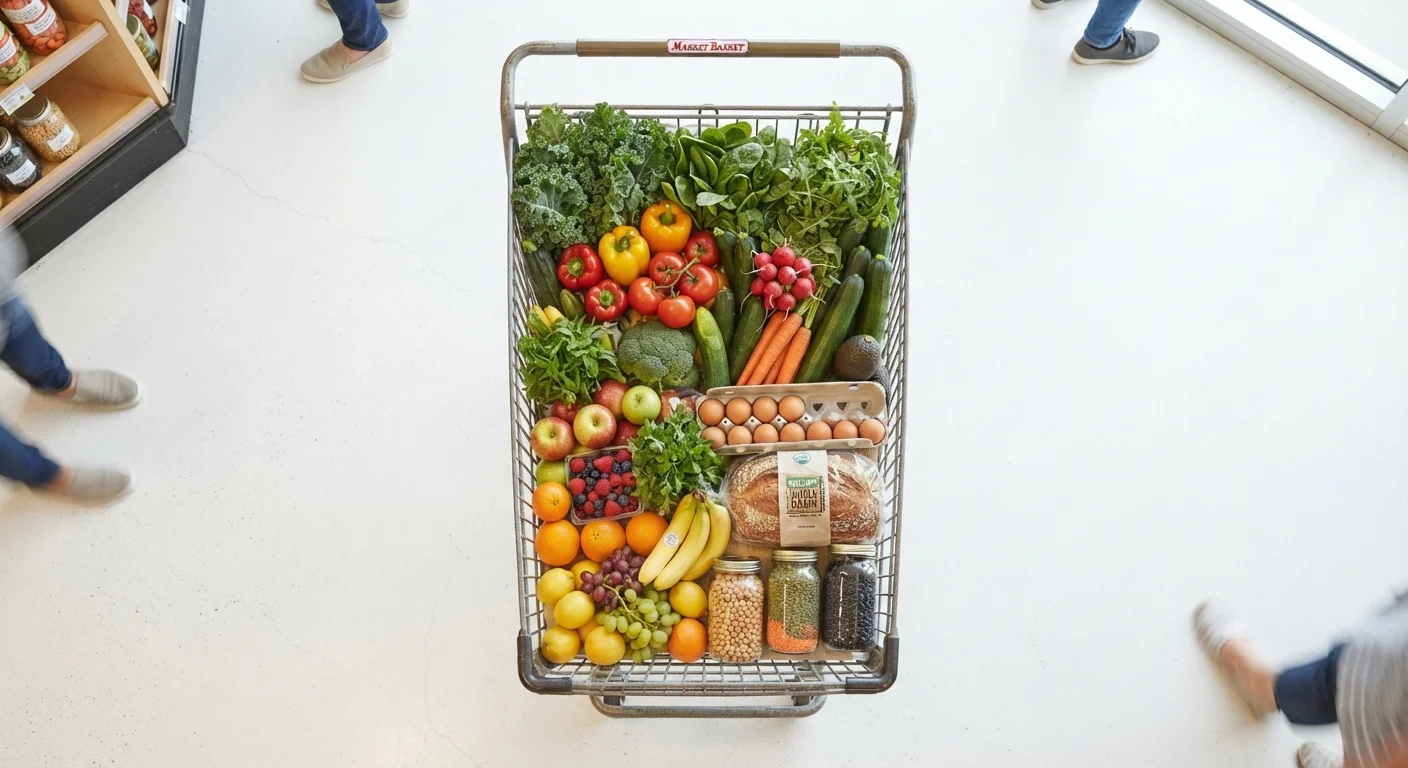
Most nutrition decisions don't happen at the dinner table — they happen in the grocery aisle. The foods you bring home are the foods you eat. That means shopping with even a loose nutritional framework can shift your eating habits more reliably than willpower alone.
This checklist isn't about perfection or eliminating entire food groups. It's built around the kinds of eating patterns nutrition research consistently supports — whole foods, variety, and balance across food categories. Work through each group before or during your next trip to the store.
Reusable shopping list (paper or app)
Organize your cart by food category so you move through the store systematically and avoid overlooking key groups.
Nutrition Facts label
Use it to compare sodium, added sugars, and fiber content when choosing between similar packaged options.
Meal plan or weekly menu sketch
Even a rough outline of three to four dinners helps you buy purposefully and reduces food waste.
Unit price calculator (phone calculator)
Compare cost per ounce between sizes and brands to stretch your grocery budget on staples.
The Checklist: Building a Balanced Cart
Use this section-by-section checklist to cover the major food categories in any balanced grocery run. You don't need everything on every trip — aim for meaningful representation across each group.
Produce
Protein Sources
Grains and Starches
Dairy and Fortified Alternatives
Healthy Fats and Oils
Pantry Staples
Don't Let 'Health' Labels Drive Your Choices
Terms like "natural," "clean," or "superfood" are marketing language, not regulated nutritional claims. A product labeled "natural" can still be high in added sugar or sodium. The Nutrition Facts panel and ingredient list are far more reliable guides than front-of-package claims. Train yourself to flip to the back before deciding.
Navigating Labels and Packaged Foods
Packaged items aren't inherently problematic, but they deserve a second look. When adding canned goods, frozen meals, sauces, or snack items to your cart, a quick label check takes under a minute and pays off significantly. For a deeper dive on decoding what's actually in packaged food, see our guide on reading an ingredient list without getting lost.
Added Sugar Is Often Hidden in Plain Sight
Added sugars appear under more than 60 different names on ingredient labels — including maltose, dextrose, cane juice, and agave nectar. Foods marketed as "healthy" (flavored yogurts, granola bars, fruit-flavored drinks, and pasta sauces) can contain surprisingly high amounts. The Dietary Guidelines for Americans recommend limiting added sugars to less than 10% of daily calories. Checking the "Added Sugars" line on the Nutrition Facts label is the clearest shortcut.
As a general habit, look for items where the ingredient list is short and recognizable, sodium per serving is moderate (the Dietary Guidelines for Americans generally recommends limiting daily sodium), and added sugars aren't among the first few ingredients. Understanding what's inside packaged food is a skill that builds quickly with practice and makes your cart choices more intentional over time.
If you're shifting toward less animal protein, our overview of plant-based eating trade-offs can help you plan around nutritional gaps that are easy to miss.
This article is for general informational and educational purposes only and is not a substitute for personalized medical or dietary advice. Consult a qualified healthcare professional or registered dietitian for guidance specific to your health needs.