

Key Takeaways
Why Patterns Beat Individual Foods
Nutrition headlines love to spotlight a single ingredient — the berry that fights inflammation, the oil that clears arteries. But decades of nutritional epidemiology point somewhere less exciting and far more useful: what matters most is the pattern of eating over time, not any individual food.
Large cohort studies, including the landmark PREDIMED trial and decades of Nurses' Health Study data, consistently show that people who eat in certain broad ways tend to have lower rates of cardiovascular disease, type 2 diabetes, and some cancers. The common thread isn't a miracle ingredient — it's a cluster of habits. If you're curious about where popular beliefs diverge from this evidence, see our look at common nutrition myths that research has moved past.
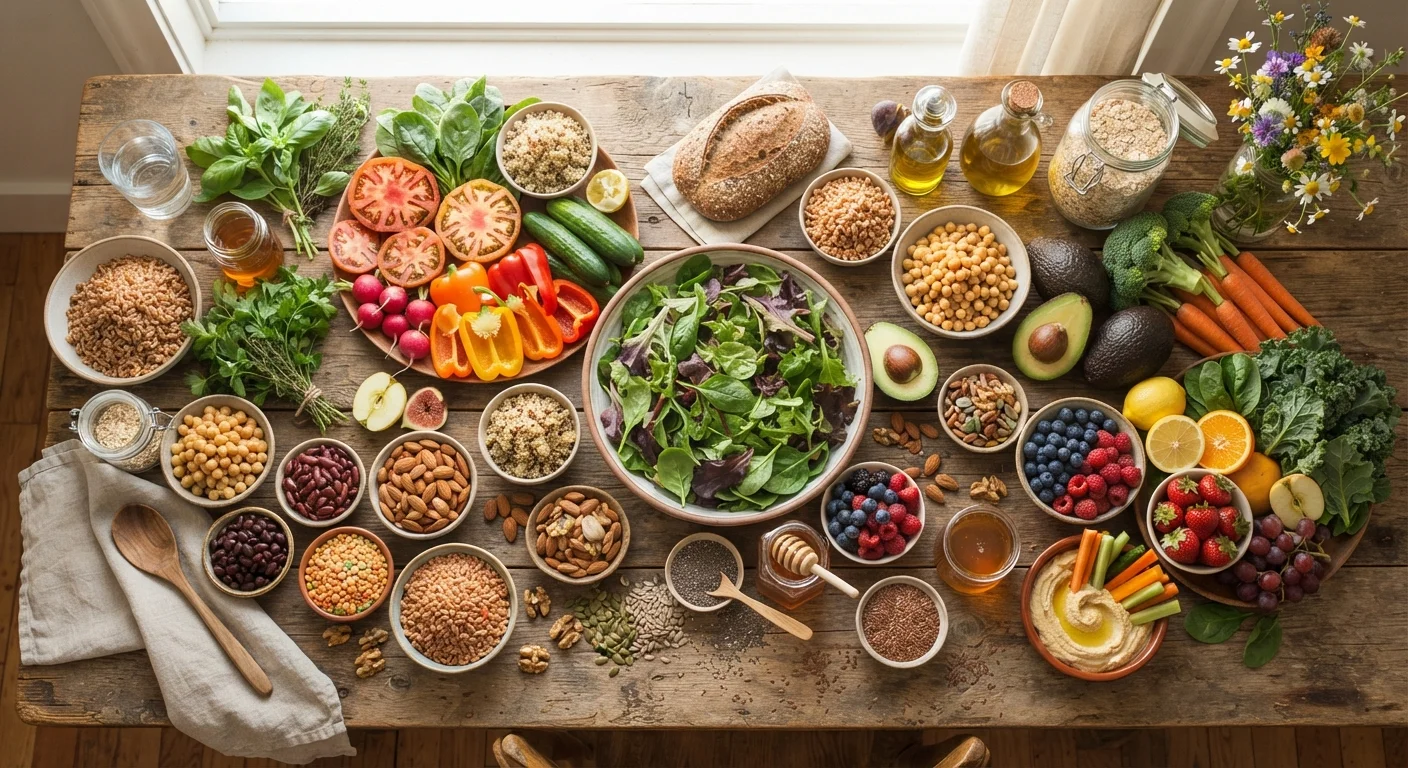
Build most meals around whole or minimally processed plant foods.
Vegetables, fruits, legumes, and whole grains supply fiber, vitamins, minerals, and phytonutrients that work synergistically. Research consistently links higher intake of these foods to reduced chronic disease risk — benefits that don't replicate cleanly in supplement form.
Limit ultra-processed foods rather than obsessing over macros.
Ultra-processed foods — broadly, products with long ingredient lists of additives, emulsifiers, and refined components — have been linked in multiple large studies to higher rates of obesity, cardiovascular disease, and all-cause mortality. Reducing their share of total calories appears to matter more than hitting precise protein or fat targets.
Prioritize dietary variety, especially among plant foods.
Different plant foods feed different gut microbiome communities and deliver different micronutrients. Studies from the American Gut Project and elsewhere suggest that eating a wider variety of plant species is associated with greater gut microbial diversity — a marker linked to broader health outcomes.
Keep added sugar and sodium within moderate ranges over time.
Both added sugar and high sodium intake are independently associated with cardiovascular risk in large observational studies and clinical trials. The relationship is cumulative: habitual high intake, even without dramatic single-meal spikes, compounds over years.
Treat fish and legumes as primary protein sources when possible.
Evidence-based dietary patterns consistently feature fish — particularly fatty fish rich in omega-3s — and legumes as preferred protein sources over processed meats. Legumes also contribute significant fiber, which processed and animal proteins don't provide.
What Research-Supported Patterns Share
Despite surface differences, the Mediterranean diet, the DASH diet, traditional Okinawan eating, and the Dietary Approaches recommended by U.S. federal guidelines share a recognizable core. They aren't identical — but they overlap heavily.
30%
Reduction in major cardiovascular events
The PREDIMED trial found participants following a Mediterranean-style diet supplemented with olive oil or nuts showed approximately a 30% lower rate of major cardiovascular events compared to a control diet.
57%
Share of U.S. calories from ultra-processed foods
Research published in the journal BMJ Open estimated that ultra-processed foods account for more than half of daily caloric intake among U.S. adults.
30+
Plant species associated with higher gut diversity
Data from the American Gut Project suggested that people who ate 30 or more different plant species per week had measurably greater gut microbiome diversity than those eating 10 or fewer.
These patterns are also notably flexible. You don't need to follow a rigid script. The evidence supports a direction of travel, not a single destination. For those considering a more plant-forward approach, our article on plant-based eating trade-offs walks through both the benefits and the nutritional gaps worth planning around.
Core Practices Worth Adopting
The practices below reflect what nutrition researchers see repeated across the strongest evidence — large randomized trials, long-running cohort studies, and systematic reviews. They aren't prescriptions for any individual; everyone's health context differs. Consult a registered dietitian or your healthcare provider before making significant dietary changes, especially if you have an existing health condition.
Dietary needs also shift over time. What works well in your 30s may need adjustment later — our piece on nutrition through every decade covers how needs evolve from your 20s onward. And for families, factors beyond food choices — explored in our article on things that affect children's nutrition — also shape how well kids actually eat.
“The evidence continues to point in the same direction: diets built predominantly on whole plant foods, with limited processed meat and ultra-processed products, are associated with better long-term health. The details matter less than the overall pattern.”
— Walter Willett, Professor of Epidemiology and Nutrition, Harvard T.H. Chan School of Public Health
This article is for general informational and educational purposes only and is not a substitute for professional medical or dietary advice. Speak with a qualified healthcare provider or registered dietitian about your individual health needs.