

Key Takeaways
Why Hazardous Conditions Demand a Different Mindset
Most drivers adjust their speed when the weather turns bad — but speed is only one part of the equation. Rain, ice, and fog each degrade your vehicle's performance and your own ability to perceive risk in different ways. Understanding what each condition actually does to your car is what allows you to make good decisions in the moment.
Wet roads reduce tyre grip and extend stopping distances. Black ice can cut traction to almost nothing in a fraction of a second. Fog collapses the amount of time you have to react to anything ahead. The defensive driving mindset — anticipating hazards before they develop — becomes especially important when conditions change.
The steps below walk through what to actually do in each scenario, starting with preparation before you leave and covering how to handle the road itself.
What you will need
What You'll Need Before Setting Off
Windshield wipers in good condition
Clear rain and moisture from your field of view quickly and effectively.
All-season or winter tyres
Provide grip on wet, icy, or cold road surfaces where summer tyres lose traction.
Defrost and rear defroster
Keep all glass clear of condensation and ice before and during driving.
Ice scraper and de-icer spray
Remove ice from windows before setting off in freezing conditions.
Traction control and ABS (if equipped)
Electronic systems that help maintain grip and steering control during hard braking or wheelspin.
Good equipment matters, but none of it replaces adjusted behaviour. Even a vehicle with winter tyres and traction control can get into serious trouble if the driver doesn't slow down and think ahead. If you're heading out on a longer trip, a pre-drive vehicle check is worth the few minutes it takes.
Step-by-Step: Adjusting for Rain, Ice, and Fog
Check your vehicle before you leave
Before driving in any adverse condition, do a quick walk-around. Confirm your tyres are properly inflated and have adequate tread depth. Test your wipers — streaking or skipping means they need replacing. Make sure all lights work, and clear any ice, snow, or condensation from every window, not just the windshield. A small clear patch isn't enough.
Slow down and increase your following distance
Speed limits are set for ideal conditions. On wet roads, stopping distances roughly double. On ice, they can increase by up to ten times. Drop your speed deliberately — not just slightly — and open up a larger gap between you and the car ahead. A gap of four to six seconds is a reasonable starting point in rain; more on ice or in fog.
Adapt your approach for wet roads
Rain creates aquaplaning risk — where a layer of water builds between your tyres and the road, causing you to lose steering control. To reduce this risk, avoid standing water and puddles where possible, steer smoothly, and brake early and gently. If you feel the steering go light, ease off the accelerator gradually and hold the wheel steady until your tyres regain contact.
Recognize and respond to black ice
Black ice is a thin, nearly transparent layer of ice that forms on road surfaces — particularly on bridges, overpasses, shaded stretches, and areas near water. It's often impossible to see. Warning signs include: other cars drifting unexpectedly, your steering feeling unusually light, or the road surface appearing darker and shinier than surrounding pavement. If you hit black ice, do not brake hard or steer sharply. Ease off the gas, look where you want to go, and make tiny, smooth steering adjustments.
Drive through fog with the right lighting
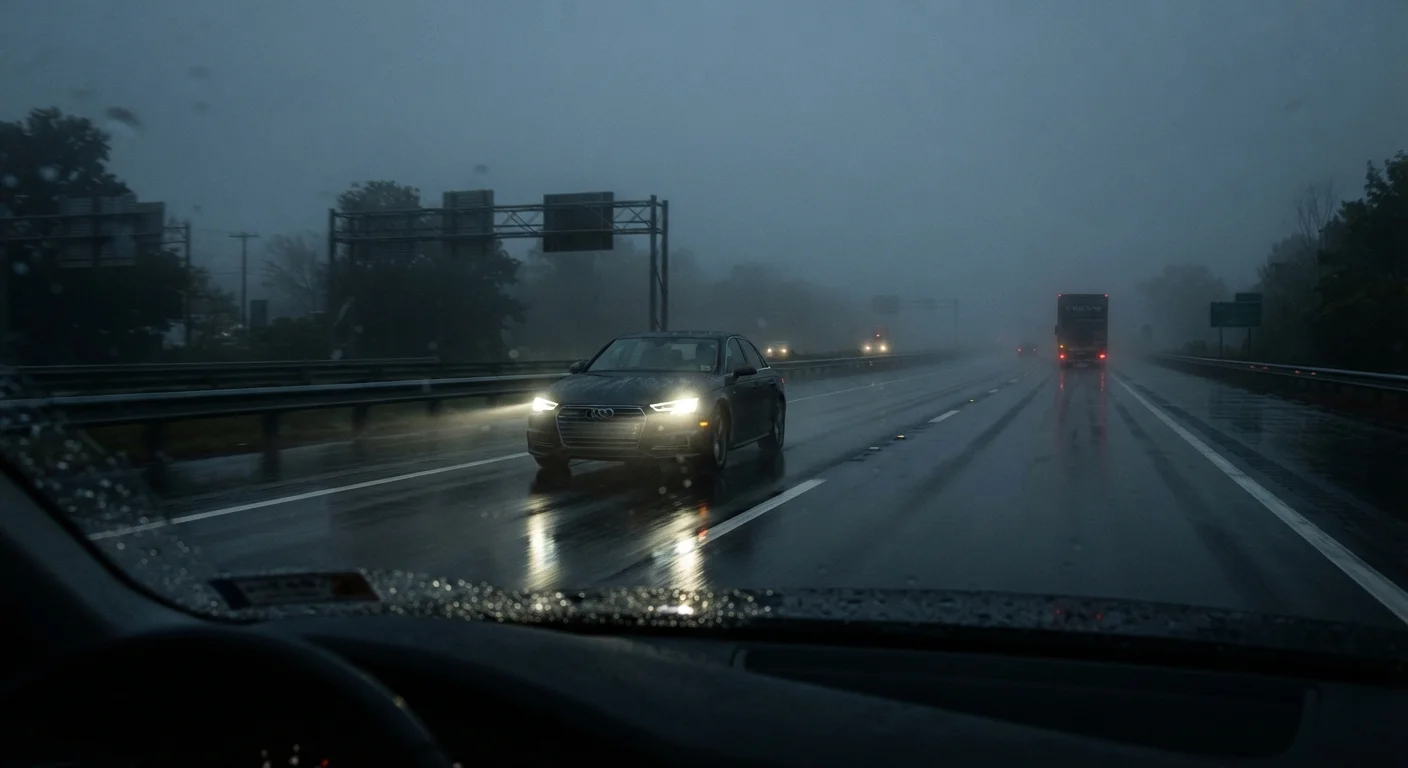
In fog, switch on your low-beam headlights — they illuminate the road ahead without reflecting back into your eyes. If your car has dedicated front fog lights, use them. Avoid high beams entirely; they bounce off the fog droplets and actually reduce how far you can see. If visibility drops below roughly 100 metres, consider whether your journey is necessary at all. Use rear fog lights if fitted, but turn them off when visibility improves so you don't dazzle the driver behind you.
Keep inputs smooth throughout
On any slippery surface, sudden movements are your enemy. Accelerate gently, brake progressively, and steer with small, deliberate inputs. Harsh movements transfer weight abruptly and can cause a tyre to lose grip almost instantly. Think of your throttle, brake, and steering as dials rather than switches — gradual changes keep the car stable.
Good Habits Start Before Bad Weather Hits
Keeping your tyres in good shape year-round — and checking them before trips — pays dividends the moment conditions deteriorate. See our guide to seasonal car maintenance for a practical breakdown of what to check and when.
Common Mistakes That Make Bad Conditions Worse
ABS Does Not Shorten Stopping Distance on Ice
Anti-lock braking systems (ABS) help you steer while braking hard, but they do not reduce stopping distances on ice the way they do on dry or wet pavement. On very slippery surfaces, a car with ABS can actually take longer to stop than one braked with careful threshold technique. Never rely on ABS to compensate for excessive speed in icy conditions.
Beyond ABS overconfidence, a few other habits tend to get drivers into trouble in hazardous weather. Overcorrecting during a skid — yanking the wheel sharply — almost always makes the situation worse. So does braking mid-corner, which transfers weight forward exactly when you need the rear tyres to stay planted.
Driving in fog with only parking lights on is another common error. Parking lights make your car visible to others but don't illuminate the road ahead effectively. Always use proper headlights.
Hazardous conditions also compound the risks that exist in any driving environment. If you're not yet comfortable with high-speed environments, it's worth reading up on motorway driving basics before combining those demands with poor weather.
When in Doubt, Don't Drive
No journey is worth the risk if conditions are genuinely severe. If roads are iced over and untreated, visibility is near-zero, or you're not confident in your vehicle's condition, delaying or cancelling is a legitimate choice. Many serious weather-related collisions happen because drivers underestimated how bad conditions had become.