

Key Takeaways
Engine Coolant (Antifreeze)
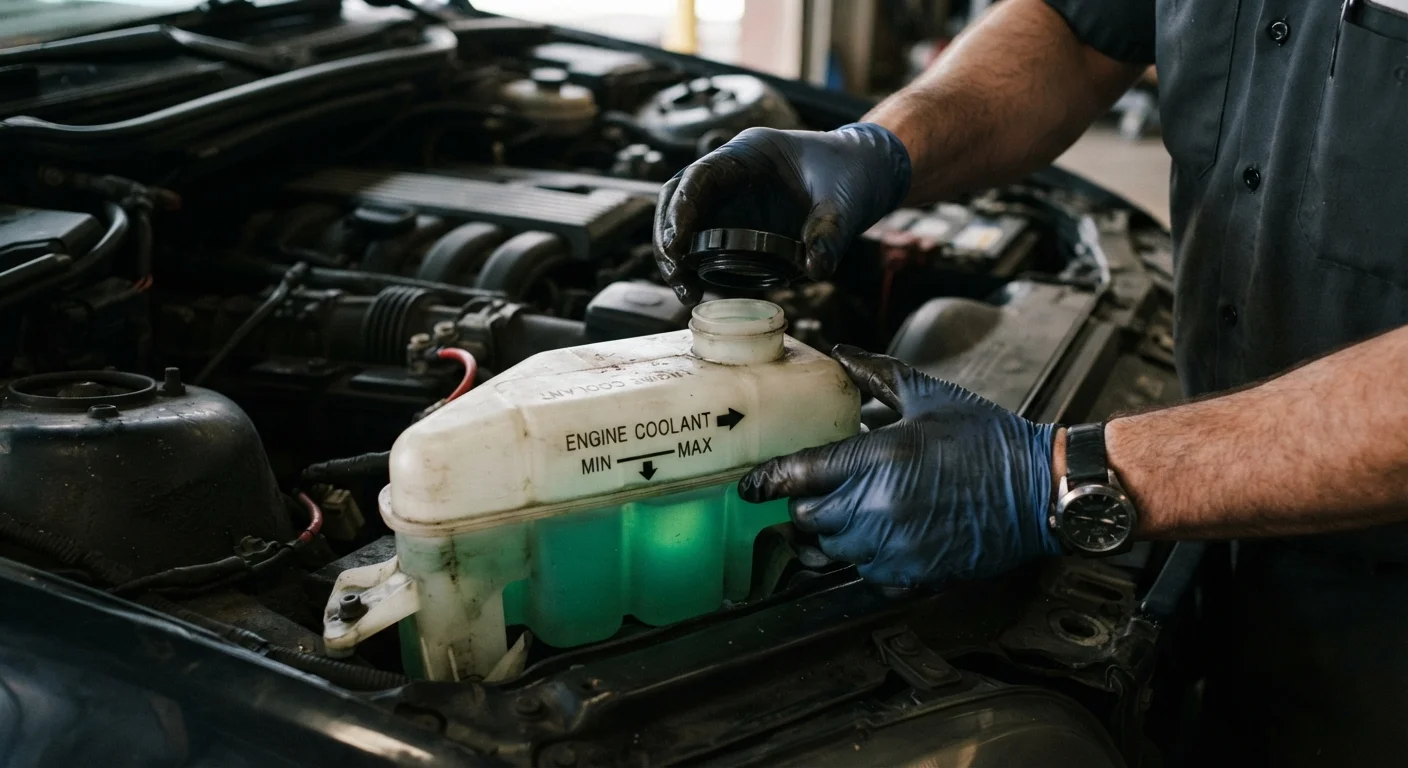
Engine coolant - also called antifreeze - is a liquid that circulates through your engine and radiator to regulate temperature. It absorbs heat from the engine and releases it through the radiator, keeping everything running in a safe range. Coolant also prevents the fluid from freezing in winter and boiling over in summer.
Most modern coolants are a mix of ethylene glycol and water, typically in a 50/50 ratio, with corrosion inhibitors that degrade over time and require periodic replacement.
What Coolant Actually Does
Most drivers know coolant has something to do with overheating. But that's just one part of the job. Coolant constantly circulates between your engine and radiator, pulling heat away from combustion components and releasing it into the air. Without it, your engine would overheat within minutes of starting.
In winter, the glycol in coolant prevents the liquid from freezing solid in your engine block - a scenario that can crack metal components and cause catastrophic damage. In summer, it raises the boiling point of the fluid so it doesn't vaporize under load. That dual function is why it's called antifreeze and coolant.
There's also a third, less obvious job: corrosion protection. Modern coolants contain inhibitors that coat metal surfaces inside the engine, radiator, and water pump, slowing rust and scale buildup. This is also why coolant goes bad over time - those inhibitors wear out even when the fluid looks fine.
For a broader look at what's going on under the hood, see Car Fluids at a Glance for a quick-reference breakdown of every reservoir.
50/50
Ideal coolant-to-water ratio
Most manufacturers recommend a 50% antifreeze, 50% distilled water mix for year-round protection in most US climates.
~265°F
Boiling point with proper coolant mix
A correct coolant mix raises the boiling point significantly above plain water's 212°F, protecting engines under heavy load.
30K-50K miles
Typical coolant flush interval
Many manufacturers recommend a coolant flush within this range, though long-life formulas can extend that window depending on the vehicle.
Signs Your Coolant Needs Attention
The temperature gauge is the obvious warning sign - if it climbs toward the red, pull over safely and let the engine cool before doing anything. But there are earlier signals worth knowing.
- Low coolant level in the reservoir: A one-time top-up isn't alarming, but repeated low levels suggest a slow leak somewhere in the system.
- Discolored or murky fluid: Fresh coolant is typically bright green, orange, or pink depending on type. Rusty, brown, or oily fluid means it's contaminated and needs a flush.
- Sweet smell inside the cabin: This can indicate a heater core leak - coolant is leaking internally and vaporizing into the air you're breathing.
- White exhaust smoke: Persistent white smoke from the exhaust often signals that coolant is burning inside the engine, which can point to a blown head gasket.
If you notice any of these, have a qualified mechanic inspect the system. Catching a minor leak early is far cheaper than dealing with an overheated engine.
Never Open a Hot Radiator Cap
Coolant systems are pressurized, and opening the radiator cap on a hot engine can cause scalding fluid to spray out instantly. Always wait until the engine has fully cooled - typically at least an hour after driving - before checking or adding coolant. If the temperature gauge is elevated, do not attempt to inspect the system.
When to Flush and Replace Coolant
Because coolant looks like it's doing fine long after its protective additives have degraded, many drivers skip flushes longer than they should. A coolant flush removes old, depleted fluid and refills the system with fresh, inhibitor-rich coolant.
General guidance points to every 30,000 to 50,000 miles, or roughly every two to five years - but this varies by vehicle and coolant type. Older green coolants typically needed replacing more frequently than modern long-life formulas. Your owner's manual will have the manufacturer's recommended interval for your specific car.
A coolant flush is often included or assessed during a full service. If you want to understand what else gets checked at that visit, What Happens During a Car Service walks through the full process.
Seasonal changes are also a practical reminder to check coolant levels and condition. Seasonal Car Maintenance covers what to look at as temperatures shift.
Coolant Color Isn't a Reliable Type Indicator
Different manufacturers use different color conventions for their coolant formulations, and aftermarket products vary further. Don't assume two green coolants or two orange coolants are compatible. Always check the specification in your owner's manual rather than matching by color alone.
Using the Right Coolant - and Why It Matters
Coolant isn't universal. Different vehicles require different formulations - typically identified by color, though color alone isn't a reliable guide since manufacturers use different color conventions. The key distinction is the inhibitor chemistry: OAT (Organic Acid Technology), HOAT (Hybrid OAT), and IAT (Inorganic Additive Technology) formulas are not interchangeable.
Using the wrong type, or mixing two types together, can cause chemical reactions that form a gel-like sludge. This clogs the fine passages in your radiator and heater core, reduces cooling efficiency, and can accelerate corrosion rather than prevent it.
The safest approach: check your owner's manual for the specification, and match it exactly. If you're unsure what's currently in your system, a full flush before switching types is the right move. For more on how fluid mix-ups happen and what they cost, see Common Car Fluid Mix-Ups.