

Key Takeaways
What's Actually Under the Hood
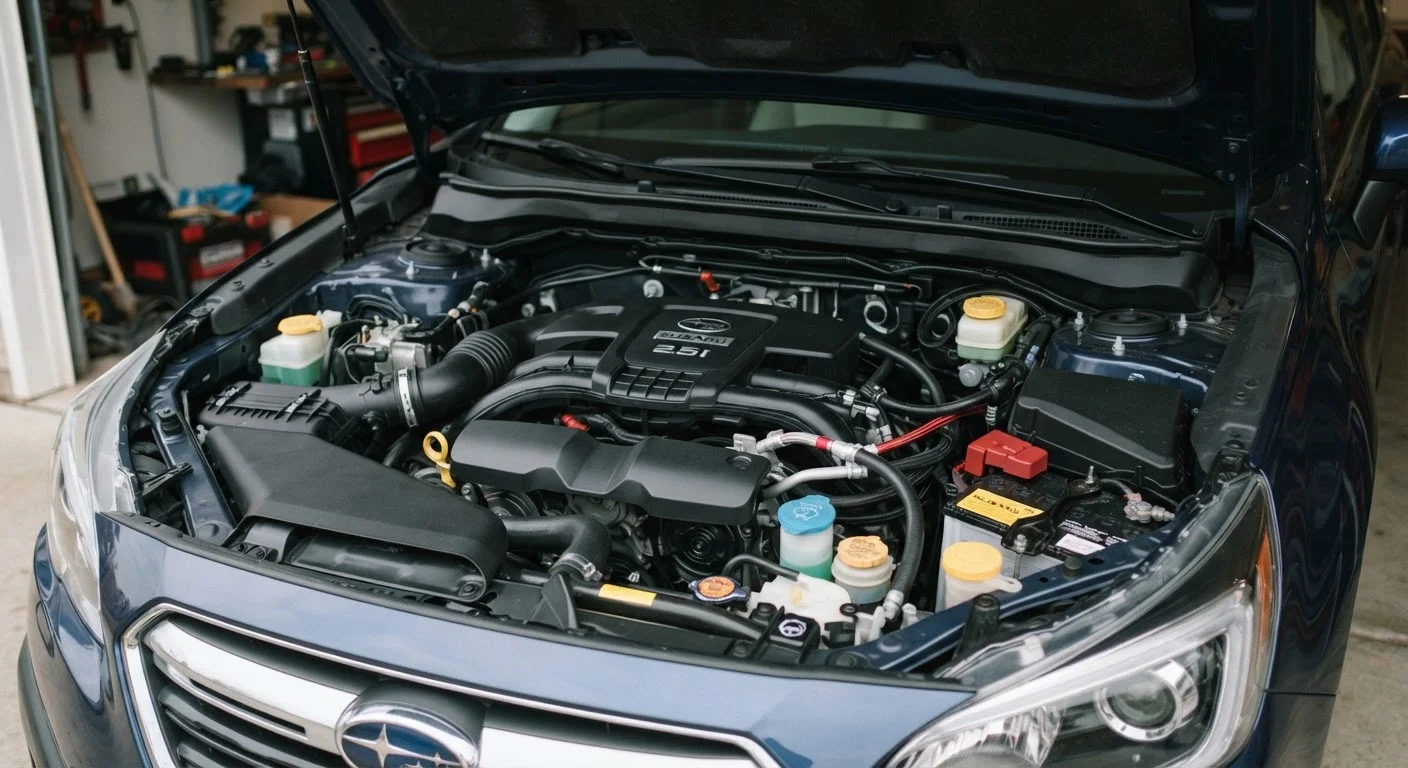
Lift the hood on most passenger cars and you'll see a cluster of caps, tanks, and dipsticks - each one a gateway to a fluid that keeps something important running. Plenty of drivers know they need to check the oil but draw a blank on the other reservoirs. That gap can get expensive fast.
This guide breaks down the six most common fluid systems in plain language - what each one does, what to look for, and when you should act. For a broader look at keeping your car running well, the Car Ownership Basics hub covers the essentials every owner should know.
Your Owner's Manual Is the Final Word
Fluid specifications vary significantly between makes, models, and model years. Using the wrong type - particularly for coolant, transmission fluid, or brake fluid - can cause damage rather than prevent it. Always cross-reference with your owner's manual or the label inside the hood before topping off any reservoir.
The Six Fluids Every Driver Should Know
Engine Oil
Engine oil is the fluid most drivers know by name, and for good reason - it's doing some of the heaviest lifting. It lubricates hundreds of metal parts moving at high speed, reduces friction and heat, and carries microscopic debris away from sensitive components. Without it, an engine can seize within minutes.
Check the level with the dipstick (engine off, car on level ground). Healthy oil is amber to light brown. Black, gritty oil or a milky appearance are both warning signs. Change intervals vary by vehicle and oil type - synthetic oils typically last longer than conventional - so follow your owner's manual rather than guessing.
Without oil, an engine can seize within minutes - it's the most critical fluid in your car.
Coolant (Antifreeze)
Coolant circulates through the engine and radiator to regulate temperature - keeping the engine from overheating in summer and the coolant itself from freezing in winter. It's a mixture of antifreeze concentrate and water, and most modern vehicles use a closed system with a translucent overflow reservoir you can read without opening anything.
Check the level when the engine is cold. Coolant is typically green, orange, or pink depending on the formulation - mixing types can cause problems, so stick to what your vehicle calls for. Low coolant or a consistently dropping level can indicate a leak worth investigating promptly.
Low or leaking coolant is one of the fastest ways to cause serious, expensive engine damage.
Brake Fluid
Brake fluid transfers the force from your foot on the pedal through hydraulic lines to the brakes at each wheel. It operates under high pressure and must withstand significant heat. Because it's hygroscopic - meaning it absorbs moisture over time - it degrades and can lower the boiling point of your brake system, reducing stopping performance.
The reservoir is usually a small translucent cylinder near the firewall. Fluid should be at or near the MAX line. A consistently dropping level can mean brake wear or a leak - both worth a mechanic's attention. Most manufacturers recommend flushing brake fluid every two years or so, though your manual will give you the exact interval.
Brake fluid absorbs moisture over time, which can quietly reduce your car's stopping ability.
Power Steering Fluid
If your car has hydraulic power steering (rather than the electric power steering found on many newer vehicles), it relies on pressurized fluid to make turning the wheel feel effortless. The reservoir - often marked with a steering wheel icon - has a dipstick or MIN/MAX markings on the side.
Heavy or stiff steering, a whining noise when you turn, or a visibly low reservoir are signs something may be off. A leak in the power steering system can escalate quickly, so don't ignore those symptoms. Note: many vehicles made in the last decade use electric power steering and have no fluid reservoir for this system at all - check your owner's manual if you're unsure which type you have.
If your steering feels stiff or you hear a whine when turning, check the power steering fluid first.
Transmission Fluid
Transmission fluid lubricates the gears, clutch packs, and other internal components of your transmission - whether it's automatic or manual. In automatic transmissions it also acts as a hydraulic fluid. Keeping it at the right level and in good condition is key to smooth gear changes and long transmission life.
Some vehicles have a transmission dipstick; others have a sealed unit that requires a lift and a mechanic to service properly. Healthy fluid is typically red or pink. Dark brown fluid with a burnt smell is a clear sign it needs changing. Transmission repairs are among the most expensive in automotive work, making this fluid worth monitoring.
Dark or burnt-smelling transmission fluid is a warning sign - address it before it becomes a costly repair.
Windshield Washer Fluid
It's easy to treat washer fluid as an afterthought, but running dry at the wrong moment - behind a salt-spraying truck in winter, for example - is both dangerous and frustrating. Washer fluid is more than just water; it contains detergents and sometimes antifreeze agents that help cut through road grime, bugs, and ice without damaging seals or paint.
Don't substitute plain water in climates with freezing temperatures - it can crack the reservoir or clog the lines. The reservoir is usually large, clearly marked, and easy to top off yourself. Keep a spare bottle in the car if you drive frequently in messy conditions.
Plain water in the washer reservoir can freeze and crack lines - always use proper washer fluid.
Check Fluids When the Engine Is Cold
For most fluids, checking when the engine is cold gives you the most accurate reading and is safer - hot coolant under pressure can cause burns if a cap is opened. Engine oil is an exception on some vehicles, where the manual recommends checking shortly after shutdown. When in doubt, consult your owner's manual for the recommended procedure.
Staying Ahead of Problems
You don't need to be a mechanic to keep tabs on your car's fluids. A quick visual check every month or two - levels, color, consistency - takes only a few minutes and can flag a problem before it turns into a breakdown or a big repair bill. Your owner's manual is the most reliable source for recommended change intervals and the correct fluid specifications for your specific vehicle.
If you're curious how your braking system connects to the fluid that powers it, our guide to brake pads, rotors, and calipers explains how the whole system fits together. And while you're thinking about what filters and fluids protect your engine, our breakdown of car filters is worth a read too.