

Key Takeaways
Disc Brake System
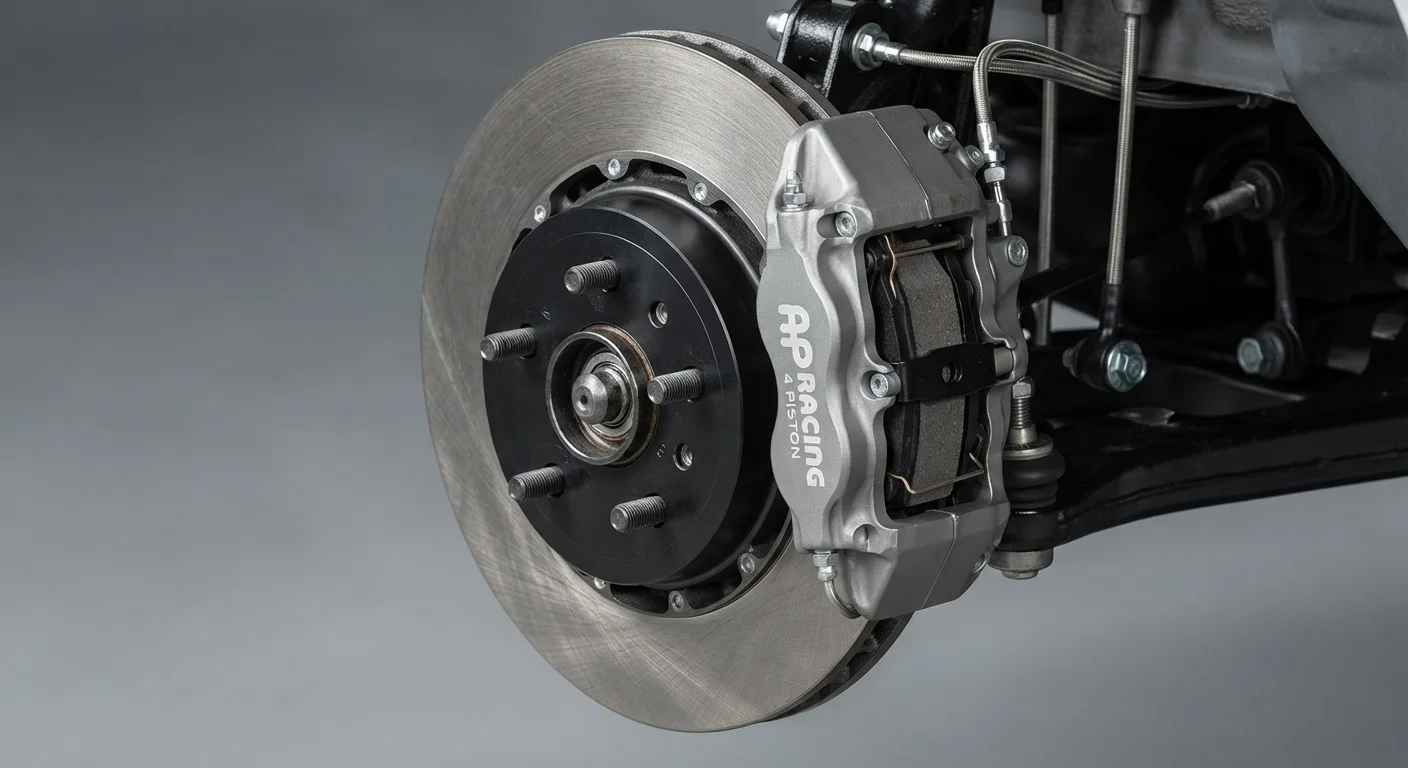
A disc brake system is the most common type of braking setup on modern cars. When you press the brake pedal, hydraulic pressure pushes brake pads against a spinning metal disc (called a rotor), creating friction that slows the wheel. The caliper is the clamp-like housing that holds the pads and squeezes them against the rotor.
Most vehicles use disc brakes on all four wheels, though some use drum brakes at the rear. Brake fluid transmits the force from your pedal through the hydraulic lines to each caliper.
The Three Main Players in Your Braking System
Every time you press the brake pedal, three components do the actual work of slowing your car: the brake pads, the rotors, and the calipers. Understanding what each one does helps you make sense of what a mechanic is telling you - and know when it's urgent.
Brake pads are flat friction material mounted inside the caliper. When you brake, they press against the rotor to create the stopping force. They're designed to wear down gradually - they're the sacrificial part of the system. Most pads have a metal wear indicator that produces a high-pitched squeal once pads are running thin.
Rotors (also called brake discs) are the large metal discs you can often see through your wheel spokes. They spin with the wheel and provide the surface the pads clamp against. Over time and heat cycling, rotors can develop grooves, rust, or slight warping - which you might feel as a pulsing sensation through the pedal when braking.
Calipers are the hydraulic clamps that house the pads and squeeze them against the rotor when you brake. They don't wear out the same way pads do, but the pistons inside can seize up over years of use, causing uneven braking or a pad that stays partially engaged against the rotor.
Drum Brakes Are Still Around
Some vehicles - particularly older models or budget-oriented economy cars - use drum brakes at the rear rather than disc brakes. Drum brakes work on a similar friction principle but use brake shoes pressing outward against a drum instead of pads clamping a rotor. The inspection and replacement process differs, so it's worth knowing which setup your rear wheels use.
How the System Works Together
When you press the brake pedal, you're pushing on a master cylinder filled with brake fluid. That hydraulic pressure travels through brake lines to each wheel's caliper. The caliper piston extends, pressing the inner brake pad against the rotor. The caliper body then pulls the outer pad in from the other side - squeezing the rotor from both faces simultaneously.
The friction between pads and rotor converts your car's kinetic energy into heat, slowing the wheel. That's why brakes get hot during heavy use, and why brake fade - reduced braking force during prolonged heavy braking - is a real concern on long downhill grades.
Brake fluid is the unsung part of this chain. Because it's hydraulic, even a small drop in fluid quality or level can affect pedal feel and stopping performance. A soft or spongy pedal is often a sign of air or moisture in the brake lines.
30,000-70,000 mi
Typical brake pad lifespan range
Actual life varies widely based on driving style, vehicle weight, and whether driving is primarily city or highway.
~$150-$300
Typical cost per axle for pad replacement
General industry estimate; costs vary by vehicle, location, and whether rotors also need replacing.
Warning Signs Your Brakes Need Attention
Your car usually gives you clear signals before brakes become a safety problem. Knowing what to listen and feel for can save you from a bigger repair bill - and keep you safe.
- Squealing when braking: Usually the wear indicators telling you pads are getting low. Don't ignore it for long.
- Grinding or metal-on-metal noise: Pads may be fully worn through. This can damage rotors quickly.
- Pulling to one side: Could be a stuck caliper or uneven pad wear. Affects control and should be checked promptly.
- Pulsing or vibration through the pedal: Often indicates warped rotors.
- Longer stopping distances: Can point to worn pads, glazed rotors, or a brake fluid issue.
If you notice any of these, don't delay getting an inspection. Dashboard warning lights - including the brake warning light - are another prompt to act quickly.
Check Pads When You Rotate Tires
Tire rotations are a convenient time to have brake pad thickness visually inspected - the wheels are already off the car. Many shops include a brake check as part of a rotation service. It keeps you informed without adding extra trips to the shop.
Keeping Brakes in Good Shape
Brake maintenance isn't something you do constantly - but it does need to stay on your radar. The maintenance schedule most drivers overlook includes brake inspections at regular intervals, typically every 12 months or 12,000 miles, or whenever tires are rotated.
A few habits extend the life of your braking system. Avoid riding the brakes on long downhill stretches - instead, use engine braking by shifting to a lower gear. Leave adequate following distance so you're not braking hard frequently. And address any warning signs early: worn pads that are ignored can score the rotors, turning a straightforward pad swap into a costlier rotor replacement too.
For a broader picture of what gets checked during professional servicing, see what happens during a car service. Brakes are always part of a thorough inspection - and a good mechanic will measure pad thickness and rotor condition before recommending any replacement.
This article is for general informational purposes. For any brake repair or safety concern, consult a qualified mechanic who can inspect your specific vehicle.