

| Engine air filter replacement interval | Every 15,000-30,000 miles (varies by vehicle and driving conditions) (Owner's manual guidance varies by manufacturer) |
| Cabin air filter replacement interval | Every 12,000-15,000 miles, or roughly once a year (General industry guidance) |
| Fuel filter (external) replacement interval | Every 20,000-30,000 miles on older vehicles with external filters (Varies significantly by vehicle design and age) |
| What engine air filter protects | Engine combustion chamber and intake system |
| What cabin air filter protects | Passenger compartment air quality |
| What fuel filter protects | Fuel injectors and fuel delivery components |
Three Filters, Three Very Different Jobs
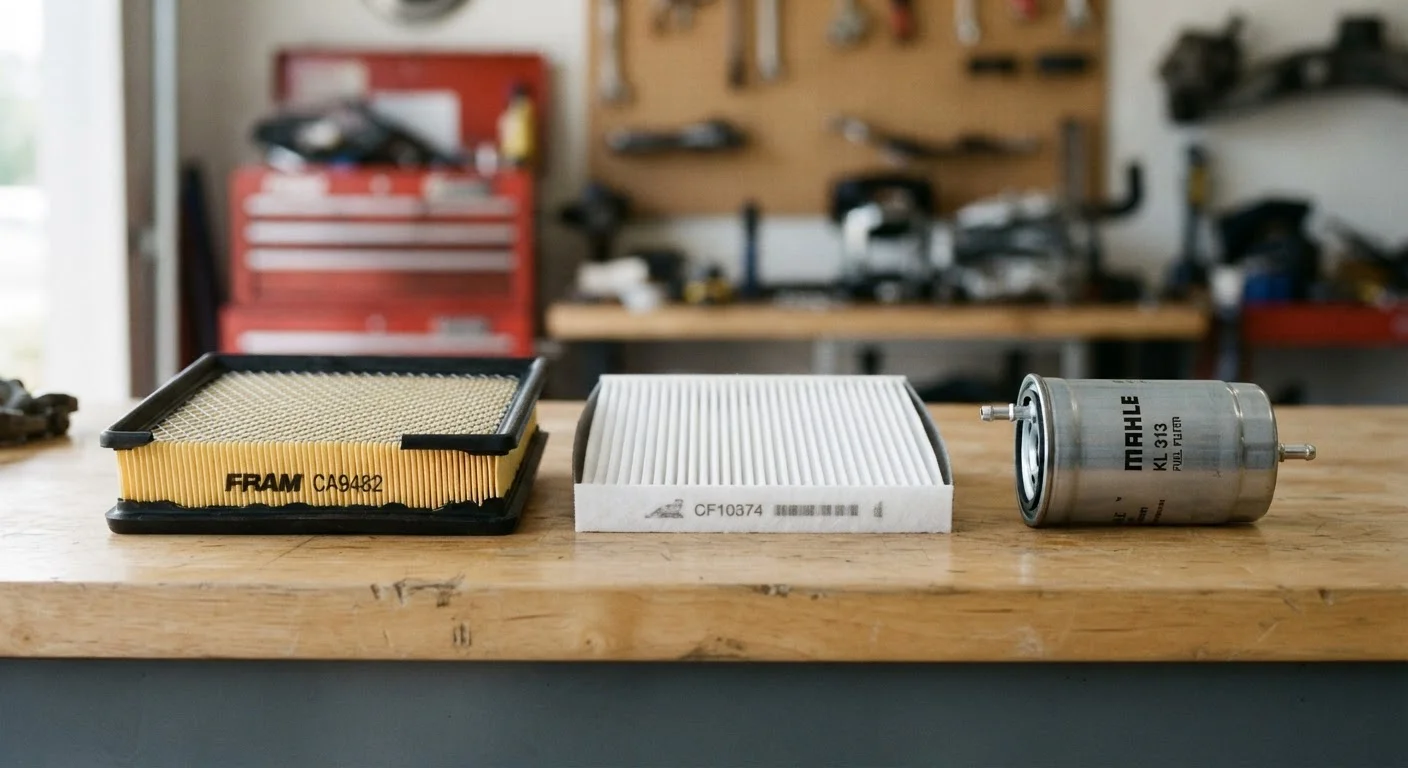
When a mechanic tells you a filter needs replacing, it helps to know which one they mean - and why it matters. Your car likely has three filters doing everyday work: the engine air filter, the cabin air filter, and the fuel filter. Each protects a different system, fails in different ways, and gets replaced on a different schedule.
Mix them up and you might ignore a genuinely important job or pay to replace something that wasn't urgent. This quick-reference guide cuts through the jargon so you know exactly what each filter does, what happens when it gets clogged, and roughly how often it needs attention.
| Engine air filter replacement interval | Every 15,000-30,000 miles (varies by vehicle and driving conditions) (Owner's manual guidance varies by manufacturer) |
| Cabin air filter replacement interval | Every 12,000-15,000 miles, or roughly once a year (General industry guidance) |
| Fuel filter (external) replacement interval | Every 20,000-30,000 miles on older vehicles with external filters (Varies significantly by vehicle design and age) |
| What engine air filter protects | Engine combustion chamber and intake system |
| What cabin air filter protects | Passenger compartment air quality |
| What fuel filter protects | Fuel injectors and fuel delivery components |
Engine Air Filter: Keeping Combustion Clean
Your engine burns a mixture of fuel and air to generate power. The engine air filter sits between the outside air intake and the engine itself, trapping dust, pollen, insects, and road grit before they reach the combustion chamber. A clean filter lets air flow freely; a dirty one restricts that flow.
When an engine air filter is heavily clogged, you may notice reduced acceleration, slightly higher fuel consumption, or a rough idle. In severe cases, the engine can run rich - meaning too much fuel relative to air - which can foul spark plugs over time.
Replacement intervals typically range from 15,000 to 30,000 miles, but if you drive frequently on unpaved or dusty roads, it can need attention sooner. Your owner's manual gives the manufacturer's specific recommendation for your vehicle. This is a job many drivers can do themselves - the filter housing is usually accessible without tools - but a mechanic will check it at a standard service too. See what happens during a car service for a broader view of what gets inspected.
Engine air filter
A filter that removes dust, pollen, and debris from the air entering the engine before combustion. It keeps contaminants out of the combustion chamber and helps maintain proper air-to-fuel ratios.
Cabin air filter
A filter that cleans air flowing into the passenger compartment through the HVAC system. It traps pollen, dust, and exhaust particles to improve air quality inside the vehicle.
Fuel filter
A filter that removes sediment and debris from the fuel before it reaches the engine. It protects fuel injectors and other fuel system components from damage or clogging.
HVAC system
Stands for heating, ventilation, and air conditioning. In a car, it controls temperature and airflow inside the cabin. The cabin air filter is part of this system.
Running rich
A condition where the engine receives too much fuel relative to air in the combustion mixture. It can cause poor fuel economy, rough idling, and fouled spark plugs, and may result from a severely restricted air filter.
Cabin Air Filter: What You're Actually Breathing
The cabin air filter has nothing to do with the engine. It cleans the air coming into the passenger compartment through the heating, ventilation, and air conditioning (HVAC) system. It catches dust, pollen, mold spores, and exhaust particles before they circulate inside the car.
A clogged cabin filter often makes itself known through reduced airflow from your vents, a musty smell when you run the heat or AC, or increased allergy symptoms during your commute. It won't affect engine performance at all - which is exactly why it's easy to overlook.
Most manufacturers recommend replacing the cabin filter every 12,000 to 15,000 miles, or roughly once a year for average drivers. It's one of the more affordable routine maintenance items, and in many vehicles the filter is located behind the glove box and accessible without any mechanical skill. That said, locations vary - check your manual before assuming it's a straightforward DIY job.
Cabin Filter vs. Engine Filter: Easy to Confuse
Because both are called 'air filters,' they often get mixed up at the service counter. Always confirm which filter is being discussed - they are in completely different parts of the car and serve entirely separate purposes. A clogged cabin filter won't affect engine performance, and a clogged engine air filter won't affect what you breathe inside the cabin.
Fuel Filter: Protecting Your Engine's Fuel Supply
The fuel filter screens out contaminants - rust particles, sediment, and debris - that can make their way into your fuel tank from the pump or from the fuel itself. It sits in the fuel line between the tank and the engine, keeping the fuel injectors and other components from getting clogged or damaged.
A failing fuel filter can cause hard starting, engine hesitation or sputtering under acceleration, stalling, and in advanced cases, a no-start condition. Because these symptoms overlap with several other issues, fuel filter problems are sometimes misdiagnosed.
On older vehicles, fuel filters were often external and replaced every 20,000 to 30,000 miles as a routine item. Many modern cars have the filter integrated inside the fuel tank as part of the fuel pump assembly - these are designed to last much longer and may only need attention if a problem arises. Check your owner's manual to understand what applies to your vehicle. Fuel system work should generally be left to a qualified mechanic due to the fire risk involved. For a related look at how fuel type affects maintenance needs, see petrol vs. diesel vs. hybrid differences.
Staying on top of all three filters is straightforward once you understand what each one does. You can also explore what each fluid reservoir under the hood does to round out your maintenance knowledge.