

Key Takeaways
Why Fluid Mix-Ups Are More Common Than You'd Think
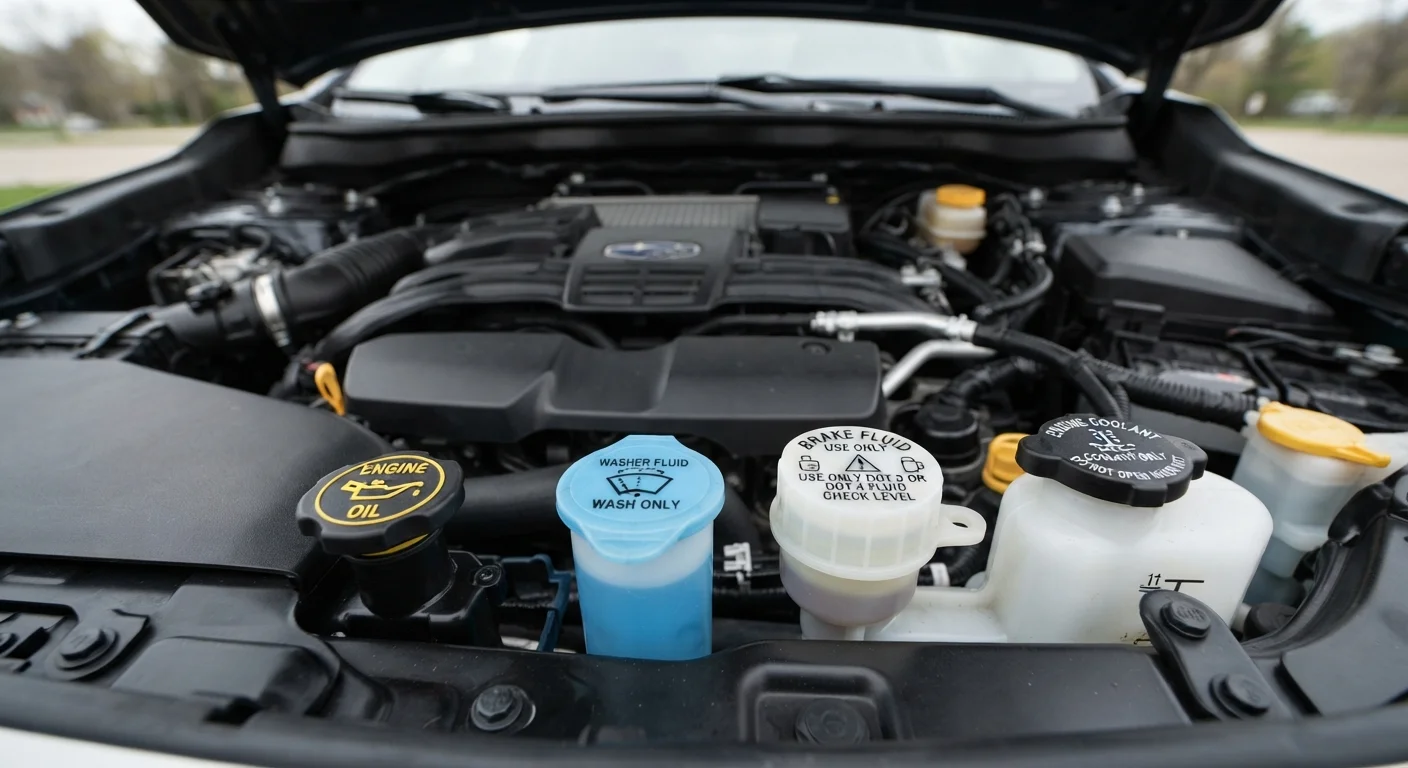
Most drivers know their car needs oil, coolant, and brake fluid - but far fewer know what type goes where, how much to add, or what happens when you get it wrong. The engine bay is crowded, labels are small, and fluid bottles often look alike. These conditions make honest mistakes easy.
The bigger issue is that fluid errors rarely announce themselves immediately. An engine running on the wrong oil viscosity won't seize on the spot - it slowly accumulates wear. Mixed coolant types might look fine for months before corrosion starts. That delay is exactly what makes fluid mix-ups so costly: by the time symptoms show up, damage is already done.
This article covers the most common mistakes drivers make with vehicle fluids, why each one happens, and what you can do to avoid them. For a broader look at car maintenance fundamentals, the hub is a useful starting point.
The Most Costly Fluid Mistakes - And How to Avoid Them
Each of the errors below is genuinely common, and each one has a straightforward fix. The pattern across all of them is the same: the wrong assumption costs far more than a quick check would have.
Using the wrong motor oil viscosity grade.
Why it happens: Many drivers assume all motor oils are interchangeable, or they grab whatever is on sale without checking the owner's manual for the recommended grade.
Mixing different coolant types or adding plain water long-term.
Why it happens: Coolant reservoirs look empty and topping up with anything available feels like a quick fix. Different coolant colors and formulations also create confusion about compatibility.
Adding the wrong brake fluid type or overfilling the reservoir.
Why it happens: Brake fluid bottles look similar, and the DOT ratings (DOT 3, DOT 4, DOT 5) aren't well understood. Some drivers also top up the reservoir without realizing it's intentionally low due to worn brake pads.
Confusing power steering fluid with transmission fluid.
Why it happens: Both are red or pink liquids stored in similar-looking reservoirs, and the fill points are sometimes located close together under the hood.
Skipping fluid checks entirely until a warning light appears.
Why it happens: Modern cars feel reliable day-to-day, and warning lights create a false sense that the car will alert you before anything goes seriously wrong.
Wrong Brake Fluid Can Compromise Safety
Brake fluid is safety-critical. Using the wrong type - or allowing contaminated fluid to remain in the system - can lead to brake fade or failure under hard braking. If you are unsure what type your vehicle requires, have a qualified mechanic inspect and service the brake system rather than guessing.
One broader pattern worth noting: many fluid mistakes stem from the same underlying habit of improvising rather than referencing the owner's manual. That single document - often forgotten in the glove box - contains every fluid specification your vehicle needs. Making it your first stop before any top-up can save you significant money over a car's lifetime. You can also review common car maintenance myths to separate what's true from what's just automotive folklore.
Building a Simple Fluid-Check Habit
You don't need mechanical training to stay on top of your car's fluids - just a consistent habit and the right reference point. Once a month, with the engine cool and parked on a level surface, pull the dipstick to check oil level and color, glance at the coolant reservoir window, and visually inspect the brake fluid reservoir. Most of this takes two to three minutes.
If any fluid looks unusually dark, milky, or lower than it should be, that's a signal worth taking to a mechanic - not necessarily an emergency, but not something to defer indefinitely either. Slow leaks, in particular, are easy to miss until a system runs critically low.
~$4,000
Average engine repair cost from oil neglect
Industry repair data consistently shows that engine damage linked to improper lubrication - including wrong oil grades - ranks among the most expensive non-collision repairs vehicle owners face.
1 in 3
Cars found low on at least one fluid
Vehicle inspection data from service centers regularly finds that a significant proportion of cars coming in for unrelated issues are also low on oil, coolant, or brake fluid.
The goal isn't to become your own mechanic - it's to catch small issues before they compound. Fluid mix-ups that lead to expensive repairs almost always had an early warning sign that went unnoticed.
This article is for general informational purposes only. Always consult your vehicle's owner's manual and a qualified mechanic for guidance specific to your car's make and model.