

Key Takeaways
Why Maintenance Myths Stick Around
A lot of car maintenance advice was passed down from a generation of vehicles that no longer exist. Carbureted engines, single-grade oils, and pre-computer drivetrains had real quirks that required specific habits. Those habits became rules of thumb - and the rules outlived the reasons behind them.
The result: millions of drivers spend money on services their cars don't need, or skip ones that actually matter. Understanding what's changed - and why - helps you make better decisions at the shop. For the full picture of what your car genuinely needs and when, the maintenance schedule most drivers quietly ignore is a useful starting point.
Myth
You need to change your oil every 3,000 miles, no exceptions.
Fact
Most modern vehicles with conventional oil can go 5,000-7,500 miles between changes; those using full synthetic oil often go 10,000 miles or more.
The 3,000-mile guideline made sense decades ago when engine tolerances were looser and oil formulas were simpler. Today's engines are tighter, and modern motor oils - especially full synthetics - hold up far longer under normal driving conditions. Your owner's manual will list the manufacturer-recommended interval for your specific engine. Following that is both sufficient and more cost-effective than frequent unnecessary changes. For a deeper look at how oil types differ, see our guide to synthetic vs conventional oil.
Myth
You should let your engine warm up for several minutes before driving in winter.
Fact
Modern fuel-injected engines reach operating temperature faster by being driven gently - idling for more than 30-60 seconds is generally unnecessary.
Older carbureted engines did need extended idle time in cold weather. Fuel injection changed that. Today's engines warm up more efficiently under light load than they do sitting still in your driveway. Extended idling wastes fuel, adds unnecessary engine hours, and in very cold climates can actually wash oil off cylinder walls if the engine never fully warms up. A gentle drive - avoiding hard acceleration until the temperature gauge moves - is all most modern vehicles need.
Myth
Premium fuel will clean your engine and improve performance in any car.
Fact
Premium fuel only benefits engines specifically designed or tuned to require it - using it in a regular-grade engine typically provides no measurable advantage.
Premium fuel has a higher octane rating, which resists premature detonation (knocking) in high-compression engines. If your owner's manual says "regular unleaded," filling up with premium is spending extra money for no real return. If the manual says premium is "required," use it - skipping it can reduce performance and may cause knocking over time. If it says premium is "recommended" rather than required, your car will generally run fine on regular, though you may see a modest difference in performance or fuel economy in some driving conditions.
Myth
You must replace all four tires at the same time, always.
Fact
Whether you replace one, two, or four tires depends on your vehicle's drivetrain and how much tread the remaining tires have.
All-wheel-drive vehicles are the most sensitive to mismatched tire diameters - on many AWD systems, a significant tread depth difference between tires can stress the drivetrain, so replacing in pairs or sets on those vehicles is often the right call. On front-wheel-drive and rear-wheel-drive vehicles, replacing just the worn tires is usually fine as long as the remaining ones are in good shape. When in doubt, your mechanic can measure tread depth and advise whether mixing is safe for your specific setup.
Myth
Flushing your transmission fluid is unnecessary if the car seems to be shifting fine.
Fact
Transmission fluid degrades over time regardless of how the transmission feels, and neglecting it can lead to expensive damage.
Transmission problems don't always announce themselves early. Degraded fluid loses its ability to lubricate and cool internal components, gradually increasing wear. By the time shifting feels rough or sluggish, significant damage may already be underway. Consult your owner's manual for the recommended service interval - some modern transmissions are labeled "lifetime fill," but many mechanics caution that this doesn't always mean truly maintenance-free, especially under towing, city driving, or high-heat conditions. For a full picture of what gets checked at a service, see what happens during a car service.
What Your Car Actually Needs - and When
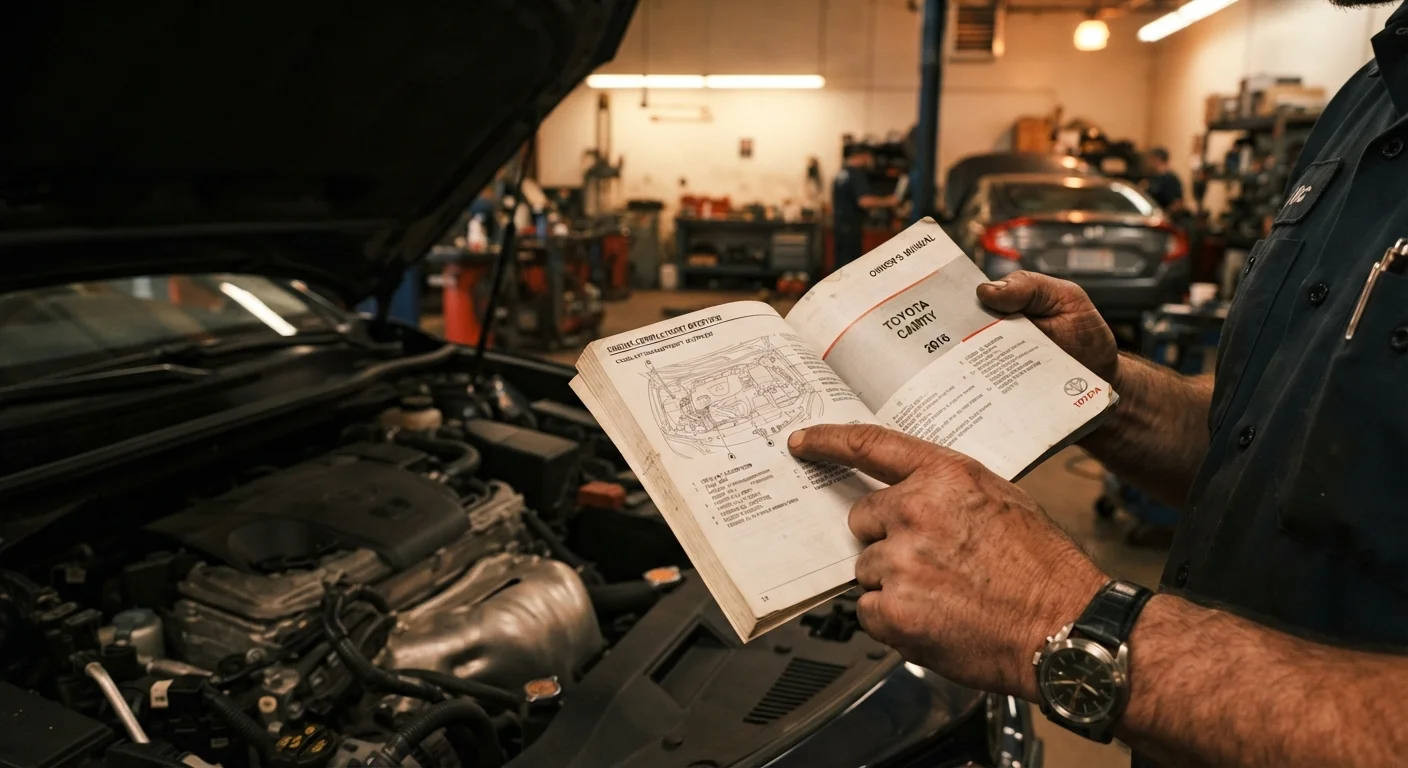
The most reliable source for your vehicle's maintenance requirements isn't a shop reminder sticker or a general guideline - it's your owner's manual. Manufacturers test their vehicles extensively and publish specific intervals for oil changes, fluid flushes, filter replacements, and inspections based on your engine, drivetrain, and intended use.
Your Owner's Manual Beats Any Rule of Thumb
Every car is engineered differently. The maintenance intervals and fluid specs printed in your owner's manual are set by the manufacturer for your specific engine - not for a generic vehicle from 1985. Following those guidelines is the single most reliable way to avoid unnecessary service costs and protect your warranty.
If you're dealing with a higher-mileage vehicle, some of these intervals may need to be shortened as components age. The upkeep needs of a high-mileage car shift in ways worth understanding before your next service appointment.
Don't Skip Oil Changes Entirely
Extending intervals beyond what your owner's manual recommends - even with synthetic oil - can accelerate engine wear. If your car has an oil life monitoring system, follow its prompts. If it doesn't, stick to the interval in the manual rather than guessing.
Separating myth from fact doesn't mean skipping maintenance - it means spending on what your car actually needs rather than what habit or marketing suggests. That's a meaningful difference for your wallet and your engine's long-term health.