

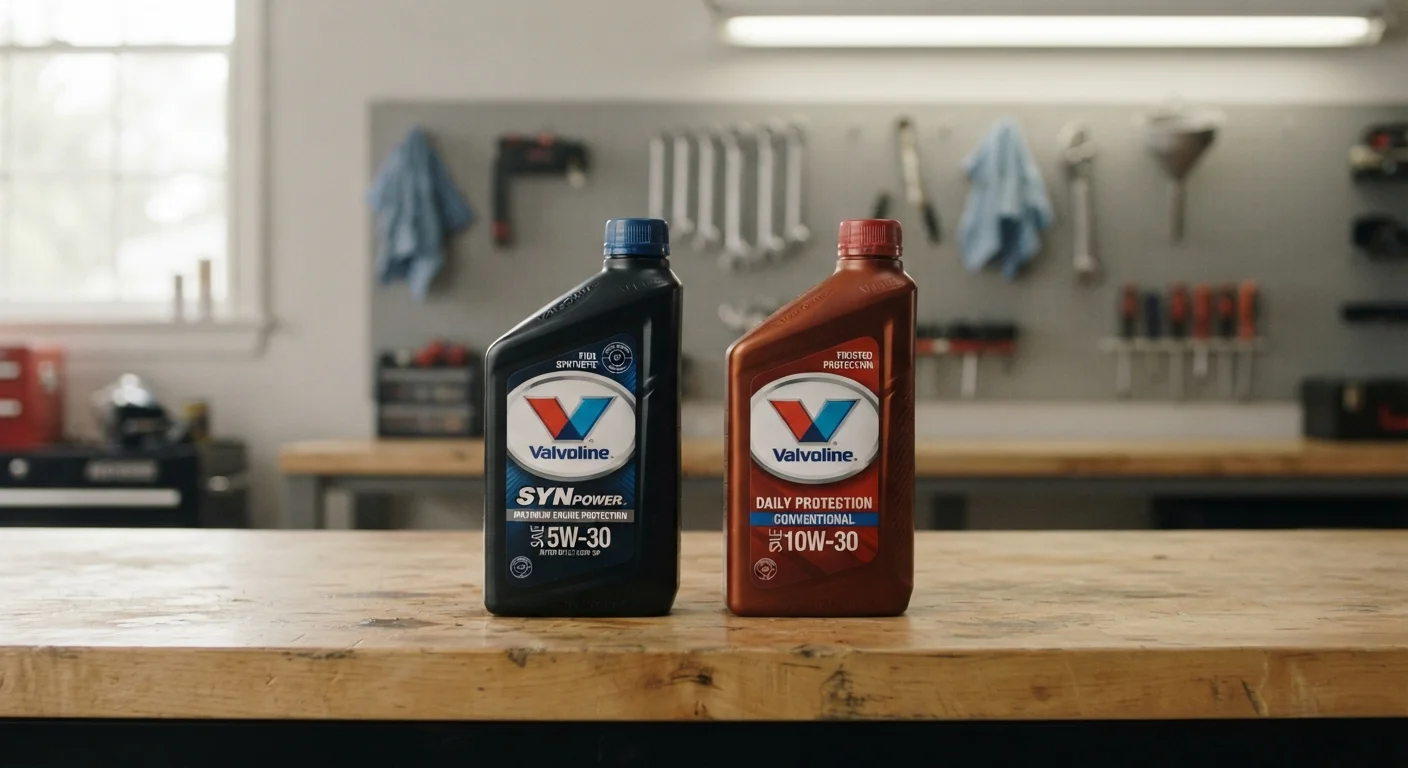
Key Takeaways
Option A
Synthetic Motor Oil
The engineered, high-performance formulation.
Best for: Newer vehicles, high-performance engines, extreme climates, and drivers who go longer between oil changes.
Option B
Conventional Motor Oil
The time-tested, widely available standard.
Best for: Older vehicles with simple engine designs, low-mileage drivers, and cars whose manufacturers specify conventional oil.
If you drive a newer vehicle or a turbocharged engine
Synthetic Motor Oil
Most modern manufacturers - especially those with turbos or direct injection - specify full synthetic because it handles heat and tight tolerances better.
If you drive an older, simpler engine and change oil regularly
Conventional Motor Oil
Older engines designed around conventional oil may not need the added performance of synthetic, and conventional oil does the job reliably when changed on schedule.
If you drive in extreme cold or very hot climates
Synthetic Motor Oil
Synthetic oil flows better at low temperatures and resists breakdown at high temperatures, offering more consistent protection in harsh conditions.
If you want longer intervals between oil changes
Synthetic Motor Oil
Synthetic oil generally lasts longer before degrading, though you should still follow the interval your vehicle manufacturer recommends.
What Actually Makes Them Different
Motor oil has one core job: keep metal engine parts from grinding against each other. Both synthetic and conventional oil do this, but they're made very differently - and that matters for how well they perform under stress.
Conventional motor oil starts as crude oil pumped from the ground. It's refined to remove impurities, then blended with additives to meet performance standards. Because it comes from a natural source, the molecules aren't perfectly uniform - there's natural variation in size and shape.
Synthetic motor oil is built in a lab from chemically modified base stocks. The molecules are more uniform in size, which means the oil flows more predictably, handles heat better, and breaks down more slowly. It's not "fake" oil - it's engineered oil.
For a deeper look at what the labels and numbers actually mean, see Engine Oil Explained: Grades, Types, and Why They Matter.
| Criterion | Synthetic Oil | Conventional Oil |
|---|---|---|
| Base material | Chemically engineered base stocks | Refined crude oil |
| Temperature performance | Excellent in extremes (hot and cold) | Adequate in moderate conditions |
| Typical change interval | Often 7,500-10,000+ miles (varies by vehicle) | Often 3,000-5,000 miles (varies by vehicle) |
| Cost per quart | Generally higher | Generally lower |
| Best engine fit | Modern, turbocharged, high-performance | Older, simpler engine designs |
| Breakdown resistance | Degrades more slowly | Degrades faster under heat and stress |
How to Know Which One Your Engine Needs
The single most reliable answer is in your owner's manual. Manufacturers test their engines extensively and specify exactly what oil type and grade is required. Using something different - even a supposedly better product - can potentially void warranties or affect performance.
A few general patterns worth knowing:
- Most vehicles made after roughly 2010 are designed for full synthetic. Turbocharged engines and those with variable valve timing especially depend on it.
- Many older or high-mileage vehicles ran on conventional oil from the factory and may continue to do so without issue. High-mileage synthetic blends exist specifically for engines over 75,000 miles.
- Climate matters. In very cold winters, synthetic flows faster at startup - that's when most engine wear actually happens.
If you're unsure, a qualified mechanic can check your vehicle's specifications and advise on what's appropriate. Don't rely on what the quick-lube shop automatically puts in - ask what they're using and confirm it matches your manual.
~75%
U.S. new vehicles specifying synthetic oil
Industry estimates suggest the large majority of new passenger vehicles sold in the U.S. now require or recommend full synthetic motor oil.
Up to 40%
Engine wear occurring at cold startup
A significant share of engine wear happens in the first moments after a cold start, when oil hasn't yet fully circulated - an area where synthetic's faster flow offers an advantage.
Common mix-ups around oil selection - including using the wrong grade - are covered in Common Car Fluid Mix-Ups That Lead to Expensive Repairs.
Clearing Up a Few Common Myths
A lot of drivers have heard conflicting things about motor oil. Here are the ones that come up most often:
"You need to change oil every 3,000 miles." This was a reasonable rule decades ago for conventional oil in older engines. Most modern vehicles - especially those running full synthetic - can go significantly longer. Check your manual for the actual interval, which might be 5,000, 7,500, or even 10,000 miles depending on the vehicle and oil type.
"Once you switch to synthetic, you can't go back." Not true. You can switch between oil types as long as the grade is correct for your engine. The only caution is with very old engines that may have seals not designed for synthetic - another reason to consult a mechanic if you're unsure.
"Synthetic oil causes leaks in older engines." Synthetic oil doesn't create leaks, but it may flow into pre-existing weak seals that thicker conventional oil was masking. If your engine already has seal wear, that's worth addressing regardless of oil type.
For more persistent myths about maintenance, Common Car Maintenance Myths That Cost Drivers Money covers the full picture.
Synthetic Blends: A Middle Ground
Synthetic blend oils mix conventional and synthetic base stocks. They offer better performance than straight conventional oil at a lower cost than full synthetic. They're commonly recommended for trucks, SUVs under towing loads, and higher-mileage vehicles. If your manual permits a blend, it can be a reasonable middle option - but again, confirm with your vehicle's specifications first.