

Key Takeaways
Engine Oil Grade
An engine oil grade is a standardized code - like 5W-30 or 10W-40 - that tells you how the oil behaves at different temperatures. The numbers describe how thick or thin the oil flows, which directly affects how well it lubricates your engine during cold starts and at normal operating heat. Using the grade your vehicle's manufacturer recommends helps protect engine components and maintain fuel efficiency.
Oil grades are set by the Society of Automotive Engineers (SAE). The 'W' stands for Winter, and the number before it reflects cold-weather flow; the number after indicates viscosity at high operating temperatures.
What the Numbers on the Bottle Actually Mean
Pick up any bottle of motor oil and you'll see a code like 5W-30 or 10W-40. These aren't arbitrary - they're standardized viscosity ratings set by the Society of Automotive Engineers (SAE). Viscosity simply means how easily a fluid flows. Thicker oil flows more slowly; thinner oil flows faster.
The number before the W (which stands for Winter) describes how the oil behaves when your engine is cold - a lower number means the oil stays fluid at lower temperatures, making cold-start lubrication quicker. The number after the W describes viscosity at normal operating temperature, typically around 212°F. A higher number means the oil stays thicker under heat, which can be important for older or high-performance engines running hot.
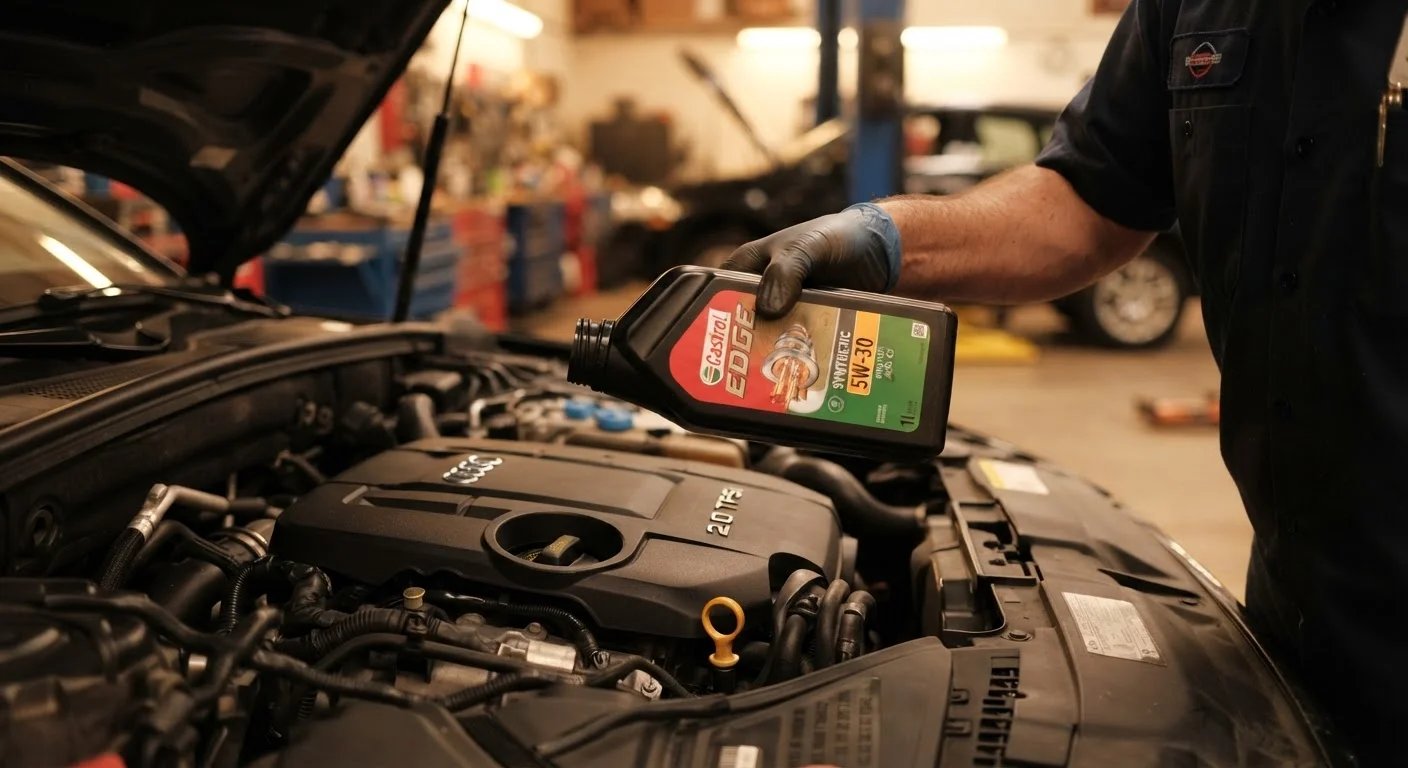
So a 5W-30 oil flows well in cold weather and maintains moderate thickness when hot. A 10W-40 is slightly thicker at both ends. Neither is universally superior - the right choice depends entirely on your specific engine and climate. See what each fluid under your hood actually does for a broader overview of your vehicle's fluid system.
5W-30
Most commonly specified grade in modern passenger cars
Industry service data consistently shows 5W-30 as the most widely recommended viscosity grade across mainstream vehicle manufacturers in North America.
~25%
Engine wear occurs during cold starts
Engineering studies on engine wear have long noted that a disproportionate share of internal wear happens in the first moments after startup, before oil fully circulates.
Synthetic vs. Conventional: What's the Real Difference?
Beyond the viscosity grade, oil comes in two main types: conventional and synthetic. Conventional oil is refined directly from crude petroleum. Synthetic oil is engineered in a lab - its molecules are more uniform in size and structure, which allows for more predictable performance across a wider temperature range.
Synthetic oil generally resists breakdown longer, performs better in extreme heat or cold, and can support longer change intervals. Conventional oil costs less upfront but may need more frequent changes. There's also synthetic blend oil, which mixes both types and sits in the middle on both performance and price.
For a deeper comparison of when each type makes sense, see synthetic vs. conventional oil explained. The short version: use whatever your owner's manual specifies. Upgrading to synthetic when your car calls for conventional won't hurt, but switching in the other direction can.
Check the Cap, Not Just the Shelf
Before buying oil, look at the oil filler cap on your engine - many manufacturers print the recommended grade right there. It takes five seconds and removes all guesswork. If the cap is blank, your owner's manual is the definitive source.
Why Using the Wrong Oil Is a Bigger Deal Than It Sounds
It's easy to assume any oil labeled for gasoline engines will do the job. In practice, using the wrong grade can leave engine parts poorly lubricated - especially on cold starts when oil needs to reach bearings quickly. Too thick at low temperatures means slow distribution; too thin at high temperatures means reduced film strength between metal parts.
There's also a warranty consideration. Many manufacturers specify an oil grade as part of their maintenance requirements. Using a different grade - especially if it contributes to engine damage - may give a dealer grounds to deny a warranty claim. It's a small detail that carries real consequences.
Common fluid mix-ups that lead to expensive repairs covers exactly how these kinds of simple mistakes add up. And if you're curious about persistent oil-change myths - like the old 3,000-mile rule - common car maintenance myths breaks down what's actually true.
How to Find the Right Oil for Your Car
The simplest answer: check your owner's manual. It will list the recommended SAE grade and often specify whether synthetic is required or preferred. Many modern vehicles - especially turbocharged or European-market engines - require full synthetic and a specific viscosity. Using anything else can affect performance and protection.
If you don't have your manual handy, the oil cap under the hood sometimes lists the recommended grade. Many auto parts stores also have lookup tools by vehicle year, make, and model. When in doubt, ask a mechanic - getting this right costs nothing and could save you from an expensive repair down the road.
This article is for general informational purposes only. Always consult your vehicle's owner's manual or a qualified mechanic before making changes to your maintenance routine.