

Key Takeaways
Our Verdict
No single national park is best for everyone. The right choice depends on your preferred activity level, crowd tolerance, travel season, and what kind of landscape speaks to you. Taking time to match a park's genuine character to your travel style — rather than defaulting to the most famous option — usually produces a far more rewarding experience.
| Best for | Recommended |
|---|---|
| Active hikers who want dramatic canyon scenery | Zion National Park |
| Families and mixed-pace groups seeking coastal variety | Acadia National Park |
| Wildlife-focused and patient, slow-travel visitors | Everglades National Park |
| Travelers seeking solitude, dark skies, and off-the-beaten-path exploration | Great Basin National Park |
Why Park Choice Matters More Than Most People Realize
The phrase "national park trip" can mean wildly different things depending on which park you choose. Yellowstone means geothermal features and wildlife watching from a car. Olympic means rainforests, alpine meadows, and rugged Pacific coastline — sometimes all in one day. Choosing the wrong park for your group's pace, fitness level, or interests can turn a dream trip into a frustrating one.
Before committing to a destination, it helps to ask a few honest questions: How much physical activity do you actually want? Do crowds energize or exhaust you? Are you chasing a specific landscape, or a general outdoor feeling? The answers tend to point toward very different parks. See our guide to understanding your travel style for a broader framework on this kind of self-assessment before booking.
| Zion (UT) | Acadia (ME) | Everglades (FL) | Great Basin (NV) | |
|---|---|---|---|---|
| Best for | Active, trail-focused hikers | Families, mixed fitness levels | Wildlife and slow-travel enthusiasts | Solitude seekers, stargazers |
| Physical demand | High | Low to moderate | Low | Moderate |
| Crowd level | Very high in peak season | Moderate to high | Low to moderate | Very low |
| Best season to visit | Spring and fall | Late summer to fall | December to March | June to September |
| Signature experience | Canyon slot hikes | Coastal drives and scrambles | Wildlife kayaking and walks | Cave tours and dark sky viewing |
| Advance planning required | High (permits, shuttles) | Moderate | Low to moderate | Moderate (cave tours book out) |
Breaking Down Four Distinct Park Personalities
Zion National Park (Utah)
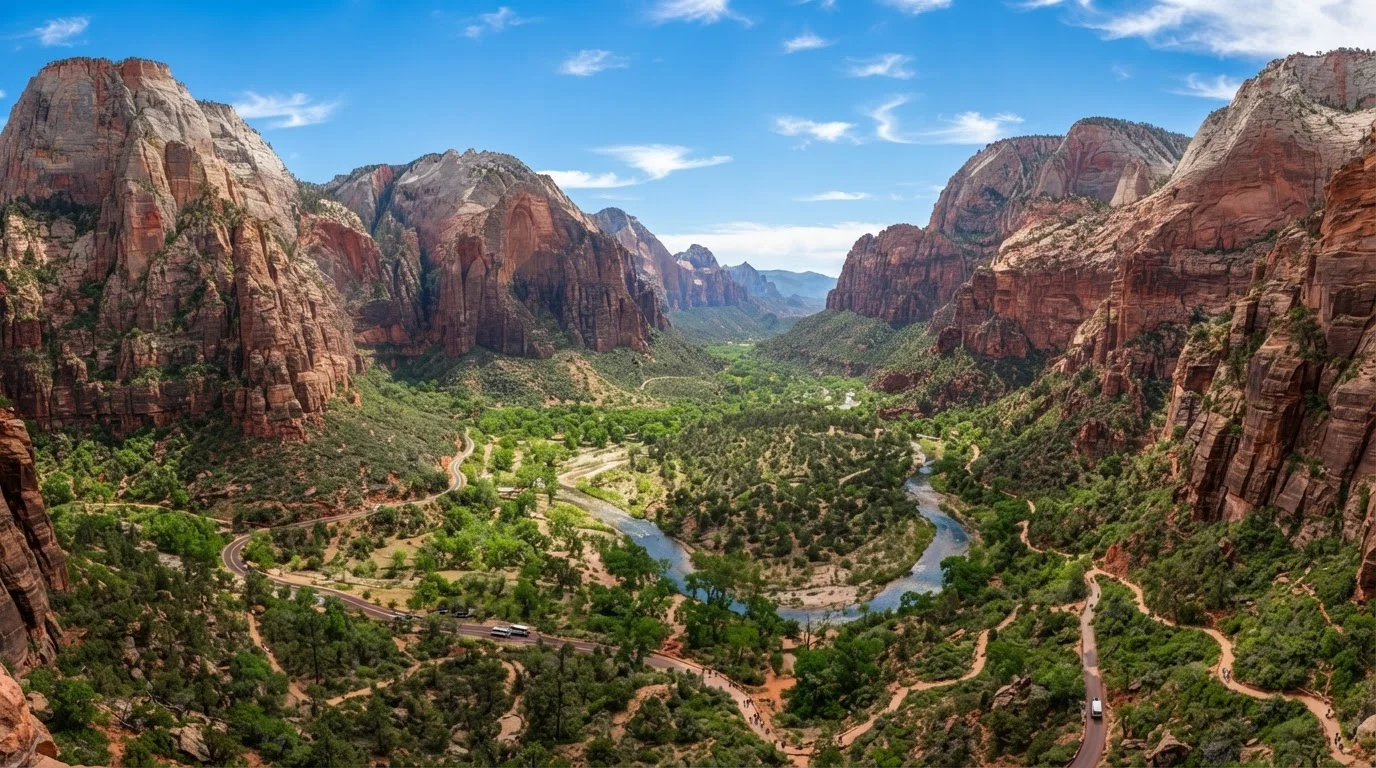
Zion is built for people who want a physical challenge wrapped in spectacular scenery. The park's signature hikes — including Angels Landing and The Narrows — require genuine fitness and, in some cases, permits obtained via lottery. Shuttle buses are mandatory in peak season, and trails can be densely crowded between March and November. If you thrive on adrenaline, elevation gain, and sharing a trail with fellow enthusiasts, Zion delivers. If you prefer solitude or have mobility limitations, the experience may disappoint.
Acadia National Park (Maine)
Acadia occupies a more accessible middle ground. Located on Mount Desert Island off the Maine coast, it blends ocean views, forested carriage roads, and summit hikes into a compact, well-organized park. The park's loop road makes scenic driving genuinely rewarding, and difficulty levels range from flat shoreline walks to the rocky scramble up Beehive Trail. Families with varying fitness levels tend to fare particularly well here. Building a balanced daily itinerary is especially useful for Acadia, where it's tempting to overbook activities.
Everglades National Park (Florida)
The Everglades rewards patience and curiosity over athleticism. This is not a dramatic cliff-and-canyon park — it's a vast, flat subtropical wilderness where the appeal lies in wildlife encounters: alligators, manatees, roseate spoonbills, and rare wading birds. Kayaking, ranger-led walks, and slow boardwalk strolls are the primary ways in. Summer heat and mosquitoes are intense; winter (December through March) is the clear visiting window. It suits travelers who want to observe rather than conquer.
Great Basin National Park (Nevada)
One of the least-visited parks in the continental US, Great Basin offers ancient bristlecone pine forests, a marble cave system, and some of the darkest night skies in North America. If your goal is genuine solitude and you're comfortable with limited visitor infrastructure, this park is underrated. It's a good fit for destinations that reward research before you arrive — the cave tours book out, road conditions vary seasonally, and the high elevation surprises unprepared visitors.
Practical Logistics That Shape the Experience
Beyond the landscape itself, a few operational realities shape how enjoyable any park visit will be.
- Reservations and timed entry: Several high-demand parks now require advance reservations for entry, parking, or specific trails. Zion, Yosemite, and Rocky Mountain have all implemented timed-entry systems at various points. Check each park's official National Park Service page well ahead of your trip.
- Seasonality: Most parks have a clear best window. Visiting Acadia in peak leaf season (late September to mid-October) versus July crowds are very different trips. The Everglades is essentially inhospitable in summer. Great Basin's summit roads close in winter.
- Crowd patterns: Weekday visits are typically less congested than weekends, and arriving at trailheads before 8 a.m. often means a fundamentally different experience than arriving at noon.
Check for Timed-Entry Requirements Early
Many of the most popular national parks now require timed-entry reservations during peak months — and these can sell out weeks in advance. Visit the official National Park Service website (nps.gov) for the specific park you're considering as soon as your dates are set. Don't assume a park entrance fee alone guarantees you access to a trailhead or parking area.
If you're building a larger itinerary around a park, the core phases of trip planning framework is a useful starting point for sequencing your research, booking, and preparation steps efficiently.
Regional Parks Worth Considering
The four parks above illustrate distinct personalities, but they're a small sample of more than 60 options. Travelers interested in the Pacific Northwest should consider Olympic National Park, which combines rainforest, alpine terrain, and coastline in ways that few parks can match. For broader regional context, our orientation to Oregon and Washington explains the geography and climate that makes this corner of the country distinct from the desert Southwest.
The takeaway isn't that one park is objectively superior — it's that different parks are genuinely designed, by geography and infrastructure, for different kinds of travelers. Spending twenty minutes matching your actual preferences to what a park offers is one of the highest-return investments in trip planning you can make.
Prices, availability, entry requirements, and conditions at national parks can change. Always verify current information directly through the National Park Service (nps.gov) before traveling.