

Key Takeaways
Option A
Lisbon
The walkable, history-rich city break.
Best for: Travelers who want culture, food, architecture, and urban energy packed into a few days.
Option B
The Algarve
The sun-drenched coastal escape.
Best for: Travelers seeking beaches, warm weather, and a slower, relaxing pace by the sea.
If you want cultural immersion and city energy
Lisbon
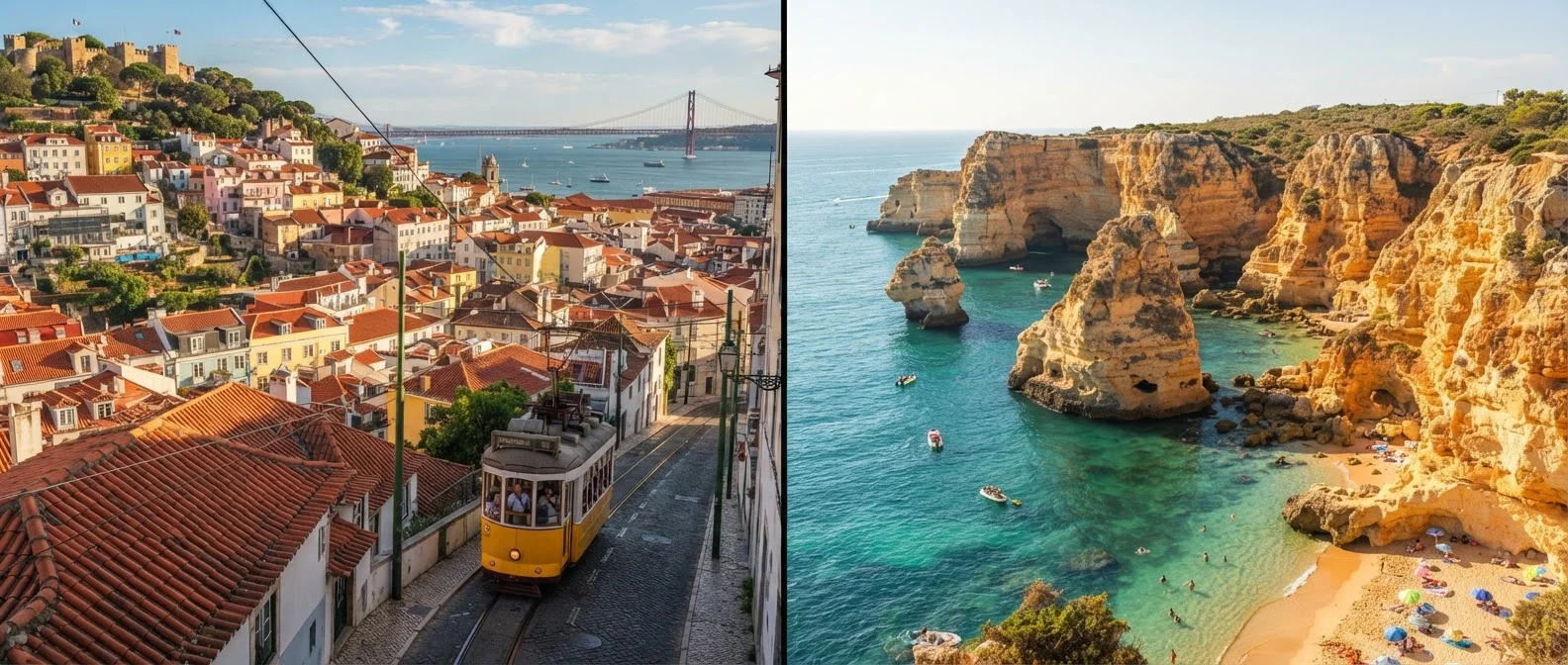
Lisbon's neighborhoods, museums, food scene, and tram-laced streets reward curious, on-the-go travelers who enjoy discovery around every corner.
If rest and beach time are your main goals
The Algarve
The Algarve's coastline offers warm waters, striking rock formations, and a slower pace that suits travelers looking to genuinely unwind.
If you're traveling with mixed interests in one group
Lisbon
Lisbon's variety — from history to nightlife to day trips — tends to satisfy a wider range of travelers than a beach-focused destination.
If you want reliable sunshine and outdoor activity
The Algarve
The Algarve sees more annual sunshine hours than Lisbon and is better set up for water sports, coastal hiking, and outdoor dining.
If you want to combine both destinations in one trip
Lisbon
Start in Lisbon for a few days, then travel south to the Algarve — the capital makes the stronger base for a multi-stop Portugal trip.
What Each Destination Actually Offers
Lisbon is Portugal's capital and one of Europe's oldest cities. Spread across seven hills above the Tagus River, it's compact enough to explore largely on foot, though its steep neighborhoods — called bairros — will test your legs. The city's appeal is layered: Gothic and Moorish architecture, celebrated tile-covered facades (azulejos), a thriving food scene, and a nightlife culture centered on fado, the country's melancholic folk music tradition. Day trips to Sintra's palaces and Cascais's seaside promenade are easy additions.
The Algarve refers to Portugal's entire southern coastal region, stretching roughly 100 miles from Lagos in the west to the Spanish border in the east. It's not one town but a string of beach resorts, fishing villages, and dramatic rock formations carved by the Atlantic. The area around Lagos and Sagres is wilder and more rugged; the stretch near Albufeira and Vilamoura is more developed, with golf courses, waterparks, and package-holiday infrastructure. What ties it all together is the coastline — warm water, long beaches, and outstanding seafood.
| Criterion | Lisbon | The Algarve |
|---|---|---|
| Primary draw | Culture, history, food, urban life | Beaches, sunshine, coastal scenery |
| Best travel months | April–October; mild year-round | May–September for beach weather |
| Getting around | Metro, tram, walkable | Rental car strongly advised |
| Pace | Active, exploratory | Relaxed, resort-oriented |
| Family beach access | Day trips to Cascais/Setúbal coast | Extensive, right on the doorstep |
| Nightlife & dining variety | Extensive urban scene | Resort dining; smaller towns quieter |
| Day trip options | Sintra, Cascais, Setúbal Peninsula | Cape St. Vincent, boat cave tours |
Timing, Weather, and Crowds
Both destinations sit in southern Europe and enjoy a Mediterranean-influenced climate, but there are meaningful differences. Lisbon is pleasant from April through October, with summers that are hot but rarely oppressive — temperatures typically stay in the low-to-mid 80s°F. The city is a year-round destination; winter is mild and the streets are far less crowded.
The Algarve gets hotter and sunnier, with July and August regularly reaching the upper 80s to low 90s°F and very little rain. This makes it ideal for a beach holiday from May through September — but it also means it gets extremely busy. Popular beaches around Albufeira can feel overwhelmed in peak season. Shoulder months like May, June, and September tend to offer a better balance of warmth, manageable crowds, and lower accommodation costs. For more on timing strategy, see our guide on travelling in peak season vs. the shoulder months.
300+
Sunny days per year in the Algarve
The Algarve is widely cited as one of Europe's sunniest regions, averaging over 300 days of sunshine annually according to regional tourism data.
~2.5 hrs
Train journey from Lisbon to Faro
CP (Comboios de Portugal), the national rail operator, runs regular intercity services connecting Lisbon's Oriente station to Faro in approximately two and a half to three hours.
Pace, Budget, and Practical Logistics
Lisbon suits travelers who like to fill their days with varied activities — a morning at the Museu Nacional do Azulejo, lunch at the Mercado da Ribeira, an afternoon in Alfama, and evenings at a neighborhood restaurant. That level of engagement is energizing for some and exhausting for others. If you're the kind of traveler who needs a nap after a nap, a beach holiday may serve you better.
Budget-wise, Lisbon has grown noticeably more expensive over the past decade, though it remains more affordable than London or Paris. The Algarve varies widely: a self-catering villa near the coast can be economical for families, while resort hotels near Vilamoura trend upscale. Getting around the Algarve generally requires a rental car unless you're staying in one spot — public transport connects larger towns but won't reach smaller beaches. Lisbon, by contrast, is navigable by metro, tram, and rideshare without renting a vehicle.
If you're weighing how to structure your days in either place, our guide on building your travel itinerary without overloading every day offers useful framing for pacing any trip realistically.
Combining Destinations on a Short Trip
If your trip is five days or fewer, splitting time between Lisbon and the Algarve can feel rushed rather than rewarding. Each destination benefits from at least three full days to settle in and explore at a comfortable pace. A longer trip of eight to ten days gives you space to experience both without feeling like you spent the whole time in transit.
Combining Both: Is It Worth It?
Many visitors to Portugal do visit both Lisbon and the Algarve on a single trip, and it works well if you have at least seven to ten days. A common structure is three to four days in Lisbon, followed by three to five days on the coast. Trains run regularly from Lisbon's Oriente station to Faro (the Algarve's main hub) in roughly two and a half to three hours. From Faro, buses and taxis reach most resort towns.
The risk of combining both is trying to cover too much and genuinely relaxing nowhere. If your trip is under a week, committing to one destination usually produces a better experience than splitting. Consider what you most need from the trip — stimulation and discovery, or genuine rest — and let that guide the decision. For travelers still working out their overall approach, organised planning vs. spontaneous travel can help clarify what style suits you best.
All travel information is general in nature. Entry requirements, transport schedules, and local conditions can change. Always verify current details with official government sources and your transport or accommodation providers before traveling.