

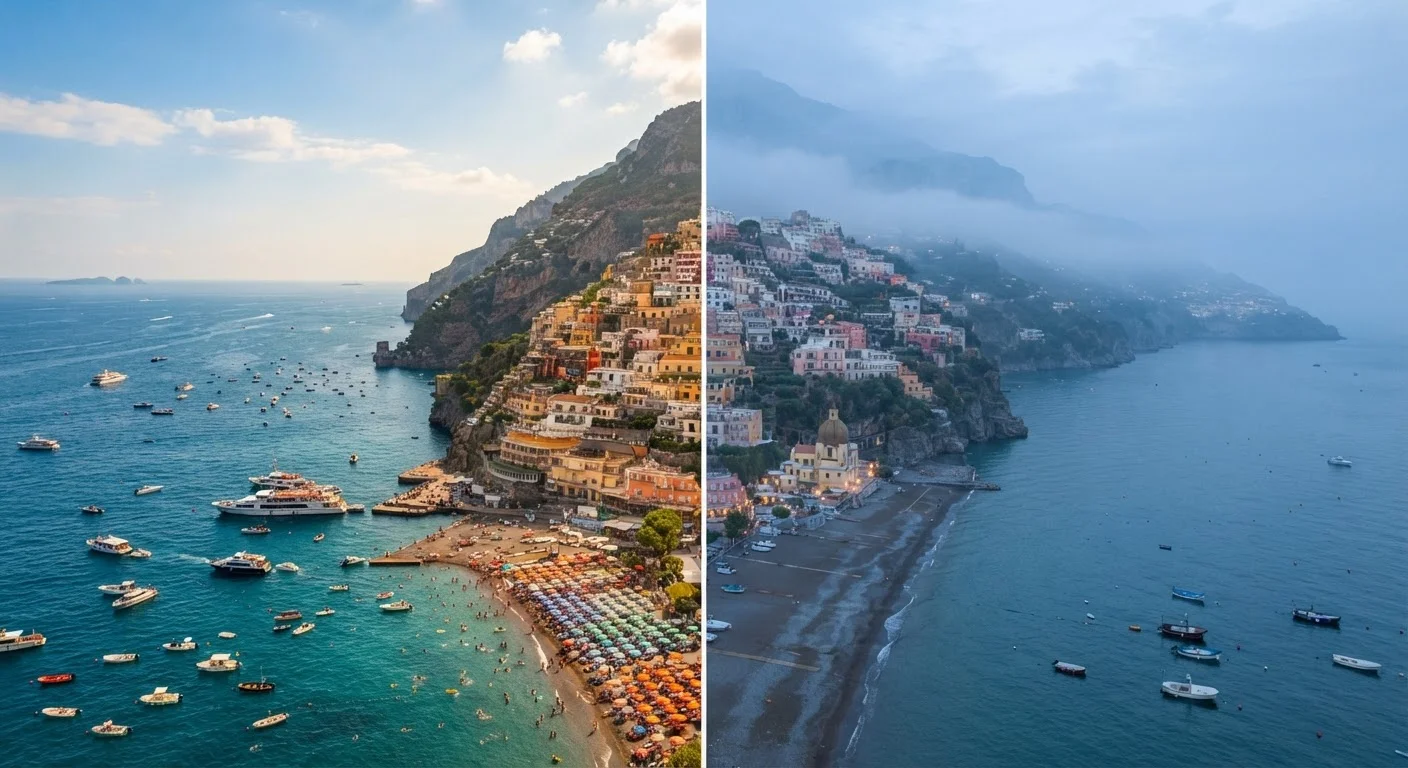
Key Takeaways
Option A
Peak Season Travel
The energetic, fully-loaded experience with the crowds to match.
Best for: Travelers who want reliable weather, full amenity access, and the buzzing atmosphere that popular destinations are known for.
Option B
Shoulder Month Travel
The quieter, more flexible window between extremes.
Best for: Travelers who prioritize breathing room, lower demand on popular sites, and more manageable trip costs without hitting full off-season limitations.
If you need guaranteed warm, dry weather and want every attraction fully open
Peak Season Travel
Peak season aligns with the most dependable conditions at most destinations, ensuring beaches are swimmable, mountain passes are open, and major sites operate full hours.
If you want popular sites without the worst of the crowds
Shoulder Month Travel
Shoulder months reduce visitor pressure significantly at most destinations while keeping hotels, restaurants, and key attractions operating normally.
If your travel dates are fixed by school holidays or family schedules
Peak Season Travel
When flexibility is limited, planning ahead and booking early lets you make the most of peak season rather than fighting it.
If budget management is a primary concern for your trip
Shoulder Month Travel
Accommodation and flights frequently cost less during shoulder periods, which can meaningfully reduce overall trip spend — though verify pricing for your specific route and dates.
If you want a culturally immersive experience with fewer tourist-oriented crowds
Shoulder Month Travel
Fewer visitors often means more authentic interactions, easier access to local restaurants, and a destination that feels less staged for tourism.
What Peak Season and Shoulder Months Actually Mean
Every destination has its own rhythm of visitor demand. Peak season refers to the period when a location draws its highest volume of tourists — usually driven by school holidays, favorable weather, or a combination of both. For beach destinations, that's often summer; for ski resorts, winter school breaks; for European cities, July through August.
Shoulder months sit just before and just after peak season. They're not the quietest time to visit (that's typically called the off-season or low season), but they're a deliberate middle ground. Crowds thin out, prices ease, and most services stay open. Think of late September in Mediterranean Europe, or May in many Southeast Asian coastal areas before monsoon season fully arrives.
Understanding this calendar for your specific destination matters more than applying general rules. A city like Prague has a shoulder window that stretches several months on either side of summer, while a remote island destination might have a peak window of just eight weeks. As part of a well-planned trip, researching your destination's seasonal rhythm is one of the most consequential decisions you'll make.
| Criterion | Peak Season | Shoulder Months |
|---|---|---|
| Crowd levels | High — popular sites very busy | Moderate — noticeably quieter |
| Weather reliability | High — most predictable conditions | Moderate — some variability |
| Accommodation demand | High — book far in advance | Lower — more last-minute flexibility |
| Typical pricing | Highest of the year | Generally lower than peak |
| Services and attractions | Fully open, extended hours | Mostly open, standard hours |
| Local atmosphere | Tourist-oriented, high energy | More local, relaxed pace |
| Booking flexibility | Low — popular options fill early | Higher — more options available |
The Real Trade-Offs: Crowds, Cost, and Conditions
Peak season's biggest draw is predictability. The weather is typically at its most reliable, attractions run full schedules, and the destination is humming with energy. That said, predictability comes at a price — often a literal one. Accommodation costs routinely spike during high-demand periods, popular restaurants fill weeks in advance, and iconic sites can feel less like an experience and more like a queue. For travelers whose budgets come under pressure mid-trip, this is a genuine concern. The reasons travel budgets fall apart often trace back to underestimating peak-season pricing.
Shoulder months rebalance that equation. Visitor numbers drop enough to feel meaningfully different — shorter waits, easier reservations, more space to move around — without the compromises of true off-season travel, where some hotels close, weather turns unpredictable, and local businesses scale back. The trade-off is that conditions are somewhat less guaranteed. An October trip to the Algarve might deliver warm sunny days or overcast skies; there's a wider range of possibilities than July.
20–40%
Typical accommodation price difference, peak vs. shoulder
Industry travel data consistently shows accommodation costs running materially higher during peak demand windows, though the exact range varies by destination and booking platform.
2–3x
Visitor volume difference at top European sites
Research by European tourism boards suggests several major heritage sites and city centers see visitor counts two to three times higher in July–August than in April–May or September–October.
6–8 weeks
Typical shoulder window at beach destinations
For many Mediterranean and tropical coastal destinations, the practical shoulder season lasts only six to eight weeks on each side of peak — making timing precision important.
For group travelers, timing decisions get more complicated. School-age children and coordinated group schedules often make peak season unavoidable, but strategic early booking can recover some of the flexibility that shoulder months naturally provide. See our look at group travel planning for more on navigating those dynamics.
How to Choose the Timing That Suits You
Neither peak season nor shoulder months is universally superior — the right choice depends on what matters most to you. Ask yourself a few practical questions before deciding:
- How flexible are your dates? If school holidays or work constraints lock your window, peak season planning is about maximising what you can control: booking early, building in buffer for crowds, and setting realistic expectations.
- What's the weather risk tolerance? Some travelers are fine accepting a 30% chance of rain in exchange for quieter streets. Others want near-certainty of sunshine and should lean toward peak season despite the crowds.
- What type of experience do you want? A lively, social atmosphere where the destination is in full swing suits peak season. A slower, more immersive experience often plays out better in the shoulder months.
Your travel style matters here too. If you lean toward structured planning, the comparison between organised and spontaneous travel is worth reading before you commit to a timing window that rewards one approach over the other.
Finally, do destination-specific research rather than relying on rules of thumb. Some locations — particularly those that reward careful pre-trip research — have nuanced seasonal dynamics that general advice won't capture. Check what's actually open, what the weather data shows over recent years, and what local travelers recommend for timing.
Shoulder Season Varies by Destination
What counts as 'shoulder' is highly destination-specific. In parts of Southeast Asia, what looks like shoulder season on a generic calendar may fall inside monsoon season for a specific island or region. Always cross-reference a destination's actual climate data and local tourism calendar — not just a generalized seasonal guide — before booking. Government tourism boards and meteorological records are useful starting points.