

Key Takeaways
Nutrition Facts Label
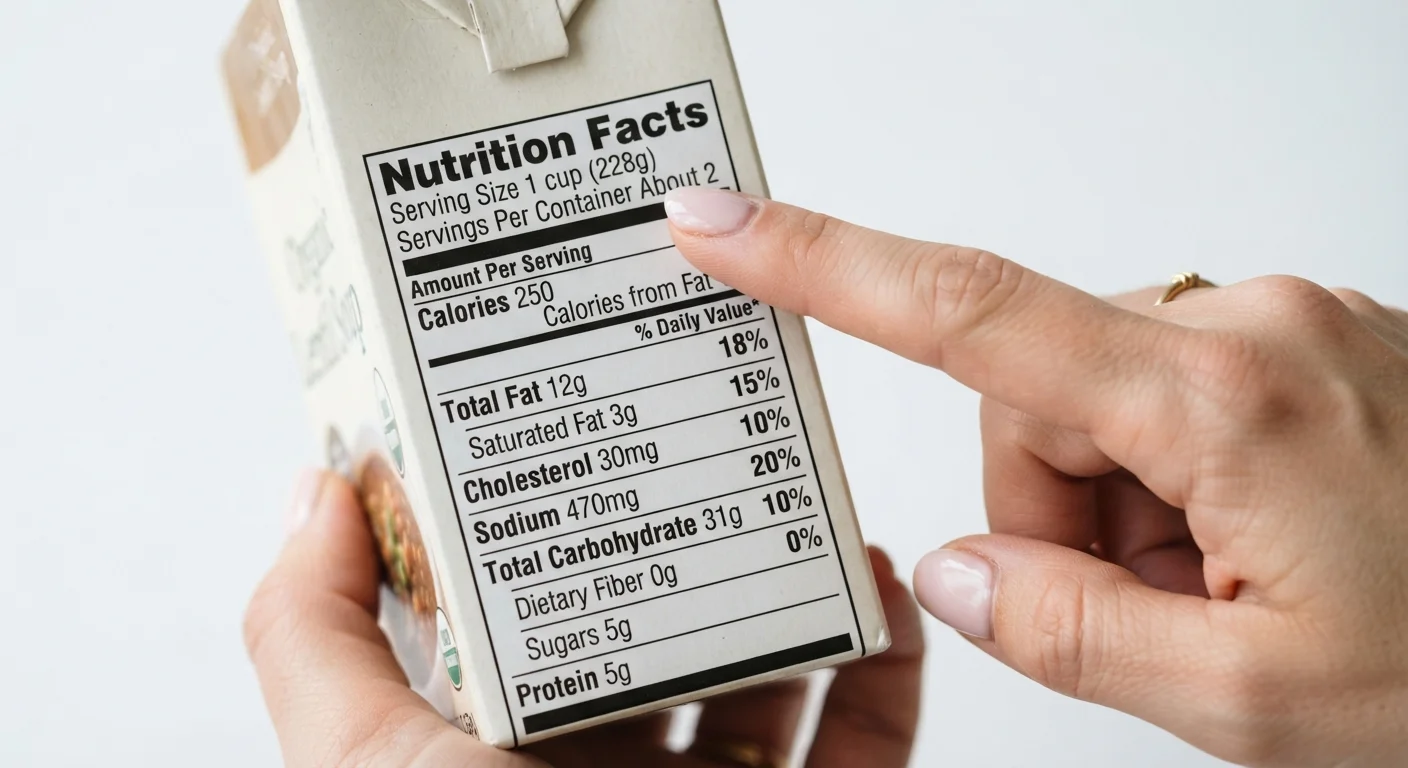
The Nutrition Facts label is the standardized black-and-white panel required by the FDA on most packaged foods and beverages sold in the United States. It tells you how much of key nutrients — like calories, fat, sodium, and fiber — are in a specific amount of that food. It's designed to help consumers make informed choices about what they eat.
The current label format was updated by the FDA in 2016 (with full compliance required by 2020) to reflect updated nutritional science, including a revised definition of serving sizes based on amounts people actually eat.
Start Here: Serving Size and Calories
Everything on the Nutrition Facts label is anchored to one number: the serving size. It appears at the very top for a reason — every gram, calorie, and percentage below it is calculated for that specific amount of food. If you eat twice the serving size, you double every number on the label.
Serving sizes are set by the FDA based on amounts people typically eat — not on what's nutritionally ideal. A bag of chips might list a serving as 1 ounce (about 28 grams), but if you eat the whole bag, you need to multiply accordingly.
Just below serving size, you'll see calories displayed in a large font. This is the total energy one serving provides from all macronutrients combined. It's intentionally prominent because calorie awareness is central to energy balance — though calories alone don't tell the full story of a food's nutritional value.
The Serving Size Math Habit Worth Building
Before reading any other number on the label, check how many servings are in the container and compare that to how much you actually plan to eat. A drink or snack that looks moderate in calories per serving may contain two or three servings per package. Getting this step right first makes every other number on the label accurate for your situation.
Nutrients to Limit — and Why They're Flagged
The label lists several nutrients that Americans commonly consume in excess. Saturated fat, sodium, and added sugars are the three most prominently flagged, because habitual overconsumption is linked in research to increased risk of cardiovascular disease, high blood pressure, and metabolic conditions.
Total fat is also listed, broken down into saturated and trans fats. Trans fats — partially hydrogenated oils — have been largely phased out of the U.S. food supply by the FDA, but you may still see trace amounts listed. Unsaturated fats (mono- and polyunsaturated) are generally considered more favorable by mainstream nutrition guidance, though they share the same calorie density as saturated fat.
The added sugars line — added in the 2016 label redesign — is particularly useful. It separates sugars added during manufacturing from naturally occurring sugars, so you can tell the difference between a yogurt sweetened with cane sugar versus one whose sugar comes from milk (lactose). For context on separating food label facts from popular misconceptions, see our guide to common nutrition myths.
Cholesterol Is Still on the Label
You'll notice cholesterol listed on the Nutrition Facts panel, though it no longer has a % DV reference. Current dietary guidance has shifted away from strict dietary cholesterol limits for most people, as the relationship between dietary cholesterol and blood cholesterol is more nuanced than previously understood. The label retains it for informational purposes and because it may still be relevant for certain individuals — a conversation best had with a healthcare provider.
Nutrients to Get Enough Of
Below the nutrients to limit, the label identifies nutrients that many Americans fall short on: dietary fiber, vitamin D, calcium, iron, and potassium. The FDA requires these specific nutrients because their under-consumption is associated with population-level health concerns like bone loss, anemia, and elevated blood pressure.
Dietary fiber supports digestive health and is associated with sustained satiety and healthy blood sugar regulation. Most Americans consume well below the recommended daily intake. Choosing foods with a higher % DV for fiber is a practical way to close that gap.
If you're evaluating foods as part of a shift toward plant-based eating, the label becomes especially useful for tracking iron and calcium — nutrients that require more planning when animal products are reduced. Our article on plant-based diet trade-offs covers this in more detail.
~10%
Adults meeting daily fiber recommendations
According to research cited by the Dietary Guidelines for Americans, dietary fiber is one of the most widespread nutrient shortfalls in the U.S. adult population.
3,400mg
Average daily sodium intake for U.S. adults
The CDC estimates average American sodium consumption is well above the 2,300mg daily limit recommended by the Dietary Guidelines for Americans.
2016
Year FDA redesigned the Nutrition Facts label
The FDA's updated label — the first major redesign in over 20 years — added the added sugars line, updated serving sizes, and made calorie counts more prominent.
How to Use % Daily Value as a Quick Guide
The % Daily Value (% DV) column is based on a 2,000-calorie daily diet — a general reference used for label standardization, not a universal prescription. It gives you a fast benchmark: 5% DV or less means a serving is low in that nutrient; 20% DV or more means it's high.
Use that scale directionally. For nutrients you want to limit (sodium, saturated fat, added sugars), look for lower % DVs. For nutrients you want more of (fiber, potassium, calcium), higher % DVs are helpful. A single food doesn't need to be perfect — the goal is for the pattern across your whole day to balance out.
The label doesn't list % DV for total sugars or protein, which can trip people up. Protein content is listed in grams only, so comparing across products requires reading that number directly. For more on what's hiding in product packaging beyond the Nutrition Facts panel, see our guide to reading ingredient lists.