

Key Takeaways
Our Verdict
When it comes to dietary fat, the old 'all fat is bad' message has been replaced by a more nuanced picture: unsaturated fats are genuinely beneficial, saturated fats deserve moderation, and artificial trans fats should be avoided altogether. For most people, the practical goal is shifting the balance toward more plant and fish-based fats without obsessing over every gram.
| Best for | Recommended |
|---|---|
| Those prioritising heart health | Unsaturated fats (olive oil, avocado, fatty fish, nuts) |
| Those who enjoy full-fat dairy and red meat | Moderate saturated fat intake within an overall balanced diet |
| Plant-based eaters seeking healthy fat sources | Nuts, seeds, avocado, and plant oils high in mono- or polyunsaturated fat |
| Anyone reading processed food labels | Avoid partially hydrogenated oils (trans fats) wherever listed |
Why Fat Got a Bad Reputation — and Why That Story Was Incomplete
For much of the late 20th century, dietary fat was cast as the villain behind heart disease, obesity, and poor health. Low-fat products flooded grocery shelves, and many Americans replaced fat with refined carbohydrates — a substitution that, in hindsight, created its own problems. Research since then has substantially revised the picture.
Fat is not optional. Your body requires it to absorb fat-soluble vitamins (A, D, E, and K), produce hormones, build cell membranes, and support brain function. The more relevant question was never how much fat, but what kind. As nutrition science has clarified, wholesale demonisation of any single macronutrient rarely survives scrutiny.
The Four Main Types of Dietary Fat
Fat molecules differ in their chemical structure, and that structure determines how they behave in your body.
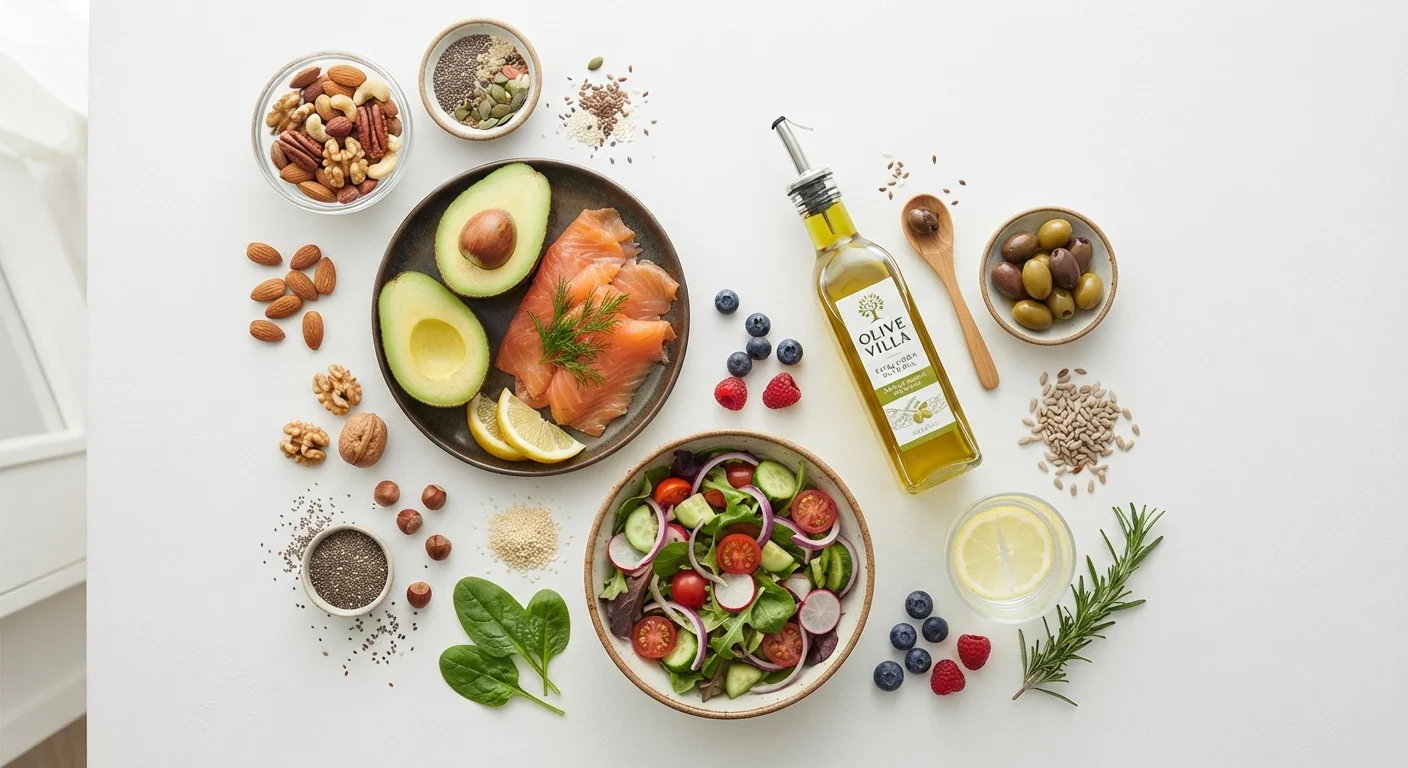
- Monounsaturated fats (MUFAs): Found in olive oil, avocados, and most nuts. Associated with reduced LDL ("bad") cholesterol while maintaining HDL ("good") cholesterol. The Mediterranean diet, which is heavy in MUFAs, is one of the most consistently supported eating patterns in cardiovascular research.
- Polyunsaturated fats (PUFAs): Include omega-3 and omega-6 fatty acids. Omega-3s — from fatty fish, flaxseed, and walnuts — are linked to reduced inflammation and heart-protective effects. Omega-6s (sunflower oil, corn oil) are also essential but already abundant in the typical American diet, so the priority is usually increasing omega-3s rather than omega-6s.
- Saturated fats: Found primarily in animal products — red meat, butter, full-fat dairy, and tropical oils like coconut and palm oil. They raise LDL cholesterol, which is a risk factor for cardiovascular disease. Current guidance from major health bodies recommends limiting saturated fat, though the evidence is more nuanced than a simple 'avoid entirely' message.
- Trans fats (artificial): Produced by partially hydrogenating vegetable oils. They raise LDL and lower HDL simultaneously — a uniquely harmful profile. The FDA phased out partially hydrogenated oils from the U.S. food supply, so industrially produced trans fats are now largely absent, but it is still worth checking ingredient labels on older or imported products.
| Monounsaturated | Polyunsaturated (Omega-3) | Saturated | Trans (Artificial) | |
|---|---|---|---|---|
| Primary food sources | Olive oil, avocado, almonds | Salmon, walnuts, flaxseed | Butter, red meat, full-fat dairy | Partially hydrogenated oils |
| Effect on LDL cholesterol | Lowers LDL | Lowers LDL | Raises LDL | Raises LDL significantly |
| Effect on HDL cholesterol | Maintains or raises | Maintains | May raise slightly | Lowers HDL |
| Cardiovascular evidence | Broadly beneficial | Strongly beneficial | Moderate risk at high intake | Harmful — avoid |
| Recommended intake | Emphasise | Emphasise (especially omega-3) | Moderate (<10% of calories) | Minimise or eliminate |
| Solid at room temperature? | No (liquid) | No (liquid) | Often yes | Yes (solid/semi-solid) |
Saturated Fat: Nuance Behind the Warning
Saturated fat's relationship with heart disease is real but not simple. Not all saturated fats behave identically — stearic acid (in dark chocolate and beef) appears largely neutral on cholesterol, while lauric, myristic, and palmitic acids raise LDL more significantly. The food matrix matters too: full-fat dairy, for instance, shows a more complex cardiovascular picture than processed red meat.
Current U.S. dietary guidelines suggest keeping saturated fat below 10% of daily calories. That is not a threshold to obsess over, but a reasonable ceiling. Practically, it means favouring lean cuts of meat, choosing lower-fat dairy options some of the time, and using olive oil in place of butter where it makes culinary sense — not eliminating steak or cheese entirely.
Don't Confuse 'Natural' With 'Unlimited'
Coconut oil and palm oil are natural, plant-derived products — but they are among the richest sources of saturated fat available. Coconut oil in particular has been heavily marketed as a health food, but major health organisations continue to recommend using it in moderation rather than as a primary cooking fat. 'Natural' does not automatically mean cardiovascular-neutral.
Practical Swaps: Shifting Your Fat Profile Without Overhauling Your Diet
The evidence points toward replacing saturated fat with unsaturated fat — not simply cutting fat overall. Research consistently shows that this swap is associated with better cardiovascular outcomes. Here are realistic, everyday ways to do it:
- Use olive oil or avocado oil for sautéing and dressings instead of butter or lard.
- Eat fatty fish (salmon, mackerel, sardines) two or more times per week as a protein source.
- Snack on a small handful of nuts rather than processed snack foods.
- Add sliced avocado to meals where you might otherwise add cheese or a creamy sauce.
- When eating red meat, choose leaner cuts and moderate portion sizes.
These kinds of shifts align with eating patterns that research consistently supports — not rigid rules, but a general direction. If you follow or are curious about plant-based eating, plant-based diets can naturally emphasise unsaturated fats, though planning matters.
Read Beyond 'Total Fat' on Nutrition Labels
The total fat number on a food label tells you very little about quality. Look instead at the breakdown: how much is saturated, and whether 'partially hydrogenated oils' appear in the ingredient list. A food high in total fat from nuts or olive oil is nutritionally very different from one high in saturated or trans fat — and the label does show you this if you know where to look.
This article is for general informational and educational purposes only and is not a substitute for professional medical or dietary advice. Speak with a qualified healthcare provider or registered dietitian before making significant changes to your diet, especially if you have a chronic health condition or are managing cardiovascular risk factors.