

Key Takeaways
Option A
Avalanche Method
The mathematically optimal approach to eliminating debt.
Best for: People who want to minimize total interest paid and are comfortable staying disciplined without quick wins.
Option B
Snowball Method
The motivation-driven approach that builds momentum through small victories.
Best for: People who need early psychological wins to stay on track and have debts spread across multiple accounts.
If minimizing total interest cost is your top priority
Avalanche Method
Targeting the highest-interest debt first reduces what you owe to lenders over the life of your repayment plan, often by a meaningful amount.
If you've struggled to stick with a debt plan in the past
Snowball Method
Closing out smaller debts quickly creates a sense of progress that keeps many people engaged long enough to see real results.
If your debts are few and close in balance
Avalanche Method
When balances are similar, the psychological advantage of the snowball shrinks — so the math-based approach makes more sense.
If you have many small accounts dragging down your monthly cash flow
Snowball Method
Eliminating smaller debts frees up minimum payments faster, giving you more flexibility each month sooner.
How Each Method Works
Both the avalanche and snowball methods follow the same basic structure: you make minimum payments on all your debts, then direct any extra money toward one target debt at a time. Once that debt is paid off, you roll that freed-up payment into the next target. The difference is in how you rank your debts.
Avalanche method: You list your debts from highest interest rate to lowest and attack the top of the list first. Once that balance hits zero, you move down to the next highest rate, and so on. Because high-interest debt grows fastest — thanks to how compound interest works against borrowers — eliminating it first shrinks your total repayment cost.
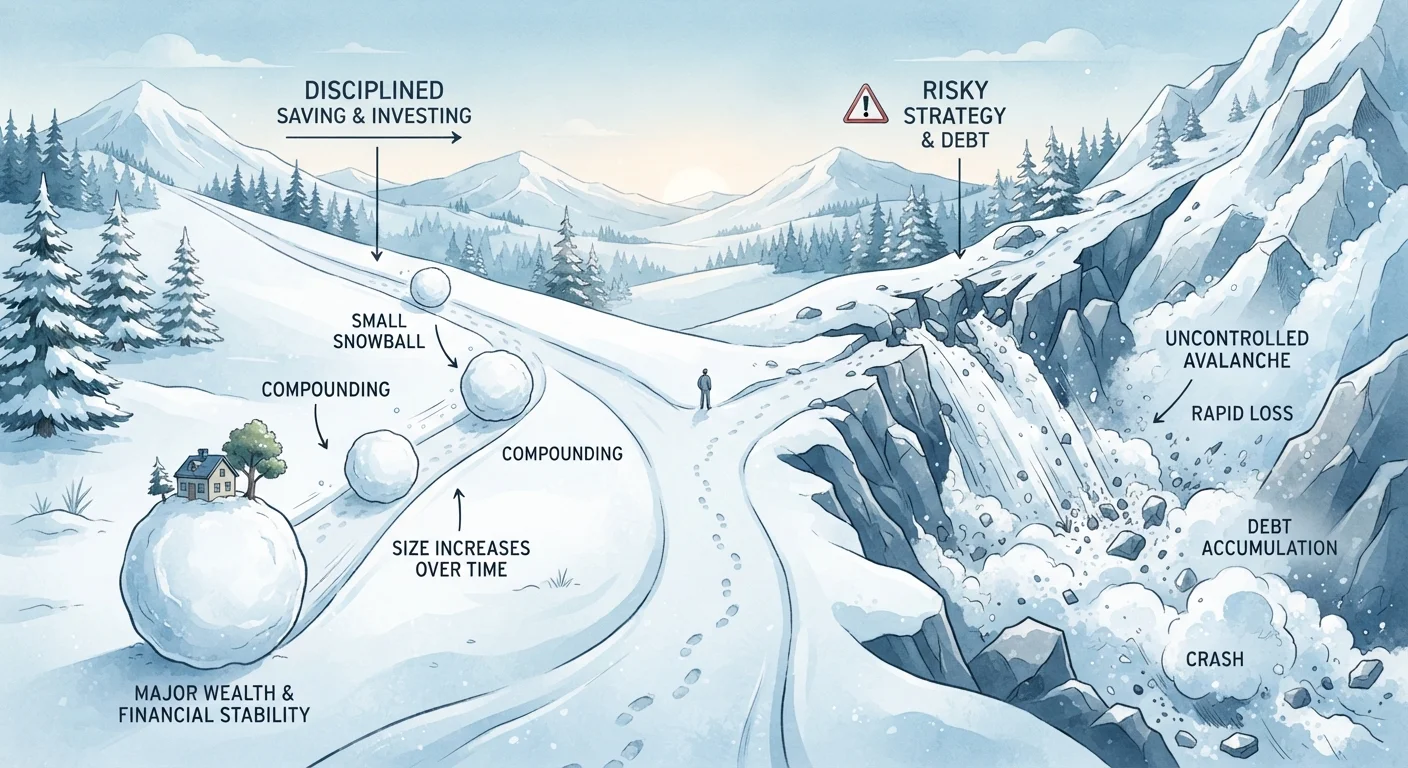
Snowball method: You list your debts from smallest balance to largest and focus on the bottom of the pile first. Interest rates don't factor into the order. Each closed account gives you a concrete win and, in theory, the motivation to keep going. The extra payment that was going toward that small debt then gets added to the next smallest balance — building momentum like a snowball rolling downhill.
| Criterion | Avalanche Method | Snowball Method |
|---|---|---|
| Payoff order | Highest interest rate first | Smallest balance first |
| Total interest paid | Lower (mathematically optimal) | Potentially higher |
| Time to first paid-off account | Slower if top debt is large | Faster, often within months |
| Motivation approach | Progress measured in interest saved | Progress measured in accounts closed |
| Best suited for | Disciplined, data-focused planners | Those needing visible milestones |
| Complexity | Requires tracking interest rates | Straightforward balance ranking |
The Case for the Avalanche
If you ran the numbers on two identical debt situations — one paid off using the avalanche, one using the snowball — the avalanche would almost always come out cheaper. The gap can be small or significant depending on how different your interest rates are. A credit card at 24% APR growing while you pay off a 6% personal loan first is money leaving your pocket unnecessarily.
~$1,000+
Potential interest savings with avalanche over snowball
The savings vary widely based on balances and rates, but analyses of typical multi-debt scenarios frequently show four-figure differences in total interest paid.
33%
U.S. adults carrying credit card debt month to month
According to the Federal Reserve's Survey of Consumer Finances, roughly one in three American families carries revolving credit card balances.
The avalanche also makes strategic sense when your highest-rate debt is not dramatically larger than your other balances. In those cases, you won't wait long before seeing your first account close, and you'll have saved more along the way.
The main honest drawback: if your highest-interest balance is large, it can take months or longer before you eliminate a single account. That slow pace tests resolve. It's worth being realistic with yourself about whether you can sustain the plan without visible checkpoints.
The Case for the Snowball
Behavioral research consistently shows that motivation and habit formation play a large role in whether people actually complete debt repayment plans. The snowball method is designed around this reality. Closing even a small account — a store card, a medical bill — triggers a genuine sense of accomplishment that can reinforce the behavior of sticking with the plan.
For people juggling several debts simultaneously, the snowball also simplifies the mental load faster. Each closed account is one fewer minimum payment to track.
The Snowball's Hidden Cost Is Real, But Manageable
Paying more in total interest isn't a trivial consideration, but for many people it's the price of staying on track. If the snowball keeps you engaged and prevents you from abandoning the plan entirely, the extra interest paid may be worthwhile compared to making no consistent progress at all. Run rough numbers on both approaches using a free online debt calculator to see how large the difference actually is for your specific debts before deciding.
The trade-off is real: if your smallest-balance debt happens to carry a low interest rate, you may be letting a high-rate balance compound unchecked while you clear it. Over a multi-year repayment timeline, that difference adds up. This isn't a reason to reject the snowball — it's a reason to go in with clear eyes about the cost.
Choosing the One You'll Actually Stick With
The "best" debt payoff method is the one you'll follow through on. A mathematically superior strategy that you abandon after three months beats nothing. A psychologically sustainable strategy you commit to for two years achieves something real.
Before choosing, consider: How many separate debts do you have? How far apart are their balances? How different are their interest rates? And honestly — how have you responded to setbacks with money goals in the past? If you've quit plans before due to slow progress, the snowball deserves serious consideration. If you're detail-oriented and motivated by seeing total interest projections drop, the avalanche may suit you better.
It's also worth remembering that these aren't the only tools available. Debt consolidation can sometimes simplify repayment and reduce rates before you apply either method. And if you're weighing whether to pay down debt or build savings first, that's a separate but equally important question — one covered in depth in our guide on prioritizing emergency funds versus debt repayment.
Whichever method you choose, the foundational habits are the same: consistent payments, no new debt accumulation, and a clear picture of what you owe. Unfamiliar with some of the terminology around debt repayment? The saving and debt payoff glossary is a useful starting point.
This article is for general informational purposes only and does not constitute personalized financial or legal advice. Consult a licensed financial professional for guidance specific to your situation.