

Key Takeaways
Why Multiple Debts Feel So Hard to Manage
Carrying several debts at once — credit cards, a car loan, medical bills, a personal loan — creates a coordination problem on top of a cash-flow problem. You're tracking different due dates, interest rates, and minimum payments, all competing for the same paycheck. It's not just stressful; the fragmentation itself costs money when payments slip or interest compounds unchecked.
The good news is that structure removes most of that chaos. Before deciding which debt to attack first, write down every balance you owe: the creditor, current balance, interest rate (APR), and minimum monthly payment. This single inventory turns an abstract pile of anxiety into a concrete list you can work from. See our full roadmap from financial stress to stability for a wider framework around this process.
Know Your Interest Rates Before You Start
Your APR determines how fast a balance grows when you're only making minimum payments. A 24% APR card can nearly double an unpaid balance in three years through compounding alone. Checking your current rates — available on any statement or through your lender's website — is the single most useful piece of information for choosing a repayment order.
The Two Core Repayment Strategies
Most structured debt payoff plans fall into one of two approaches. Understanding both lets you choose the one that fits your situation — or combine elements of each.
Use the avalanche method to minimise total interest paid
Directing any extra payment dollars toward the debt with the highest APR first reduces the total interest that accumulates across all your accounts. Over time, this is mathematically the most efficient path out of debt. It works especially well for people who are motivated by seeing numbers move on a spreadsheet.
Use the snowball method to build momentum through small wins
Paying off the smallest balance first — regardless of interest rate — delivers a psychological boost that helps many people stay committed. Behavioural research consistently shows that visible progress reduces the likelihood of giving up. The trade-off is paying slightly more in interest overall.
Maintain a small emergency buffer even while paying down debt
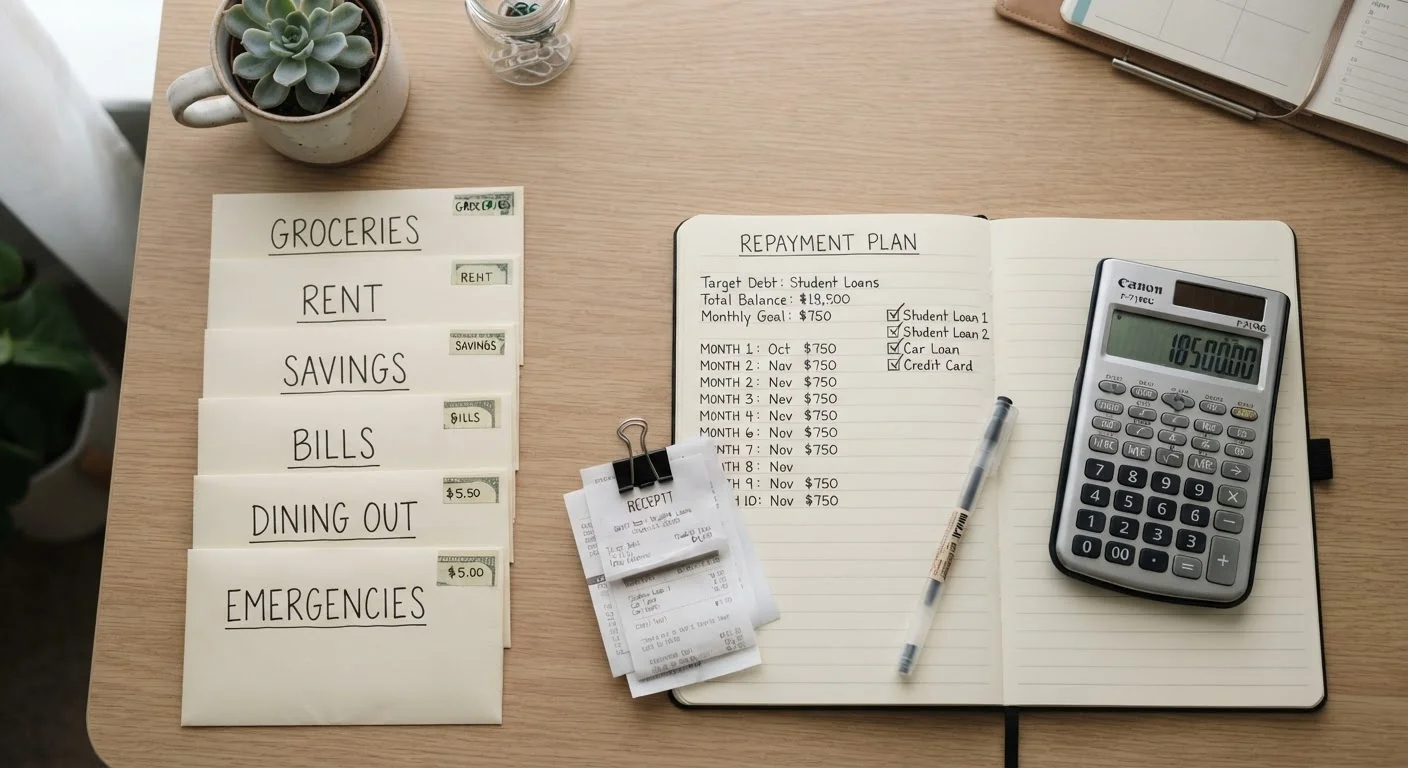
Without any savings cushion, an unexpected expense forces you onto credit — potentially undoing weeks of progress. A modest buffer of even $500–$1,000 can absorb routine surprises without disrupting your repayment plan. Think of it as insurance for your strategy.
Automate minimum payments on every account
A missed payment triggers late fees, can damage your credit score, and sometimes causes penalty interest rates to kick in — all of which set back your overall progress. Automating minimums protects you from administrative errors and ensures no account slips through the cracks while you focus extra funds elsewhere.
Review and reallocate freed-up payments immediately after clearing a debt
When one debt is eliminated, the money you were putting toward it doesn't vanish — it's now available to accelerate the next priority. Failing to redirect it intentionally means it tends to disappear into everyday spending. Treating each payoff as a trigger to update your plan keeps momentum compounding.
If you're dealing with high-interest credit card balances specifically, it's also worth understanding tools like balance transfers. Balance transfers can cut interest costs, but they come with conditions that matter. Similarly, debt consolidation can simplify repayments — though it isn't the right fit for every borrower.
Building Habits That Hold Under Pressure
A strategy only works if you can stick to it when life gets complicated — an unexpected car repair, a medical bill, a slow month at work. These practices keep your plan from unraveling.
One common tension is whether to pause debt payments to build savings first. The answer usually depends on your interest rates and how thin your safety net is. Our article on emergency fund versus debt repayment breaks down that trade-off clearly.
To stay consistent month to month, a structured review helps. A monthly financial reset checklist can catch overspending early and confirm you're still on target.
This article is for general informational purposes only and does not constitute personalised financial or legal advice. Your situation is unique — consider speaking with a qualified financial adviser before making significant changes to your debt repayment approach.