

Key Takeaways
Summary
22 items · 1.5–3 hours
Why Home Preparation Matters More Than You Might Think
The weeks before a newborn arrives are filled with excitement — and often, a quiet undercurrent of worry. You want to get everything right, but it can be hard to know where to start when every parenting blog seems to have a different "must-have" list. The truth is, thoughtful preparation doesn't require perfection or a huge budget. It requires knowing what genuinely matters for your baby's safety and wellbeing.
This checklist cuts through the noise. It focuses on evidence-informed safety steps, practical setup tasks, and the easy-to-overlook details that catch many first-time parents off guard. Working through it room by room — ideally with a partner or trusted helper — gives you a calmer, more confident entry into those first weeks at home.
For a broader look at keeping your home in safe, functional shape, our seasonal home inspection checklist is a helpful complement, especially if you're moving into a new space before baby arrives.
Sleep Space Setup
Nursery and Changing Area
Whole-Home Safety Checks
Feeding and Hygiene Essentials
Logistics and Emergency Readiness
What You'll Need to Work Through This Checklist
You don't need to go on a spending spree. Most of what this checklist calls for is either already in your home or inexpensive to add. The tools below will help you complete the safety and setup tasks efficiently.
Screwdriver and drill
Needed to install anti-tip furniture straps, outlet covers, and other safety hardware around the home.
Digital thermometer
Use to verify room temperature in the nursery and to check your water heater setting.
Baby monitor (audio or video)
Allows you to keep an ear or eye on your sleeping newborn without entering the room.
Anti-tip furniture straps
Secure dressers, bookshelves, and other tall furniture to the wall to prevent tip-over hazards.
CPSC recall lookup (cpsc.gov)
Check that any secondhand baby gear — especially cribs and car seats — has not been recalled.
Smoke and CO alarm tester
Verify that every alarm in the home is functioning correctly before baby arrives.
Cordless window blind replacements
Eliminate cord strangulation risks in rooms where baby will sleep or spend time.
A Note on Safe Sleep — Don't Skip This
Safe Sleep Is Non-Negotiable
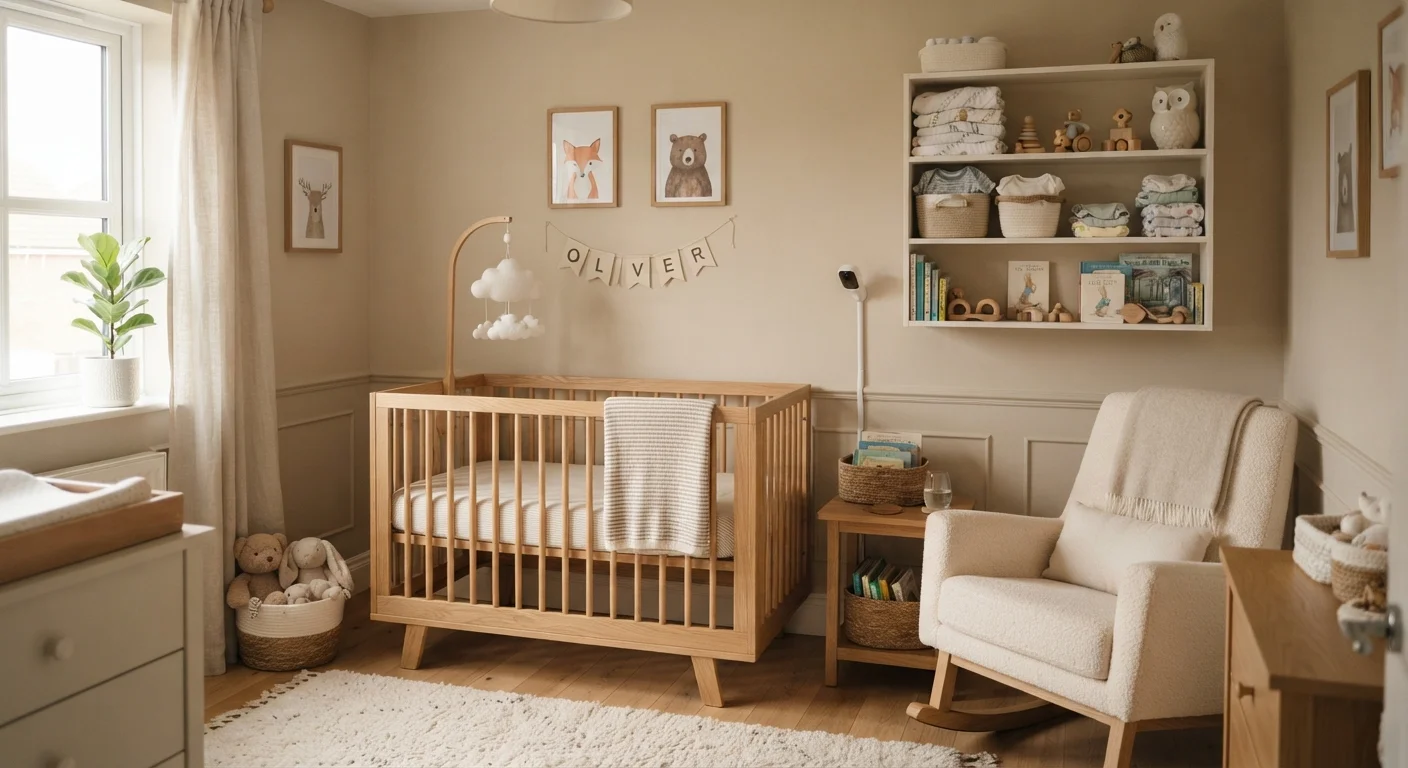
Unsafe sleep environments are a leading cause of preventable infant death in the United States. Before your baby comes home, make sure their sleep space has a firm, flat mattress with a fitted sheet only — nothing else in the crib. Always place baby on their back for every sleep. If you have questions about what is safe, talk to your pediatrician before you leave the hospital.
Safe sleep guidance from pediatric health organizations recommends that babies sleep on their backs, on a firm, flat surface, in a crib or bassinet free of loose bedding, bumpers, pillows, and soft toys. Room-sharing (but not bed-sharing) for at least the first six months is generally recommended. If you're weighing different sleeping arrangements, our article on co-sleeping and room-sharing explains the distinctions and what current guidance recommends.
When shopping for a sleep space, look for products that meet current Consumer Product Safety Commission (CPSC) standards. If you're using a secondhand crib, check that it hasn't been recalled and that all hardware is present and intact.
Never Use a Recalled or Damaged Crib
Secondhand cribs can seem like a great saving, but older models may not meet current safety standards, and recalled products can carry serious risks. Check the CPSC recall database before accepting or using any secondhand sleep surface. A crib with missing hardware, cracked slats, or a soft mattress should not be used, even temporarily.
Final Steps Before Your Due Date
Once your physical space is ready, spend a little time on the less visible but equally important logistics. Know who your pediatrician will be before you deliver — many practices allow you to register your baby prenatally. Write down after-hours numbers, the nearest emergency room, and your insurance information, and keep them somewhere easy to find in a blur of sleepless nights.
If you're planning to travel shortly after the birth — even just a short hospital-to-home drive — double-check that the infant car seat is correctly installed and that you've practiced buckling it. Our pre-journey vehicle check guide is a useful reminder of what to verify before any trip with a newborn on board.
This article provides general parenting and home safety information and is not a substitute for advice from a qualified healthcare provider, pediatrician, or certified child safety professional. Always consult your baby's doctor with questions about your newborn's specific health and safety needs.