

Key Takeaways
Option A
Speed Limits
The legal ceiling set by traffic authorities.
Best for: Establishing a maximum legal speed under normal, dry, daytime conditions on a given road type.
Option B
Safe Speeds
The driver-determined speed appropriate for current conditions.
Best for: Protecting you, your passengers, and others when weather, traffic, visibility, or road surfaces change.
If you're driving in clear, dry conditions on a familiar road
Speed Limits
Under ideal conditions, posted limits generally reflect a safe and legal ceiling. Staying at or below the limit is appropriate and expected.
If you're driving in rain, fog, ice, or heavy traffic
Safe Speeds
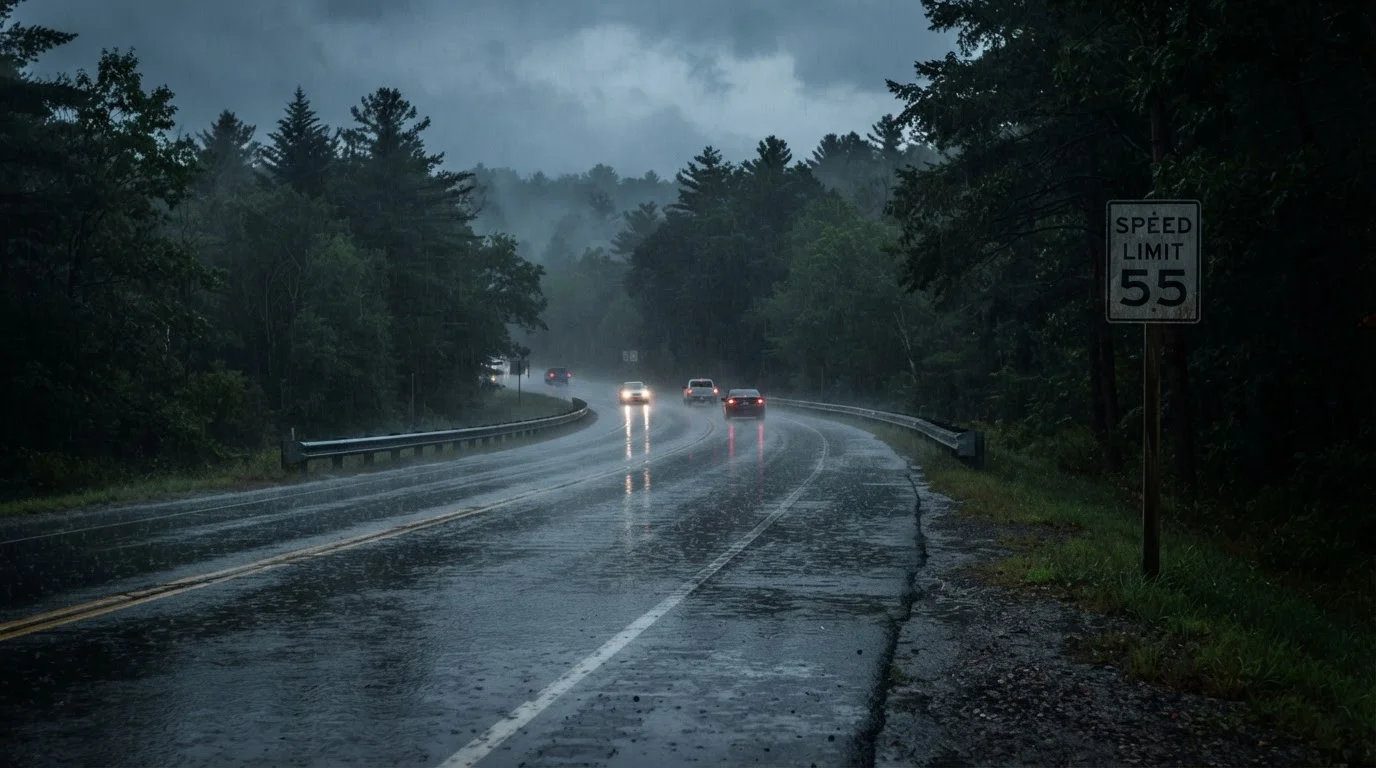
Conditions dramatically reduce traction and visibility. A speed well below the posted limit may be the only genuinely safe choice.
If you're in a school zone, residential street, or near pedestrians
Safe Speeds
Even if the limit seems low, the presence of unpredictable pedestrians — especially children — calls for extra caution beyond what the sign requires.
What Speed Limits Actually Mean
A speed limit sign tells you the fastest you're legally allowed to drive on that stretch of road — under normal conditions. Traffic engineers typically set these numbers based on road geometry, lane width, typical traffic volume, and expected visibility in good weather. They're not calculated with ice, dense fog, or a stopped school bus in mind.
That distinction matters more than most drivers realize. The limit is a legal ceiling, not a green light to drive that fast regardless of what's happening around you. In most U.S. states, traffic law includes a basic speed law — the requirement to drive at a speed that is reasonable and prudent for current conditions. That means you can be cited for driving unsafely even if you're technically at or under the posted limit.
Understanding road classifications can also help you set appropriate expectations. Our guide on motorway vs. dual carriageway differences explains how road design itself influences what limits apply and why.
| Criterion | Speed Limits | Safe Speeds |
|---|---|---|
| Set by | Traffic authorities and law | Driver judgment in the moment |
| Accounts for weather | No — assumes normal conditions | Yes — adjusts for rain, ice, fog |
| Legal status | Legally binding maximum | Required by basic speed laws |
| Changes with conditions | No — static posted number | Yes — shifts constantly |
| Considers road surface | Only in ideal state | Yes — gravel, wet, construction zones |
| Considers your vehicle | No | Yes — tire wear, load, brake condition |
What Actually Determines a Safe Speed
Safe speed is dynamic — it shifts every time your driving environment changes. Several factors pull it below whatever the sign says:
- Weather: Rain reduces tire grip. Ice can cut traction to a fraction of what dry pavement offers. Fog collapses your sight lines to a few car lengths.
- Visibility: Night driving, glare, curves, and hills all limit how far ahead you can see — and therefore how far in advance you can react.
- Traffic density: A highway with heavy, stop-and-go traffic demands slower speeds and longer following distances, regardless of the posted limit.
- Road surface: Gravel, potholes, construction zones, and wet leaves all affect how your tires respond to steering and braking inputs.
- Your vehicle's condition: Worn tires, aging brakes, or a heavy load all extend stopping distances beyond what manufacturers design for under ideal conditions.
Stopping distance is one of the clearest ways to understand why this matters. What your stopping distance actually depends on isn't just about speed — it's about the full combination of conditions your car and tires are dealing with in that moment.
2x
Stopping distance increase from 30 to 60 mph
Physics dictates that doubling your speed roughly quadruples stopping distance — a relationship confirmed by standard braking formulas used in traffic engineering.
~40%
Reduction in tire traction on wet roads
Research in transportation safety consistently shows wet pavement significantly reduces available grip compared to dry conditions, affecting both braking and cornering.
How to Make Better Speed Judgments Behind the Wheel
Most drivers already do this instinctively — slowing down in the rain, easing through a foggy stretch. The goal is to make that instinct more deliberate and consistent.
A useful mental check: Can I stop in the distance I can currently see? If the answer is no, you're moving too fast for conditions, whatever the sign says. This is sometimes called the sight distance rule, and it's a practical standard that applies whether you're on a 25 mph residential street or a 70 mph interstate.
Other habits worth building:
- Increase following distance when road conditions are poor — two seconds is a baseline for dry roads; four or more seconds in rain or snow.
- Slow down before curves, not in them. Braking mid-corner reduces stability.
- In fog or heavy rain, use your headlights on low beam and reduce speed early — don't wait until you can barely see.
- Pay attention to what other traffic is doing. If experienced local drivers are slowing significantly, that's useful information.
None of this is about driving slowly for its own sake. It's about matching your speed to the actual margin of safety available — which is what the law, and common sense, both require.
Variable Speed Limits and Work Zones
Some highways use dynamic or variable speed limit signs that change based on real-time conditions like traffic density, weather, or incidents ahead. Always follow the currently displayed limit, not what you remember the road normally showing. In active construction zones, reduced speed limits are typically enforced with heightened fines — and the slower pace reflects genuine hazards like uneven pavement, workers nearby, and lane shifts.