

Key Takeaways
Why Motorway Breakdowns Are Different
Breaking down on a surface street is stressful. Breaking down on a motorway at 70 mph is a different category of risk entirely. Traffic volumes are higher, speeds are much greater, and there is very little margin for error. Research from road safety organizations consistently shows that incidents on high-speed roads disproportionately result in serious injury - often because drivers and passengers exit their vehicles and stand in or near live traffic.
The good news is that the steps to stay safe are straightforward. Knowing them in advance - before you ever need them - is the entire point. For context on how motorways differ from other fast roads in terms of rules and layout, see our guide on motorway vs. dual carriageway differences.
Smart Motorways Have No Permanent Hard Shoulder
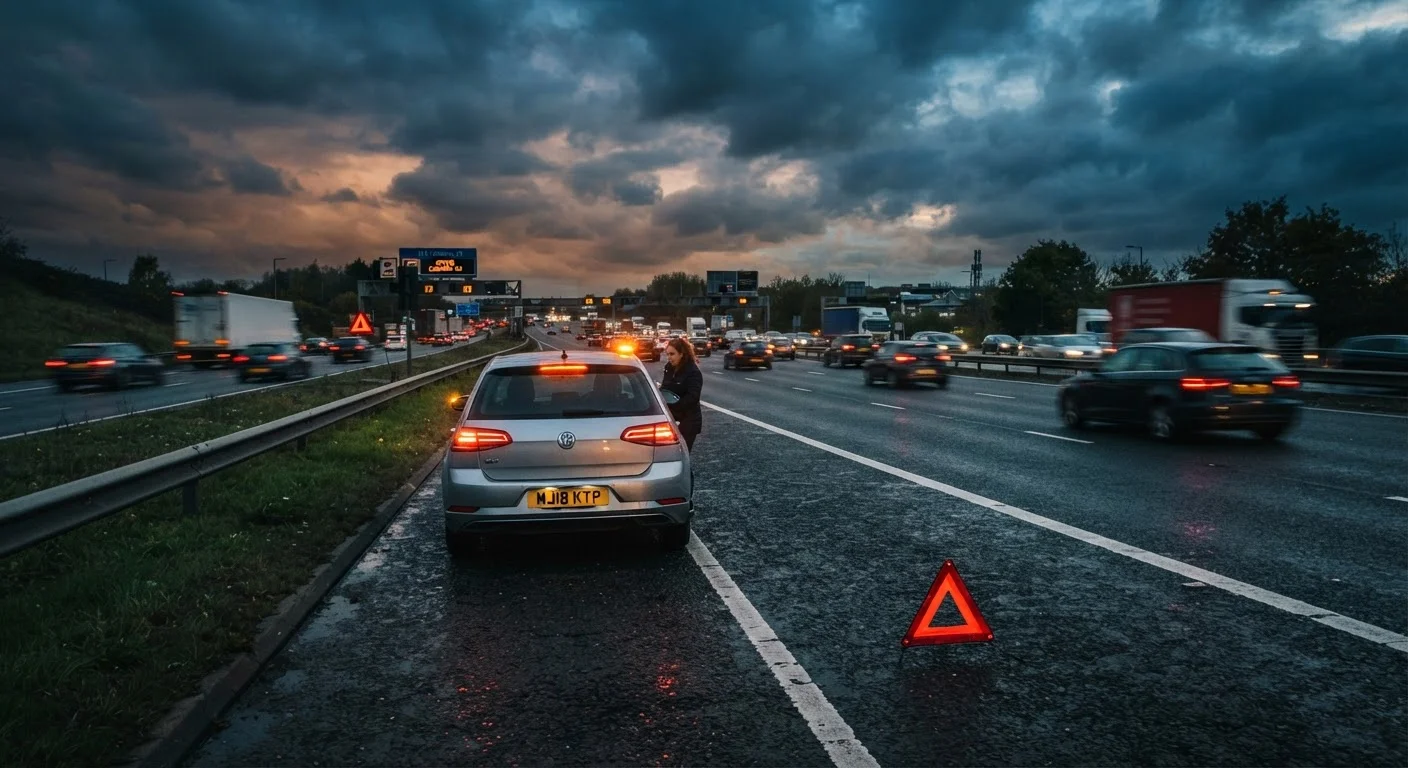
Many motorways in the US and internationally use managed or 'smart' configurations where the leftmost lane is also used as a running lane at certain times. Look for orange 'X' signals overhead indicating a closed lane, and aim for a marked Emergency Refuge Area (ERA) - identifiable by blue signs with an orange SOS phone symbol. If you cannot reach one, pull as far left as physically possible, activate hazards, and call for help without exiting the vehicle.
Being prepared also means reducing the chance of a breakdown in the first place. A few minutes spent on a pre-trip vehicle check before a long journey can catch low tire pressure, fluid problems, or warning lights that might otherwise leave you stranded at highway speed.
What to Do Step by Step
Follow these steps in order. The first two - hazards and steering left - need to happen within seconds of recognizing a problem. The rest follow once you are stopped.
What you will need
Switch on your hazard lights immediately
The moment you notice something is wrong - an unusual sound, a warning light, a loss of power or steering - activate your hazard lights without delay. Don't wait until you've stopped. Hazards give other drivers time to react and create space around your vehicle while you are still moving to safety.
Move to the hard shoulder or an emergency refuge area
Steer left as smoothly and promptly as conditions allow. Aim for the hard shoulder - the paved strip to the far left of the carriageway - or the nearest Emergency Refuge Area (ERA) if you are on a smart motorway. Try to stop with your wheels turned toward the left so that if the vehicle rolls, it moves away from traffic rather than into it.
Exit the vehicle via the passenger side
Switch the engine off, leave your hazard lights running, and exit through the passenger-side doors - away from live traffic. If you have passengers, everyone exits the same way. Do not open the driver's door into a live lane under any circumstances.
Move well clear of the vehicle and road
Once out, move quickly up the embankment or behind the barrier - at least 15 to 20 feet from the rear of your vehicle, and well away from the hard shoulder edge. Vehicles have been struck on hard shoulders by distracted or drifting drivers. Your car is replaceable; you are not.
Call for help
Call your breakdown recovery provider or, if there is an immediate danger to life, dial 911 (or the relevant emergency number in your country). Give your location as precisely as possible - use the motorway number, junction numbers on nearby signs, or your GPS coordinates. If you cannot call, use an emergency roadside phone if one is within safe walking distance along the hard shoulder.
Wait safely and stay visible
Once help is on the way, remain behind the barrier. Keep your phone with you. If it is dark or visibility is poor, use a flashlight or your phone's torch to make yourself more visible. Resist the urge to inspect the vehicle or attempt any roadside repairs - that is the recovery team's job, not yours, and the risk is not worth it.
Never Walk Along a Live Motorway
Once you are out of the vehicle, stay behind the barrier or as far from the carriageway as possible. Walking along the hard shoulder places you in extreme danger from passing traffic traveling at high speed. If there is no barrier and you cannot safely exit the vehicle away from traffic, stay inside with your seatbelt on and call 999 immediately.
Keep an Emergency Kit in Your Car
A high-visibility vest, a warning triangle, a charged power bank, and a basic first-aid kit can all make a breakdown significantly less dangerous. Store them somewhere accessible - not buried in the trunk under luggage. Keeping your phone charged before a long trip is just as important as checking your tires.
After the Breakdown: Getting Back on the Road Safely
Once your recovery vehicle arrives, let the professionals assess the situation before you approach the car again. If the vehicle is being towed, confirm with the driver where it is going and arrange your own safe transportation - do not ride in a vehicle being flat-bedded unless the recovery provider has confirmed it is safe and permitted to do so.
After the incident, it is worth reviewing what caused the breakdown. A flat tire, an overheating engine, or a dead battery each point to a maintenance gap that can be addressed before your next trip. See our pre-long-drive vehicle check for a practical starting point.
If fatigue played any role in the lead-up - reduced attention, slower reaction to the problem, or delayed decision-making - that is worth taking seriously. Our article on long-distance driving without fatigue covers the warning signs and how to plan rest breaks effectively.
This article provides general safety information for educational purposes. Always follow the guidance of emergency services and your breakdown recovery provider in a real incident. Rules and road configurations vary by country and region - verify the conventions that apply where you are driving.