

Key Takeaways
Why Tyres Deserve More Attention Than They Get
Tyres are the only part of your car that actually touches the road, yet most drivers only think about them when something goes wrong. That's a problem, because worn tread and incorrect pressure are two of the most common - and preventable - causes of handling problems and blowouts.
The good news: checking both takes under 15 minutes and requires no special skills. For a broader look at what your car needs on a regular basis, see our guide on routine maintenance schedules.
What you will need
How to Check Tyre Pressure Correctly
Your car's recommended tyre pressure is listed on a sticker inside the driver's door jamb - not on the tyre sidewall (that number is the tyre's maximum pressure, which is different). Pressure is measured in PSI (pounds per square inch), and most passenger cars fall somewhere between 30 and 35 PSI.
Check pressure when tyres are cold
Tyre pressure readings are most accurate when the tyres haven't been driven on for at least three hours. Driving heats up the air inside, which temporarily raises the reading. Check pressure first thing in the morning for the most reliable number.
Remove the valve cap and attach your gauge
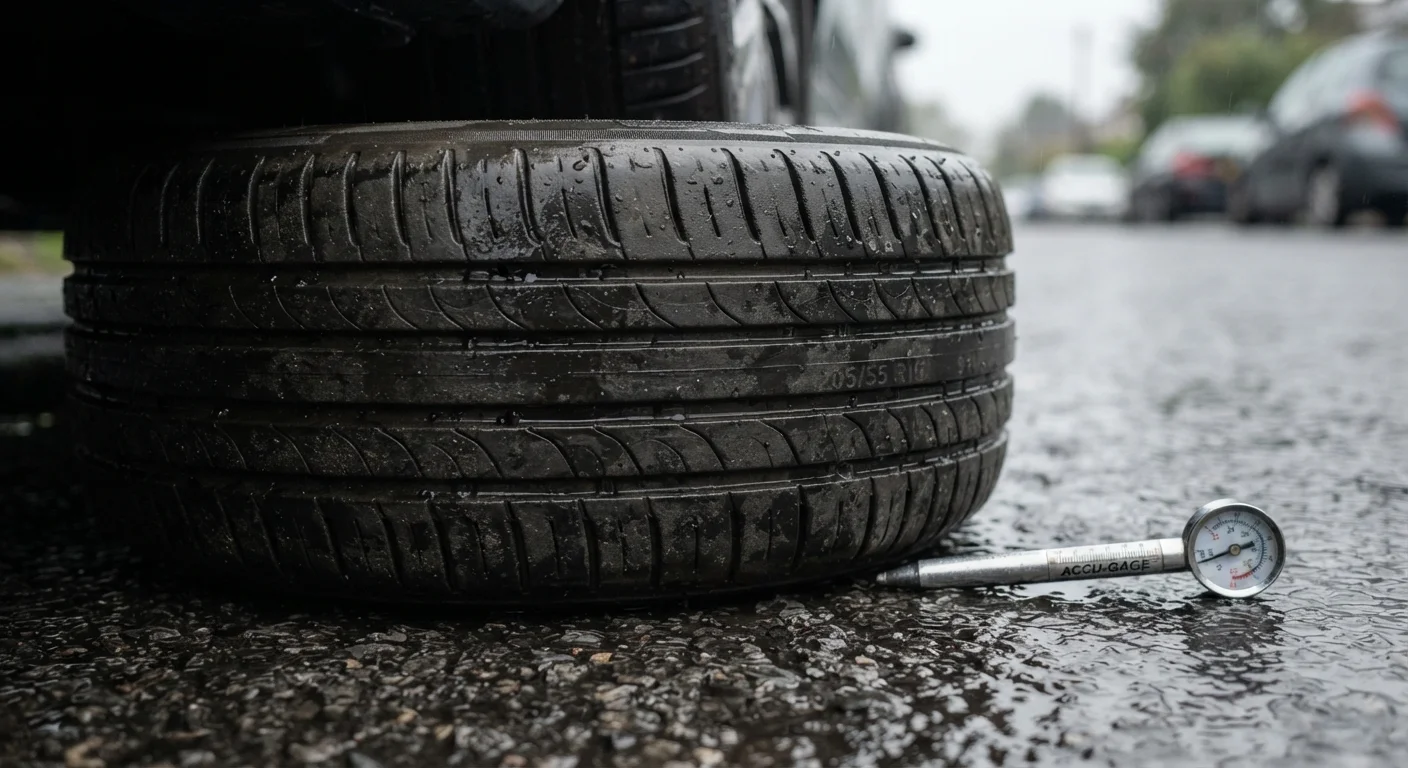
Each tyre has a small valve stem - a short rubber or metal nozzle sticking out near the wheel rim. Remove the cap and press your pressure gauge firmly onto the valve stem. You'll hear a brief hiss; that's normal. Read the PSI shown on the gauge.
Add or release air to reach the target PSI
Compare your reading to the recommended PSI on your door jamb sticker. Use an air pump to add air if pressure is low, or press the small pin inside the valve stem briefly to release air if you've over-inflated. Recheck after each adjustment.
Do the penny test for tread depth
Hold a penny with Lincoln's head pointing down and insert it into a tread groove. If you can see the top of Lincoln's head, the tread is at or below 2/32 of an inch - that tyre needs replacing. Do this in several grooves across the tyre, including center and edges.
Look for uneven wear or sidewall damage
Walk around each tyre and look for bulges, cracks in the sidewall, or patches where the tread looks noticeably shallower than the rest. Any bulge or deep sidewall crack is a reason to have the tyre inspected by a professional - these can indicate internal damage that a tread-depth check alone won't reveal.
For a deeper look at how pressure affects fuel economy and handling, see our article on why tyre pressure is the check most drivers skip.
Checking Tread Depth and Spotting Wear Patterns
Tread depth determines how well your tyres grip wet or slippery roads. New tyres typically start at around 10/32 of an inch. The legal minimum in most US states is 2/32 of an inch - but many safety experts recommend replacing tyres at 4/32 for wet-weather driving.
The Penny Test Takes 30 Seconds
Insert a penny into the tread groove with Lincoln's head facing down. If the top of his head is visible, your tread is critically low. Do this check across multiple spots on each tyre - wear isn't always even, so one groove can look fine while another is nearly gone.
Beyond depth, pay attention to where the wear is happening. Even wear across the full tread face usually means the tyre is healthy. Wear only in the center suggests chronic over-inflation. Wear on both outer edges points to under-inflation. Wear on one edge often means an alignment issue. If you notice unusual patterns, have a mechanic look at the suspension and alignment - it could prevent faster tread loss down the road. See also our guide to brakes and how they work, since stopping distance and tyre condition are closely connected.
Don't Wait for the TPMS Light
Most modern vehicles have a Tyre Pressure Monitoring System (TPMS) that alerts you when pressure drops significantly. However, the warning light typically doesn't trigger until pressure is already well below the recommended level - meaning handling and fuel economy are already affected. Monthly manual checks are more reliable than relying on the dashboard light alone.
Tyre condition should also be on your checklist before every long drive. Cold and hot weather both affect pressure and wear differently - more on that in our seasonal maintenance guide.