

Key Takeaways
Tyre Pressure
Tyre pressure is the amount of air inside your tyre, measured in PSI (pounds per square inch). It determines how much of the tyre contacts the road. Too little air and the tyre sags and wears unevenly; too much and it becomes stiff, reducing grip. Getting it right keeps your car handling predictably and your tyres lasting longer.
PSI is the standard measurement in the US. Some vehicles use kPa (kilopascals) or bar - check your owner's manual or door placard for the unit your car specifies.
Why Most Drivers Get This Wrong
Most drivers only think about tyre pressure when a warning light comes on - and by that point, the tyre is already significantly underinflated. The TPMS (Tyre Pressure Monitoring System) light typically triggers at around 25% below recommended pressure. That's not a heads-up; that's already a problem.
The bigger issue is that incorrect pressure doesn't always feel obvious from behind the wheel. Handling might feel slightly sluggish, fuel economy might tick down a little, but nothing dramatic enough to raise alarm. Meanwhile, the tyres are wearing unevenly and working harder than they should.
Tyre pressure is one of the simplest checks in car ownership - it takes five minutes and costs nothing. Yet surveys consistently show it's one of the most skipped. If you want a full pre-trip checklist that includes this check, see our practical pre-trip vehicle check.
~1 PSI
Pressure lost per month naturally
The US Department of Transportation notes tyres lose air gradually even without damage or leaks.
1 PSI
Drop per 10°F temperature decrease
A widely cited rule of thumb from tyre industry guidance on temperature and inflation changes.
25%
Below recommended when TPMS triggers
Federal TPMS regulations require the warning light to activate at or before this threshold.
Finding the Right Number for Your Car
Here's where a lot of drivers go wrong: they read the number printed on the tyre sidewall and assume that's their target. It isn't. That number is the maximum the tyre can hold - not what your car needs.
The correct PSI for your vehicle is set by the manufacturer based on the car's weight, suspension, and handling characteristics. You'll find it in two places:
- The door jamb sticker - on the inside edge of the driver's door, or sometimes the passenger door. It often lists different pressures for front and rear tyres.
- Your owner's manual - under the tyre or specifications section.
Many vehicles recommend somewhere between 30-35 PSI, but don't assume - always check for your specific make and model. Some trucks and SUVs call for higher pressure, especially when loaded.
Check Front and Rear Separately
Many vehicles specify different PSI for front and rear tyres - especially front-wheel-drive cars, where the front tyres carry more weight. Always check the door jamb sticker for both values rather than assuming they're the same.
How to Check Pressure Correctly
Timing matters here. Tyre pressure should always be checked when the tyres are cold - meaning the car has been parked for at least three hours, or driven fewer than a mile at low speed. Driving heats up the air inside the tyre, raising the pressure reading artificially. If you check after a highway run, you'll get a false high reading and potentially let air out when you shouldn't.
To check:
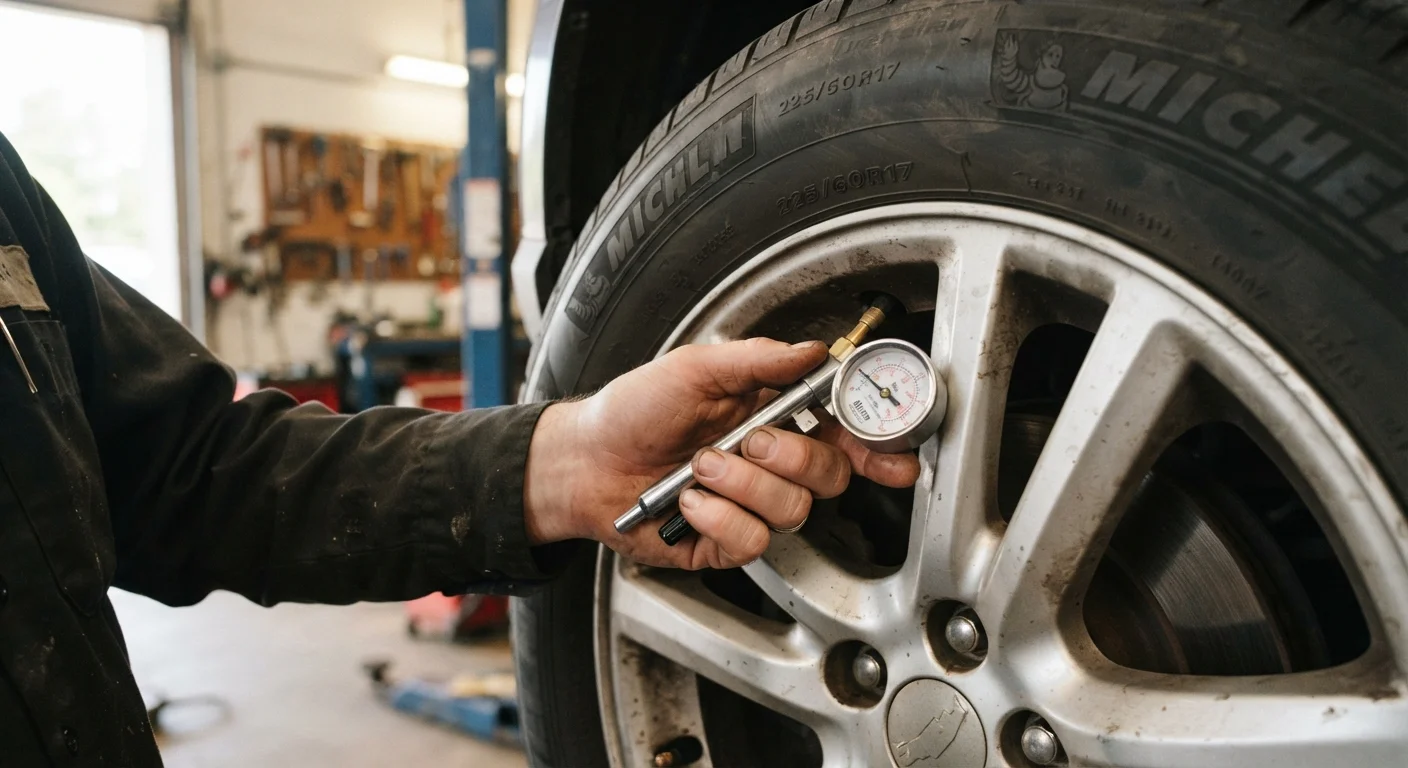
- Remove the valve cap from the tyre stem (the small rubber or metal nozzle on the wheel).
- Press your pressure gauge firmly onto the valve stem until the hissing stops.
- Read the PSI displayed and compare it to your door sticker number.
- Add air if low, or release small amounts if over-inflated, then recheck.
- Replace the valve cap securely.
A basic gauge costs just a few dollars at any auto parts store and is worth keeping in your glove box. Digital gauges are easier to read but aren't meaningfully more accurate than a good stick gauge.
For a broader look at how maintenance tasks like this fit into seasonal upkeep, our article on seasonal car maintenance covers how temperature swings affect your whole vehicle.
Spare Tyres Need Checking Too
Most drivers never check the spare until they need it - and then find it flat. Full-size spares should be kept at the same PSI as your regular tyres. Compact spares (the small 'donut' types) typically require a higher pressure, often around 60 PSI - check the sidewall or owner's manual for the correct figure.
What Happens When Pressure Is Wrong
Under-inflation is the more serious of the two problems. When a tyre doesn't have enough air, it flexes excessively as it rolls. This generates heat, accelerates tread wear on the outer edges, and in severe cases can lead to a blowout - especially at highway speeds. Fuel economy drops too, because a soft tyre creates more rolling resistance.
Over-inflation has its own downsides: the tyre becomes stiff, the center of the tread bears most of the load, and the ride gets harsher. In wet conditions, an over-inflated tyre has less contact with the road, which reduces braking grip.
Both conditions reduce tyre lifespan and cost you money over time. For a deeper look at how pressure relates to tread wear patterns and when tyres need replacing, see our guide on tyre pressure, tread, and wear.
“Tyre pressure is the single most important maintenance item a driver can manage themselves. It affects safety, fuel economy, and tyre longevity - and it takes less time than a cup of coffee.”
— A certified automotive technician, ASE-certified mechanic with over 20 years of vehicle maintenance experience