

Key Takeaways
Day-to-day costs are often significantly lower
Accommodation, food, local transport, and entrance fees in lower-income countries frequently cost a fraction of comparable experiences in high-income destinations, allowing travelers to extend trips or upgrade their experience within the same budget.
Cultural encounters tend to be more direct and less staged
Destinations with less mass tourism infrastructure often offer a less mediated window into local life, from neighborhood markets to regional traditions that haven't been packaged primarily for foreign visitors.
Natural landscapes and heritage sites are often less crowded
Many lower-income countries contain extraordinary natural and historical sites that receive far fewer visitors than equivalent attractions in Western Europe or North America, enabling a more immersive experience.
Travel can meaningfully support local economies
When spending is directed toward local businesses, guides, and accommodation, tourism dollars can be an important source of income in communities with limited economic alternatives.
Builds adaptability and practical problem-solving
Navigating unfamiliar systems, communication barriers, and logistical unpredictability tends to sharpen real-world travel skills in ways that smooth, high-infrastructure trips rarely do.
Infrastructure is often unreliable or limited
Roads, public transport networks, electrical grids, and internet connectivity can be inconsistent, particularly outside major cities. This affects everything from getting between destinations to charging devices or accessing maps.
Healthcare access may be severely limited
Hospitals and clinics in rural or under-resourced areas may lack equipment, trained specialists, or medications that travelers might need in an emergency. This risk requires proactive preparation, not reactive response.
Safety conditions vary widely and require research
Petty crime, scams targeting tourists, and in some cases more serious security concerns exist in parts of many lower-income countries. Conditions differ dramatically between regions of the same country and require destination-specific research.
Language barriers can be more significant
Translation apps and English signage are less reliable in destinations outside well-trodden tourist routes, which can complicate medical interactions, transport bookings, and everyday navigation.
Ethical pitfalls in tourism spending are harder to navigate
It can be genuinely difficult to determine whether tourist spending benefits local communities or primarily flows to foreign-owned enterprises; navigating this requires deliberate research and ongoing choices.
Health preparation is more demanding
Required or recommended vaccinations, prophylactic medications, and food and water safety precautions add meaningful planning steps and potential costs that many travelers underestimate.
Our Verdict
Visiting a lower-income country can be one of travel's most formative experiences — but only if you arrive with clear eyes. The rewards are genuine: cultural depth, relative affordability, and a sense of discovery that heavily touristed destinations rarely match. The challenges are equally real, from unpredictable infrastructure to ethical considerations that don't have easy answers. This kind of travel suits people willing to prepare carefully, adapt on the fly, and engage respectfully with the communities they visit.
Best suited to curious, adaptable travelers who have done their research, hold realistic expectations, and are genuinely interested in engaging with a destination on its own terms rather than through a sanitized tourist lens.
What 'Developing Country' Actually Means for Travelers
The term developing country — sometimes framed as lower-income or emerging economy — covers an enormous range of places, from stable and well-organized nations with limited tourist infrastructure to destinations where basic services are genuinely unpredictable. Grouping them under a single label is a simplification, but the category is useful because these destinations tend to share a common set of traveler considerations.
Before diving into trade-offs, it's worth acknowledging that the framing itself carries bias. Many countries labeled "developing" have sophisticated urban centers, deep cultural histories, and highly capable local travel industries. What they often lack — relative to high-income destinations — is the kind of standardized tourist infrastructure that makes travel frictionless. That gap is where most of the practical trade-offs live.
For honest, layered pre-trip context, see our guide on reading a destination honestly — tourism boards and travel blogs often have blind spots that are especially pronounced for these destinations.
The Real Advantages
Lower-income destinations offer several genuine advantages that are difficult to replicate in heavily developed tourist economies.
Day-to-day costs are often significantly lower
Accommodation, food, local transport, and entrance fees in lower-income countries frequently cost a fraction of comparable experiences in high-income destinations, allowing travelers to extend trips or upgrade their experience within the same budget.
Cultural encounters tend to be more direct and less staged
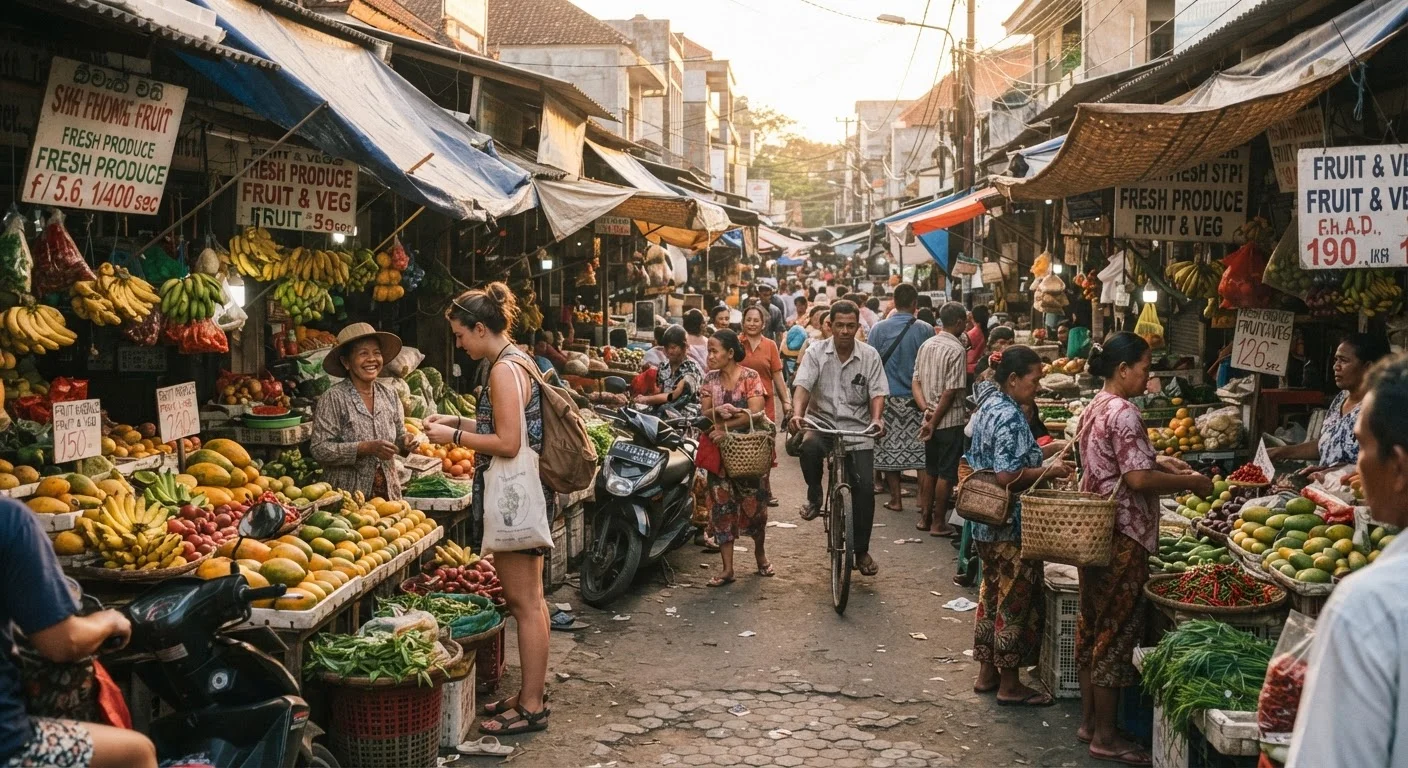
Destinations with less mass tourism infrastructure often offer a less mediated window into local life, from neighborhood markets to regional traditions that haven't been packaged primarily for foreign visitors.
Natural landscapes and heritage sites are often less crowded
Many lower-income countries contain extraordinary natural and historical sites that receive far fewer visitors than equivalent attractions in Western Europe or North America, enabling a more immersive experience.
Travel can meaningfully support local economies
When spending is directed toward local businesses, guides, and accommodation, tourism dollars can be an important source of income in communities with limited economic alternatives.
Builds adaptability and practical problem-solving
Navigating unfamiliar systems, communication barriers, and logistical unpredictability tends to sharpen real-world travel skills in ways that smooth, high-infrastructure trips rarely do.
80%+
Share of global biodiversity in tropical lower-income nations
According to Conservation International, the majority of the world's plant and animal species are concentrated in biodiverse tropical regions, many of which are lower-income countries.
~10%
Global GDP share from tourism in some developing economies
The World Travel & Tourism Council has noted that tourism can account for a significant share of GDP in smaller lower-income nations, underscoring both the opportunity and the dependency risk for local communities.
Beyond cost, the cultural texture of places with less mass tourism is often far richer. You're more likely to encounter daily life on its own terms — local markets, neighborhood festivals, regional cuisine that hasn't been adapted for foreign palates. First-time visitors to Southeast Asia, for example, frequently describe how different the lived reality of a destination is from what glossy travel content had led them to expect — and often in ways that make the trip more meaningful.
There's also the element of discovery. In destinations with thinner tourist infrastructure, you're more likely to navigate situations without a well-worn playbook, which many travelers find genuinely rewarding even when it's frustrating in the moment.
The Honest Challenges
The same features that make these destinations compelling also create real difficulty for visitors who aren't prepared.
Infrastructure is often unreliable or limited
Roads, public transport networks, electrical grids, and internet connectivity can be inconsistent, particularly outside major cities. This affects everything from getting between destinations to charging devices or accessing maps.
Healthcare access may be severely limited
Hospitals and clinics in rural or under-resourced areas may lack equipment, trained specialists, or medications that travelers might need in an emergency. This risk requires proactive preparation, not reactive response.
Safety conditions vary widely and require research
Petty crime, scams targeting tourists, and in some cases more serious security concerns exist in parts of many lower-income countries. Conditions differ dramatically between regions of the same country and require destination-specific research.
Language barriers can be more significant
Translation apps and English signage are less reliable in destinations outside well-trodden tourist routes, which can complicate medical interactions, transport bookings, and everyday navigation.
Ethical pitfalls in tourism spending are harder to navigate
It can be genuinely difficult to determine whether tourist spending benefits local communities or primarily flows to foreign-owned enterprises; navigating this requires deliberate research and ongoing choices.
Health preparation is more demanding
Required or recommended vaccinations, prophylactic medications, and food and water safety precautions add meaningful planning steps and potential costs that many travelers underestimate.
Verify Entry and Health Requirements Early
Visa policies, vaccination requirements, and travel advisories for lower-income destinations can change with relatively little notice. Official sources — your own government's travel advisory portal and the destination country's immigration authority — are more reliable than third-party booking platforms or travel forums. Plan to check these closer to your departure date as well as during initial planning, since conditions evolve.
Health preparation deserves particular attention. Required and recommended vaccinations, malaria prophylaxis, and food and water safety protocols vary significantly by country and even by region within a country. These are not decisions to make based on travel blogs — consult a travel medicine clinic or qualified healthcare provider well before your departure date. Conditions, requirements, and health advisories change; verify current guidance with official sources such as the CDC or your country's public health agency.
Ethical Dimensions Worth Thinking Through
Travel in lower-income countries raises questions that don't come with clean answers, and honest travelers are better served by sitting with the complexity than by dismissing it.
Tourism dollars can meaningfully support local economies — funding small businesses, hospitality employment, and conservation initiatives. But the same money can also inflate prices for local residents, incentivize the commodification of cultural practices, or flow primarily to foreign-owned hotel chains rather than local operators. Both things can be true at once in the same destination.
Practical choices that tend to direct more economic benefit to communities include staying in locally owned accommodations, eating at locally run restaurants, hiring local guides, and buying crafts directly from makers. These aren't guarantees, but they shift the odds. For guidance on visiting sites that face particular pressure from tourism, our piece on responsible tourism at heritage sites offers a useful framework that applies more broadly.
Voluntourism — short-term volunteer trips organized around community service — deserves specific caution. The evidence on whether brief volunteer programs deliver lasting local benefit is mixed at best. If this is part of your travel plan, scrutinize the organization carefully and ask hard questions about long-term impact and local leadership.
Planning Smarter for This Kind of Trip
Preparation is the most reliable way to close the gap between expectation and reality. A few principles that apply specifically to lower-income destinations:
- Verify entry requirements directly. Visa rules, vaccination requirements, and entry conditions change. Use official government sources — both your own government's travel advisory pages and the destination country's official entry guidance — rather than travel forums or third-party booking sites.
- Build contingency into your itinerary. Transport delays, road conditions, weather events, and itinerary changes are more common in destinations with thinner infrastructure. Rigid day-by-day plans tend to cause unnecessary stress. Timing your trip thoughtfully can also affect how much flexibility you need.
- Research medical access. Identify the nearest hospital or clinic with adequate facilities before you need one. Travel insurance that includes medical evacuation coverage is worth serious consideration for remote or lower-resource destinations.
- Keep digital and physical copies of key documents. Passport, visas, insurance policy, and emergency contacts should be accessible offline and backed up in a secure cloud location.
If this is your first international trip, our practical orientation for first-time international travelers covers the foundational logistics — currency, customs, jet lag — that apply regardless of destination.