

| Mandatory Safety Rule | Muster drills are required by international maritime law (SOLAS) (International Maritime Organization (IMO)) |
| Speed Unit at Sea | 1 knot = 1 nautical mile per hour (~1.15 mph) |
| Typical Daily Gratuity Range | Roughly $15–$25 per person, per day (varies by line and cabin category) (General industry range; verify with your specific cruise line) |
| Port Side of Ship | Left side when facing forward (same letter count as 'left') |
| Tender vs. Docked Port | Tender ports require passengers to take a small boat ashore; not all ports can accommodate large ships dockside |
Why Cruise Jargon Can Trip Up First-Timers
Cruise travel has its own dialect. Before you even step aboard, you'll encounter terms like embarkation, muster drill, and tender port — words that feel perfectly normal to seasoned sailors but can leave newcomers quietly confused. Misunderstanding even one key term can affect what you pack, how you plan your days ashore, or how much you end up spending on extras.
This glossary decodes the most important cruise vocabulary in plain English. Bookmark it before you sail, and refer back whenever something on your itinerary or booking confirmation doesn't quite make sense. If you're brand new to cruising, our first-cruise guide walks through the full experience from start to finish.
Embarkation
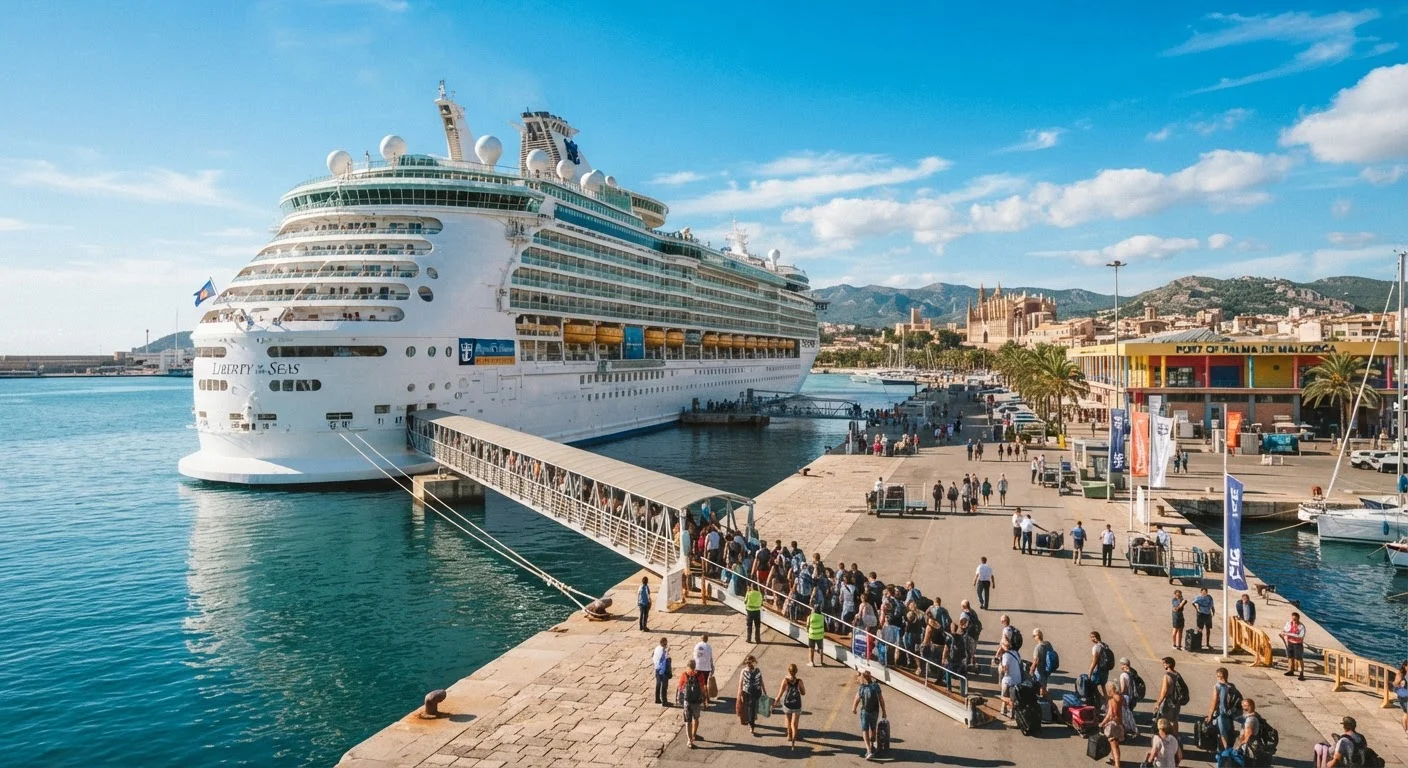
The process of boarding a cruise ship at the start of a voyage. Your embarkation port is the city or terminal where your cruise begins.
Muster Station
Your assigned emergency assembly point on the ship. Every passenger is required to know their muster station before the ship departs, as part of the mandatory safety drill.
Tender Port
A port where the ship anchors offshore and passengers use small boats (tenders) to reach land, typically because the harbor cannot accommodate the ship at the dock.
Repositioning Cruise
A one-way cruise that moves a ship from one sailing region to another, often between seasons. These voyages typically include more sea days and can offer different pricing than round-trip itineraries.
Gratuities
Daily service charges added to a passenger's onboard account to compensate crew members such as cabin stewards and dining staff. The amount and whether it's pre-paid or charged daily varies by cruise line.
Port of Call
Any destination a ship stops at during a voyage, other than the home port where passengers embark and disembark.
Sea Day
A day during a cruise with no scheduled port stop. Passengers remain aboard and can use the ship's amenities, shows, and dining options throughout the day.
Guarantee (GTY) Cabin
A booking where you pay for a category of cabin but allow the cruise line to assign your specific room, which occasionally results in an upgrade to a higher category.
Key Cruise Terms Organized by When You'll Encounter Them
Cruise terminology tends to cluster around three phases of a voyage: before you board, while you're at sea, and when you go ashore. Understanding the terms in context makes them far easier to remember.
Before and During Boarding
- Embarkation: The process of boarding the ship at the start of your cruise. Your embarkation port is the city or terminal where the voyage begins.
- Disembarkation: The reverse — leaving the ship at the end of your cruise. Cruise lines typically assign disembarkation time slots by deck or cabin number to manage the flow of thousands of passengers.
- Muster Drill (Safety Drill): A mandatory safety briefing, required by international maritime law, that familiarizes every passenger with their muster station — the designated assembly point in an emergency. Most lines now allow digital or on-demand completion before or shortly after departure.
- Sail-Away: The celebratory departure from port. Many ships mark sail-away with deck parties, music, and complimentary drinks.
Onboard Life
- Lido Deck: The main outdoor deck, usually home to the pool, casual dining buffet, and deck chairs. Think of it as the ship's backyard.
- Port vs. Starboard: Port is the left side of the ship (facing forward); starboard is the right. A helpful memory trick: port and left both have four letters.
- Knot: A unit of speed at sea equal to one nautical mile per hour. A ship traveling at 20 knots is moving roughly 23 miles per hour.
- Gratuities (Service Charges): Tips charged to your onboard account — usually daily, per person — to compensate cabin stewards, dining staff, and other crew. See our fare breakdown guide for how these affect your total cost.
Shore Day Terms
- Port of Call: Any destination the ship stops at during the voyage, as opposed to the home port where you embark and disembark.
- Tender Port: A port where the ship anchors offshore and passengers travel to land via small boats called tenders, usually because the harbor is too shallow or busy for the ship to dock directly.
- Shore Excursion: A guided tour or activity organized through the cruise line (or independently) at a port of call.
Itinerary and Booking Terms
- Repositioning Cruise: A one-way voyage where a ship moves from one region to another — for example, from the Caribbean to Europe as cruise seasons shift. These itineraries often feature longer sea days and can offer strong value.
- Sea Day: A full day at sea with no port stop. Sea days are ideal for exploring the ship's amenities and entertainment.
- Turnaround Day: The day a ship returns to its home port, disembarks one group of passengers, and embarks the next — all within a compressed window, often the same day.
| Mandatory Safety Rule | Muster drills are required by international maritime law (SOLAS) (International Maritime Organization (IMO)) |
| Speed Unit at Sea | 1 knot = 1 nautical mile per hour (~1.15 mph) |
| Typical Daily Gratuity Range | Roughly $15–$25 per person, per day (varies by line and cabin category) (General industry range; verify with your specific cruise line) |
| Port Side of Ship | Left side when facing forward (same letter count as 'left') |
| Tender vs. Docked Port | Tender ports require passengers to take a small boat ashore; not all ports can accommodate large ships dockside |
Cabin and Status Terms Worth Knowing
Your stateroom category and loyalty status can significantly shape your onboard experience. Cruise cabin types explained covers the full range of accommodation options, but a few terms come up repeatedly in booking conversations.
- Stateroom: The cruise industry's word for a passenger cabin or room.
- Inside Cabin: A room with no windows or porthole — the most affordable category on most ships.
- Guarantee Cabin (GTY): A booking where you select a cabin category but let the cruise line assign the specific room, sometimes resulting in an upgrade.
- Loyalty Tier / Crown & Anchor / Captain's Club: Cruise lines run points-based loyalty programs with tiered benefits. Cruise loyalty programmes explained breaks down how status levels and perks typically work across major lines.
Terminology Varies by Cruise Line
While most of these terms are standard across the industry, individual cruise lines sometimes use their own branded names for programs, decks, and onboard venues. Always check your specific ship's daily schedule (often called the 'Compass,' 'Patter,' or 'Daily Planner') for the terminology your line uses. When in doubt, guest services can clarify any term or policy.