
Key Takeaways
Type 2 Diabetes
Type 2 diabetes is a chronic condition in which the body either doesn't produce enough insulin or doesn't use insulin effectively, causing blood sugar levels to remain higher than normal. Unlike type 1 diabetes, it develops gradually, often over years, and is strongly influenced by lifestyle and genetic factors. It is the most common form of diabetes in the United States.
Clinically, type 2 diabetes is diagnosed when fasting blood glucose reaches 126 mg/dL or higher on two separate tests, or when an HbA1c reading is 6.5% or above — reflecting average blood sugar over roughly three months.
The Job Insulin Is Supposed to Do
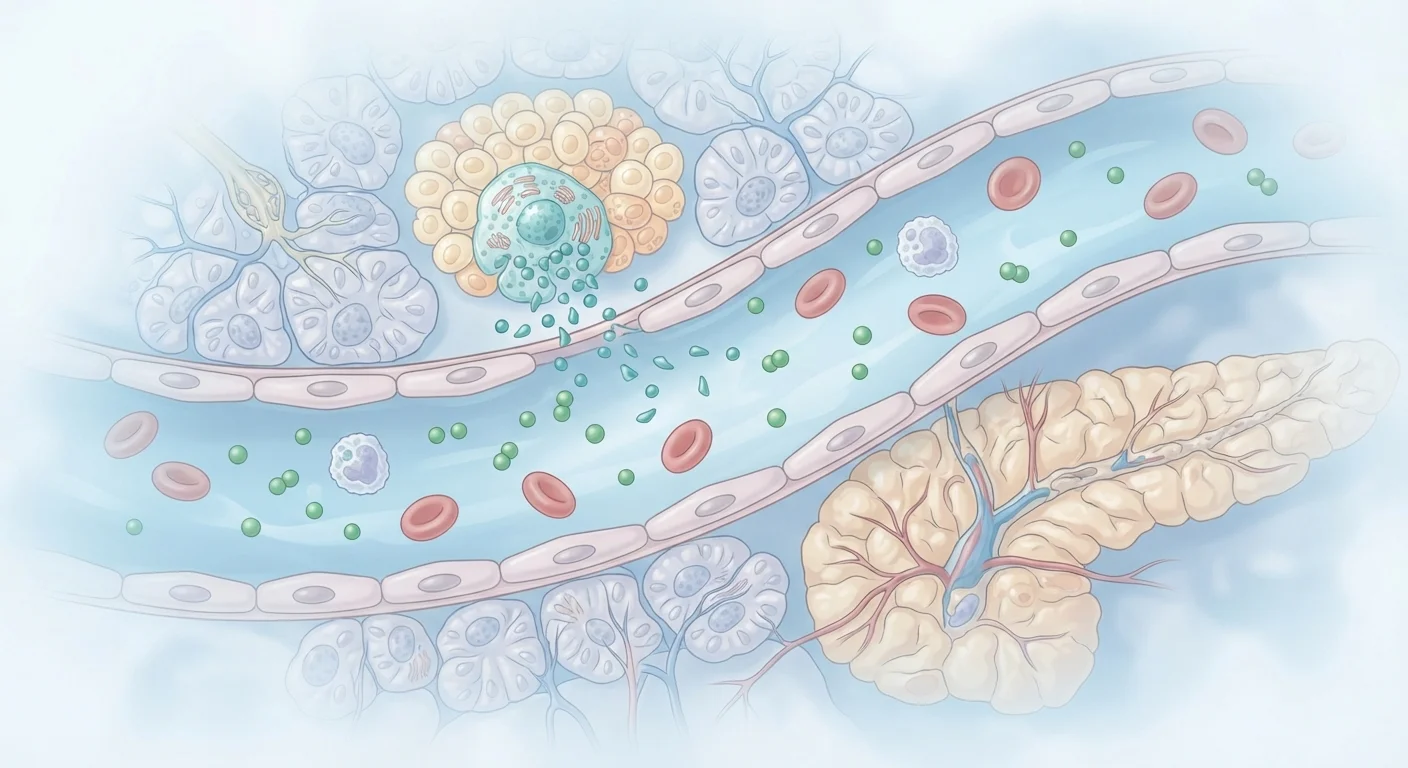
Every time you eat carbohydrates — bread, rice, fruit, vegetables — your digestive system breaks them down into glucose, a simple sugar that enters your bloodstream. Your blood glucose level rises, and your pancreas responds by releasing a hormone called insulin.
Insulin's job is to act like a key. It unlocks the doors on your cells — in muscle, fat, and the liver — so glucose can enter and be used for energy. Without insulin working properly, glucose stays in the bloodstream instead of getting into cells where it's needed.
In a healthy body, this system runs on autopilot: blood sugar rises after a meal, insulin is released, glucose moves into cells, and blood sugar returns to a normal range. With type 2 diabetes, that sequence breaks down.
What Insulin Resistance Really Means
Insulin resistance is at the heart of type 2 diabetes. It means the cells in your body have become less sensitive to insulin's signal. The key still exists, but the lock has become harder to turn.
Researchers believe that excess fat — particularly fat stored around the abdomen and within the liver — interferes with how cells receive insulin's message. Chronic low-grade inflammation and certain genetic factors also play a role. The result is that cells absorb glucose inefficiently, even when insulin is present.
38 million
Americans living with diabetes
According to the CDC, approximately 38 million Americans have diabetes, with roughly 90–95% of cases being type 2.
1 in 3
American adults with prediabetes
The CDC estimates that around 98 million U.S. adults have prediabetes, and the vast majority are unaware of it.
10–12 years
Typical silent progression before diagnosis
Research suggests type 2 diabetes often develops silently for a decade or more before it is formally identified through screening.
To compensate, the pancreas works overtime, pumping out extra insulin trying to force glucose into resistant cells. For a period of time — often years — this keeps blood sugar in a manageable range. This phase is sometimes called prediabetes: blood sugar is higher than normal but not yet in the diabetic range.
When the Pancreas Can No Longer Keep Up
Over time, the insulin-producing cells in the pancreas — called beta cells — become exhausted from the sustained overproduction. Their function gradually declines. At a certain point, the pancreas simply cannot produce enough insulin to keep blood sugar in check, even with the extra effort.
This is when blood glucose rises persistently into the diabetic range. It's not an overnight event — it's a gradual progression that often unfolds over a decade or more before a formal diagnosis.
“Type 2 diabetes is not simply a disease of too much sugar — it is fundamentally a disease of impaired insulin signaling, and understanding that distinction changes how we think about prevention and management.”
— Dr. Frank Hu, Professor of Nutrition and Epidemiology, Harvard T.H. Chan School of Public Health
Persistent high blood sugar is problematic because glucose, at elevated levels, damages blood vessels and nerves throughout the body. Over years, this damage affects the eyes, kidneys, heart, and feet — which is why early detection and management matter significantly for long-term health.
Why Some People Are More at Risk
Type 2 diabetes doesn't develop from a single cause. Several interconnected factors influence risk:
- Genetics: A family history of type 2 diabetes meaningfully raises your likelihood of developing it.
- Body weight: Excess weight — particularly visceral fat around the abdomen — is one of the strongest modifiable risk factors.
- Physical inactivity: Muscle tissue is a major site for glucose uptake. Regular movement helps muscles use glucose more efficiently.
- Age: Risk increases with age, though type 2 diabetes is increasingly diagnosed in younger adults and adolescents.
- Other health conditions: Conditions like polycystic ovary syndrome (PCOS) are associated with insulin resistance — see our overview of PCOS and hormones for more context on that connection.
Talk to Your Doctor About Screening
Many people with prediabetes or early type 2 diabetes have no noticeable symptoms. If you have risk factors — such as a family history, excess abdominal weight, or physical inactivity — ask your healthcare provider whether a fasting blood glucose or HbA1c test makes sense for you. Early detection gives you the most options.
Understanding your risk factors doesn't mean diabetes is inevitable. It means having useful information to discuss with a healthcare provider, who can recommend appropriate screening and guidance for your situation.
This article provides general health information for educational purposes only and is not a substitute for personalized medical advice. Always consult a qualified healthcare professional for diagnosis, treatment, or questions about your health.