
Key Takeaways
Polycystic Ovary Syndrome (PCOS)
Polycystic ovary syndrome (PCOS) is a common hormonal disorder that affects people with ovaries, typically during their reproductive years. It disrupts the normal balance of hormones, which can interfere with ovulation, menstrual cycles, and how the body processes insulin. Despite the name, many people with PCOS don't actually have cysts — the term refers to the appearance of multiple small follicles on the ovaries.
PCOS is diagnosed using the Rotterdam criteria, which requires at least two of three features: irregular ovulation, elevated androgens, and polycystic ovarian morphology on ultrasound.
What Is PCOS and How Common Is It?
Polycystic ovary syndrome is estimated to affect between 6% and 12% of people with ovaries in the United States, making it one of the most prevalent endocrine conditions seen in clinical practice. Yet it remains significantly underdiagnosed — research suggests many people live with PCOS for years before receiving a clear explanation for their symptoms.
The condition was first described medically in the 1930s, but scientific understanding has evolved considerably. Today, PCOS is recognized not just as a reproductive issue but as a broader metabolic syndrome with implications for long-term cardiovascular and metabolic health.
6–12%
Estimated prevalence of PCOS in the U.S.
According to the U.S. Department of Health and Human Services Office on Women's Health, PCOS affects millions of reproductive-age Americans.
70%
Of PCOS cases that go undiagnosed
Research published in reproductive health literature estimates that a large majority of people with PCOS have not received a formal diagnosis.
Up to 80%
Of people with PCOS who have insulin resistance
Studies suggest insulin resistance is present in the majority of PCOS cases, even among those who are not overweight.
The Hormonal Picture: What's Actually Going Wrong
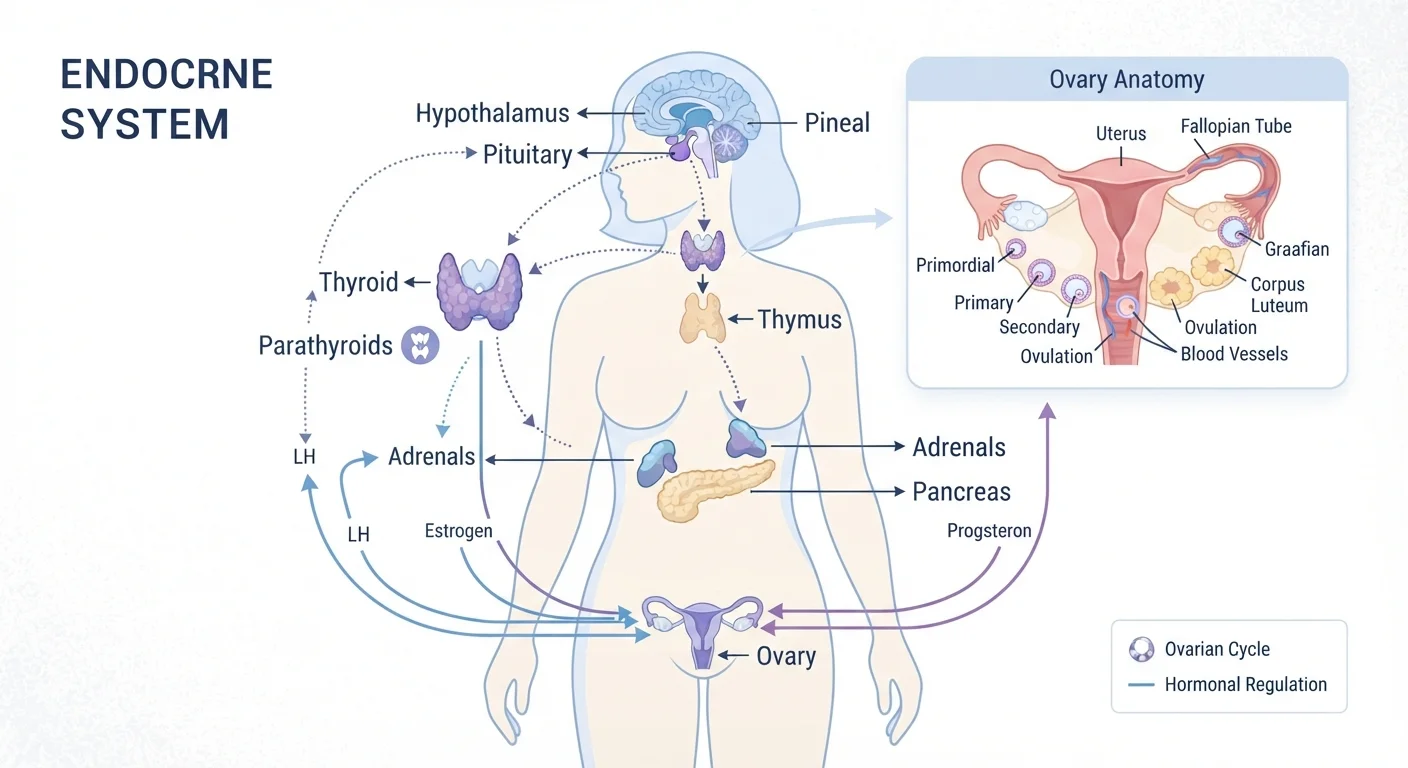
At the core of PCOS is a disruption in the hormonal signals that govern the menstrual cycle. The pituitary gland, which sits at the base of the brain, normally sends carefully timed signals to the ovaries telling them to develop and release eggs. In PCOS, this signaling system becomes dysregulated.
One key pattern is elevated androgens — hormones like testosterone that are present in all bodies but at higher levels in people with PCOS. This excess androgen activity drives symptoms such as acne, excess facial or body hair (called hirsutism), and scalp hair thinning. It also interferes with normal follicle development, often preventing ovulation from occurring regularly.
Insulin resistance is another central piece of the puzzle. When cells don't respond efficiently to insulin, the pancreas produces more of it to compensate. Elevated insulin levels, in turn, can stimulate the ovaries to produce even more androgens — creating a feedback loop that worsens the hormonal imbalance. This connection is part of why PCOS raises the longer-term risk of type 2 diabetes. For a deeper look at how insulin resistance works in the body, see our explainer on type 2 diabetes.
Recognizing PCOS: A Wide Range of Symptoms
PCOS is often called a "syndrome" precisely because it presents differently from person to person. No single symptom defines it, and some people have subtle presentations that are easy to overlook.
Common symptoms include:
- Irregular or absent periods — caused by inconsistent or absent ovulation
- Excess hair growth on the face, chest, or back (hirsutism)
- Acne, particularly along the jawline and chin
- Scalp hair thinning or androgenic alopecia
- Weight changes and difficulty managing weight, linked to insulin resistance
- Mood fluctuations, including higher rates of anxiety and depression reported by people with PCOS
- Fertility challenges due to irregular ovulation
It's worth noting that not every person with PCOS will experience all of these. Someone might have regular periods but still meet diagnostic criteria based on blood work and ultrasound findings.
Tracking Your Cycle Can Help Your Doctor
Keeping a record of your menstrual cycle — including cycle length, flow changes, and any associated symptoms — gives your healthcare provider valuable information when evaluating for PCOS. Simple period-tracking methods or apps can make this easier, and bringing several months of data to an appointment can meaningfully support the diagnostic process.
What the Research Currently Shows — and Where Gaps Remain
Scientific understanding of PCOS has advanced meaningfully, but honest assessment requires acknowledging where uncertainty persists. The condition's root cause remains incompletely understood. Current evidence points to a combination of genetic predisposition and environmental factors — including how the body metabolizes insulin — but no single gene or trigger has been definitively identified.
Research increasingly supports lifestyle interventions — particularly regular physical activity and dietary patterns that support stable blood sugar — as meaningful tools for reducing symptom severity, especially for those with insulin resistance. However, these approaches vary in effectiveness and should be tailored with professional guidance rather than treated as universal prescriptions.
On the treatment side, healthcare providers commonly use a combination of hormonal therapies to regulate cycles, medications that address insulin resistance, and targeted approaches for specific symptoms like acne or hair growth. The evidence base for these therapies is established, though optimal strategies depend heavily on individual circumstances, including whether someone is trying to conceive.
One area of active research is the long-term cardiovascular risk associated with PCOS. Studies suggest people with PCOS may face elevated risks for conditions like high blood pressure, high cholesterol, and metabolic syndrome — though researchers are still clarifying how much of that risk is driven by PCOS itself versus associated metabolic factors.
This article is for general informational purposes only and does not constitute medical advice. If you have concerns about hormonal symptoms or reproductive health, please consult a qualified healthcare provider for evaluation and personalized guidance.